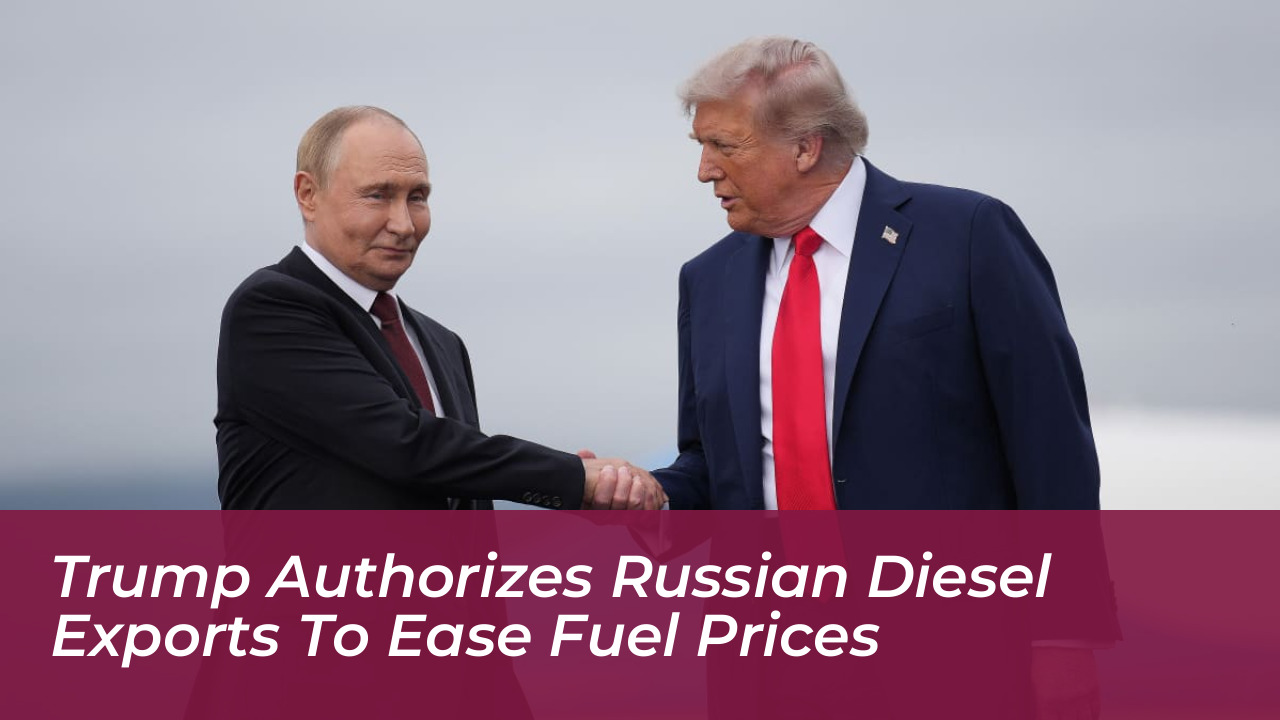

President Donald Trump announced on Friday, October 9, 2026, that Russia has agreed to release millions of tons of diesel for global markets under a new agreement with President Vladimir Putin. This strategic move is designed to ease surging fuel prices that have impacted consumers and businesses following intensive attacks on Russian refineries and ongoing supply disruptions linked to the war involving Iran.
In tandem with the announcement, the U.S. Treasury Department officially authorized Russian diesel transactions through April 7, 2027. This emergency measure aims to stabilize global supply chains and provide immediate economic relief amid mounting political pressure ahead of upcoming midterm elections.
Phased Delivery Schedule Outlines Millions of Tons
According to details shared by President Trump on Truth Social, the agreement outlines a structured, multi-phase delivery schedule to inject vital fuel supplies back into the international marketplace. The plan begins with an initial delivery of more than 300,000 tons.
Following the initial release, subsequent shipments will scale up significantly:
- An additional 500,000 tons scheduled for delivery in November.
- A subsequent block of 1 million tons immediately following the November allocation.
- A final contingent of 3 million tons, dependent upon the operational condition and repair status of Russia’s domestic refineries.
U.S. Treasury Issues Temporary General License
To facilitate the movement of fuel under the new arrangement, the U.S. Treasury Department’s Office of Foreign Assets Control (OFAC) issued a temporary general license. The regulatory waiver officially permits Russian diesel sales, deliveries, unloading, and imports, including direct shipments destined for the United States.
Official documents published on the department’s website confirm that the authorization will remain legally valid through 12:01 a.m. Eastern Daylight Time on April 7, 2027.
Global Refining Pressures and Political Context
Global diesel prices have experienced severe upward volatility as military conflicts severely constrained international refining capacity. Ukrainian military strikes on Russian refineries previously forced Moscow to implement strict export bans. Simultaneously, regional conflicts in the Middle East involving Iran and Houthi allies further restricted fuel supplies, tightening global inventories.
The resulting fuel price spikes placed intense political pressure on the administration, particularly in agricultural strongholds such as Iowa where farmers rely heavily on diesel fuel for operations. While the administration previously considered a domestic diesel export ban, industry warnings regarding potential gasoline price surges led policymakers to pursue international supply agreements instead.
Frequently Asked Questions
Why did President Trump authorize Russian diesel exports?
The authorization aims to ease surging global fuel prices caused by refinery damage from the wars in Eastern Europe and the Middle East, while relieving economic pressure on consumers and agricultural sectors.
How much diesel is Russia expected to supply under the deal?
Russia is slated to supply more than 4 million tons in total, starting with an initial 300,000 tons, followed by 500,000 tons in November, 1 million tons thereafter, and up to 3 million additional tons based on refinery conditions.
How long is the U.S. Treasury waiver valid?
The U.S. Treasury Department’s Office of Foreign Assets Control issued a general license permitting these transactions through 12:01 a.m. EDT on April 7, 2027.
What caused the global shortage of diesel fuel?
Global diesel shortages intensified after Ukrainian strikes targeted Russian refineries, forcing export restrictions, compounded by attacks on critical Middle Eastern energy infrastructure.