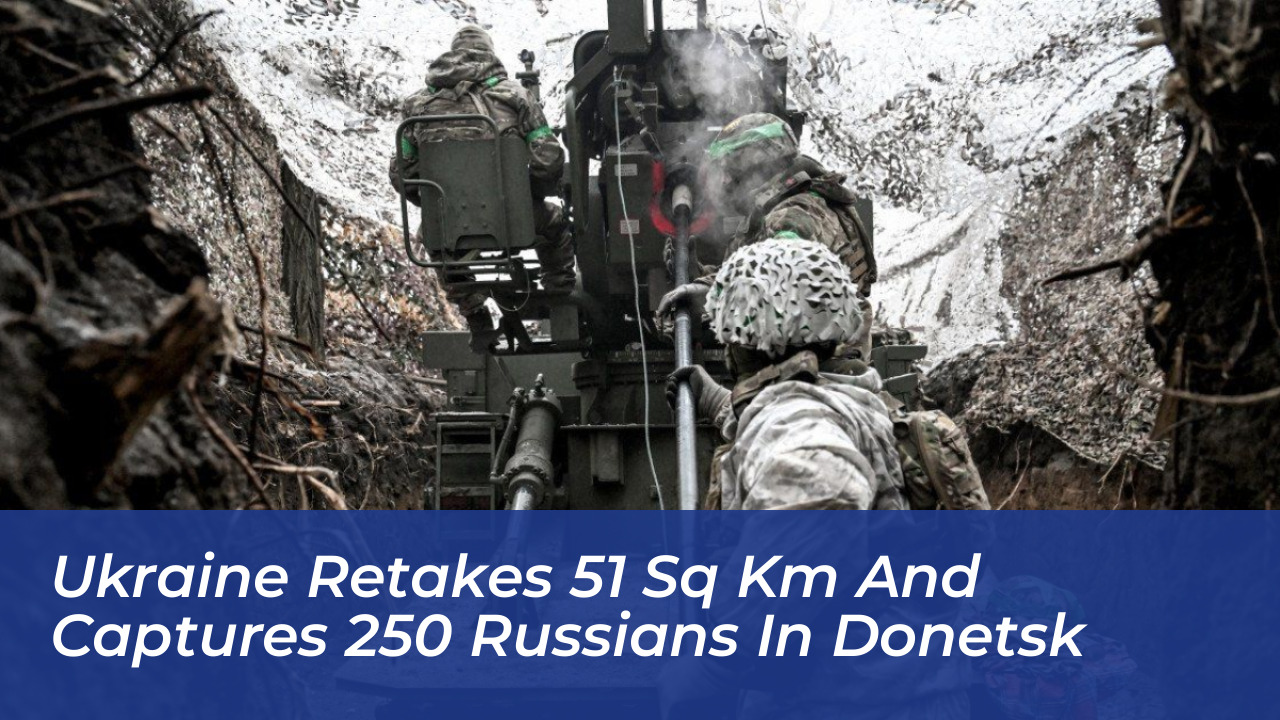
Ukraine’s Third Army Corps regained 51 square kilometers of territory and captured over 250 Russian soldiers during the third phase of Operation Vivaldi in the northern Donetsk region. This milestone was detailed in military reports released on September 28. The ongoing counteroffensive has reclaimed a total of 176 square kilometers since its initial launch, marking a major tactical shift along the Lyman axis.
- Strategic Focus on Nove and Tactical Deception
- Innovation on the Frontline: Robotic Systems and Mass Surrenders
- Broader Impact of Operation Vivaldi
- Frequently Asked Questions
- What is Operation Vivaldi?
- How much territory has been retaken during the operation?
- Which settlements were liberated in the third phase?
- How many Russian soldiers were captured?
- What new technology did Ukrainian forces use?
During this latest operational phase, Ukrainian forces liberated the settlements of Nove, Ridkodub, and Katerynivka. They also fully restored control over Karpivka and Novomykhailivka. Brigadier General Andrii Biletskyi, commander of the Third Army Corps, noted that the third phase served as a definitive turning point for the wider campaign.
Strategic Focus on Nove and Tactical Deception
Military briefings indicate that the primary objective of the third phase was the village of Nove. Russian forces had heavily fortified this village as a key hub on the bridgehead. Controlling the dominant high ground surrounding Nove was deemed critical to maintaining the tactical initiative across the sector.
Ukrainian commanders utilized strategic deception to misdirect Russian defenses. Russian forces were led to believe that the primary offensive thrust would target the Shandryholove-Zelena Dolyna area. This miscalculation compelled the Russian command to exhaust vital reserves in repeated counterattacks in the wrong sector, leaving Nove vulnerable to the actual breakthrough.
Innovation on the Frontline: Robotic Systems and Mass Surrenders
To shatter entrenched Russian positions, the Third Army Corps deployed technological innovations. These included modified Soviet-era BTR-60 armored personnel carriers converted into remote-controlled, unmanned ground strike systems. These robotic kamikaze units successfully breached heavily fortified enemy strongpoints.
The operation yielded substantial personnel and equipment losses for Russian forces. Estimates from the corps indicate that approximately 2,000 Russian personnel were lost during this third phase alone. , more than 250 troops were taken prisoner, including officers, drone operators, and artillery personnel.
“The cinematic ‘Russians don’t surrender’ turned into the reality of entire units surrendering en masse,” stated Brigadier General Andrii Biletskyi.
Broader Impact of Operation Vivaldi
Operation Vivaldi was officially announced on September 15 following a period of strict information silence. It is structured across multiple phases. The first phase focused on clearing infiltration pockets and securing local settlements. The second phase liberated Shandryholove, Derylove, and Drobysheve.
Independent military assessments, including evaluations from the Institute for the Study of War (ISW), indicate that the counteroffensive has disrupted Russian operational designs. These designs aimed at encircling Ukraine’s eastern fortress belt in the Donbas. As fighting continues along multiple axes, including Pokrovsk and Lyman, the successful maneuvers in northern Donetsk demonstrate evolving Ukrainian capabilities. These capabilities combine unmanned systems, tactical deception, and mechanized assaults.
Frequently Asked Questions
What is Operation Vivaldi?
Operation Vivaldi is a Ukrainian counteroffensive operation launched by the Third Army Corps in the northern Donetsk region, specifically in the Lyman direction, on September 15. It aims to push back Russian forces and disrupt supply lines.
How much territory has been retaken during the operation?
As of the conclusion of the third phase on September 28, Ukrainian forces have reclaimed a total of 176 square kilometers of territory.
Which settlements were liberated in the third phase?
The third phase secured the liberation of Nove, Ridkodub, and Katerynivka, alongside the restoration of control over Karpivka and Novomykhailivka.
How many Russian soldiers were captured?
More than 250 Russian soldiers, including officers, pilots, and artillerymen, were taken prisoner during the third phase of the operation.
What new technology did Ukrainian forces use?
Ukrainian forces utilized modified Soviet-era BTR-60 armored personnel carriers. They converted these vehicles into remotely operated unmanned ground strike systems to breach heavily fortified positions.