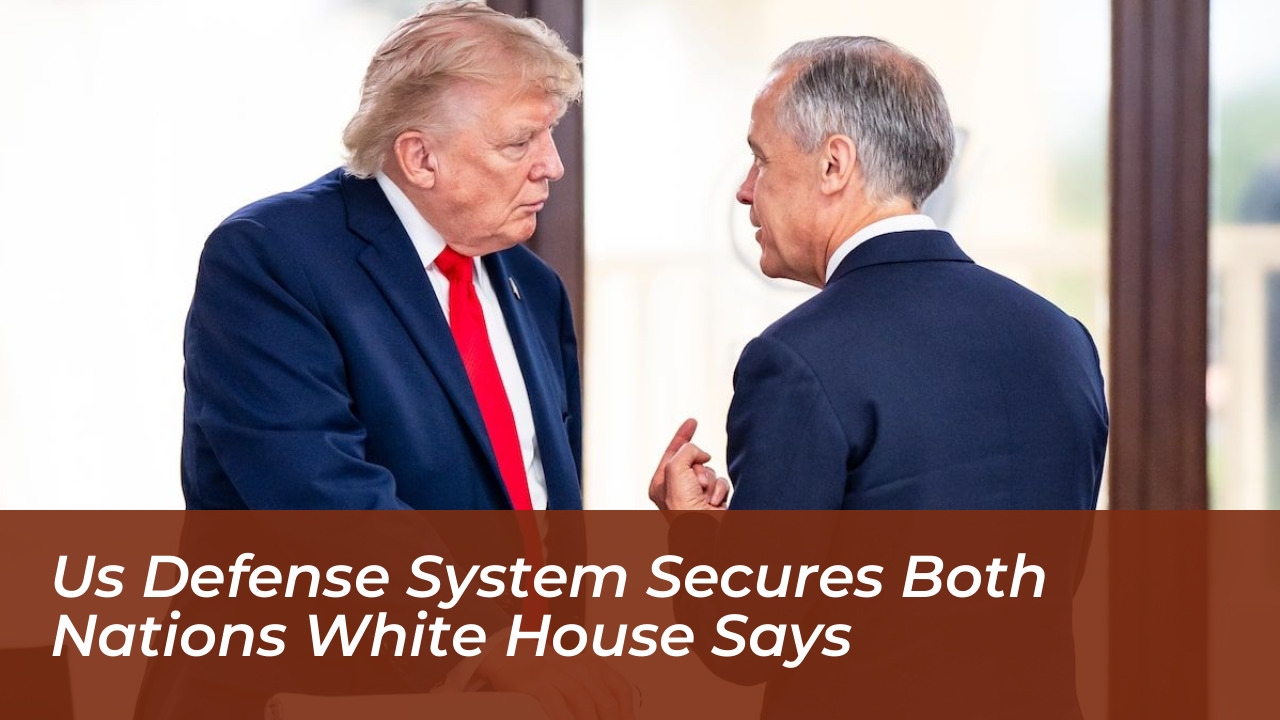
Recent strategic evaluations and defense policy shifts have sparked unexpected diplomatic friction between Washington and Ottawa, forcing both nations to reexamine their long-standing security partnership. The conversation took an intense turn following remarks about potential military scenarios, prompting immediate clarification from the executive branch. This article examines the intersection of defense directives, new supply chain mandates, and the broader bilateral security dynamics shaping North America.
- White House Response to Canadian Defense Concerns
- Addressing Canadian Leadership and Tail Risk Assessments
- Shifting Security Dynamics and Integrated Defense Mechanisms
- Defense Integration and North American Security
- Restructuring Military Supply Chains and Procurement Rules
- Project Vault and the Push for Industrial Resilience
- Evaluating Regulatory Hurdles and Supply Chain Mandates
- Stricter Compliance and Procurement Waivers
- Mapping Critical Supply Chains and Indentured Bills of Materials
- Comparative Analysis of North American Defense Policies
- Future Outlook for United States-Canada Security Cooperation
- Managing Bilateral Relations in the Arctic and Beyond
- Ensuring Long-Term Regional Deterrence
- Frequently Asked Questions
- Why did Canadian officials evaluate the risk of U.S. military action?
- What is the purpose of the new defense executive orders?
- How does the White House respond to concerns about U.S. intentions toward Canada?
- What are the requirements for defense contractors under the new executive directives?
White House Response to Canadian Defense Concerns
Addressing Canadian Leadership and Tail Risk Assessments
The diplomatic friction began when Canadian leadership evaluated the potential risks of a United States-led military invasion. During media discussions, officials described the scenario as an extreme tail risk. They characterized it as a rare possibility that warranted strategic evaluation rather than an anticipated military conflict.
White House principal deputy press secretary Anna Kelly swiftly rejected concerns regarding United States intentions toward its northern neighbor during a press briefing. Administration officials firmly defended the executive branch, stating that leaders have worked extensively to safeguard Canada. The official stance emphasizes that modeling worst-case scenarios is a standard institutional exercise rather than a reflection of actual geopolitical hostility.
Shifting Security Dynamics and Integrated Defense Mechanisms
The United States and Canada rely heavily on long-standing joint defense frameworks, most notably the North American Aerospace Defense Command. For decades, NORAD has provided shared early warning and operational defense across the continent. However, recent policy adjustments and executive actions regarding domestic defense supply chains have heightened bilateral discussions on national sovereignty, military preparedness, and regional stability.
Modern defense planning requires continuous adaptation as global competition intensifies among major powers. Both governments face internal and external pressures to secure critical infrastructure, protect domestic industries, and maintain technological superiority. While integrated defense mechanisms remain strong, shifting economic policies continue to test the limits of cross-border cooperation.
Defense Integration and North American Security
Restructuring Military Supply Chains and Procurement Rules
The strategic framework governing United States defense policy underwent significant restructuring under recent executive directives. Signed by the administration, the policy targets vulnerabilities within America’s military supply chains. It mandates that finished equipment, critical materials, and components necessary for defense maintenance originate domestically or from verified allied nations.
This mandate directly impacts decades of cross-border defense manufacturing. Integrated industrial collaboration between the United States and Canada now faces rigorous regulatory hurdles. Defense contractors must navigate stricter compliance measures, eliminate non-compliant materials sourced from geopolitical adversaries, and reduce reliance on unverified foreign suppliers.
Project Vault and the Push for Industrial Resilience
Securing critical minerals and components through initiatives like Project Vault ensures long-term industrial resilience for the United States and its trusted partners. At the same time, these initiatives introduce complex regulatory requirements that affect traditional trade allies. By eliminating geopolitical vulnerabilities, the federal government aims to fortify the defense industrial base against physical, cyber, and economic subversion.
While the White House emphasizes that these measures protect both nations by bolstering regional deterrence, foreign policy analysts closely monitor the downstream effects. Allied suppliers must now meet stringent verification standards to participate in United States defense acquisitions. This shift drives investment into domestic and allied extraction and processing capabilities for critical minerals.
Evaluating Regulatory Hurdles and Supply Chain Mandates
Stricter Compliance and Procurement Waivers
Strict limitations on procurement waivers under federal guidelines take effect soon. The Secretary of Defense will cease issuing standard waivers for covered materials unless contractors submit formal mitigation plans. These plans must document exhaustive efforts to find compliant sources and establish strict timelines for removing non-compliant items from existing inventories.
Defense contractors must adapt quickly to avoid severe penalties and contract terminations. The burden of proof shifts entirely to the manufacturing sector, requiring complete transparency regarding the origin of every subcomponent utilized in defense systems. Compliance officers are currently overhauling procurement databases to meet these impending federal deadlines.
Mapping Critical Supply Chains and Indentured Bills of Materials
Under the updated mandates, defense contractors are required to map critical supply chains from raw materials to end-use products. They must submit indentured Bills of Materials and vet all subcontractors for financial risks, foreign ownership, and manufacturing vulnerabilities. These stringent requirements ensure that the United States military relies exclusively on secure, trusted industrial partners.
While the administrative overhead increases costs for defense firms, the long-term goal remains clear. Eliminating foreign infiltration in military supply chains protects national security at every level. Contractors who fail to map their supply chains risk losing eligibility for future federal defense contracts.
Comparative Analysis of North American Defense Policies
Understanding the current friction requires examining how United States and Canadian defense strategies intersect and diverge in practice. The table below outlines key policy differences and shared commitments guiding both nations.
| Policy Area | United States Strategy | Canadian Strategy |
|---|---|---|
| Primary Focus | Domestic sourcing, supply chain security, and deterrence of great power adversaries. | Sovereignty protection, risk mitigation, and multilateral alliance maintenance. |
| Procurement Rules | Strict enforcement of domestic manufacturing under updated defense orders. | Integration with allied defense industrial bases with targeted domestic investments. |
| Regional Defense | Maintains joint commands while prioritizing American industrial independence. | Evaluates tail risks while participating in integrated continental defense systems. |
Future Outlook for United States-Canada Security Cooperation
Managing Bilateral Relations in the Arctic and Beyond
Bilateral defense cooperation remains anchored in shared geographic realities. The Arctic and North American airspace require continuous coordination between Washington and Ottawa to monitor external threats. Resolving recent diplomatic tensions depends entirely on transparent communication regarding military procurement and strategic intentions.
Canadian officials balance sovereign risk assessments with the practical necessity of maintaining a robust alliance with their southern neighbor. Joint exercises and intelligence sharing continue uninterrupted despite policy debates. Both nations recognize that continental security is indivisible in an increasingly competitive global environment.
Ensuring Long-Term Regional Deterrence
The White House continues to assert its commitment to mutual security across the continent. By strengthening domestic supply chains and enforcing rigorous oversight, the United States aims to project stability across the hemisphere. As implementation of these defense orders proceeds, defense contractors and policymakers in both nations will closely monitor compliance impacts.
Maintaining open channels of dialogue remains essential to mitigating misunderstandings. Ensuring that continental defense systems protect both nations effectively requires mutual trust, transparent policy adjustments, and a shared dedication to regional deterrence.
Frequently Asked Questions
Why did Canadian officials evaluate the risk of U.S. military action?
Canadian leadership assessed the scenario as part of an extreme tail risk evaluation. Governments routinely model improbable worst-case scenarios to test institutional resilience and emergency preparedness rather than anticipating actual conflict.
What is the purpose of the new defense executive orders?
The executive orders secure United States military supply chains against physical, cyber, and economic subversion. They mandate that critical materials, finished equipment, and defense components are sourced domestically or from verified allied nations.
How does the White House respond to concerns about U.S. intentions toward Canada?
White House officials rejected concerns regarding United States intentions. They emphasized that the administration has worked extensively to safeguard Canada and maintain strong regional deterrence through collaborative defense frameworks.
What are the requirements for defense contractors under the new executive directives?
Contractors must map critical supply chains from raw materials to end products, submit indentured Bills of Materials, vet subcontractors for foreign ownership, and eliminate reliance on non-compliant foreign suppliers.