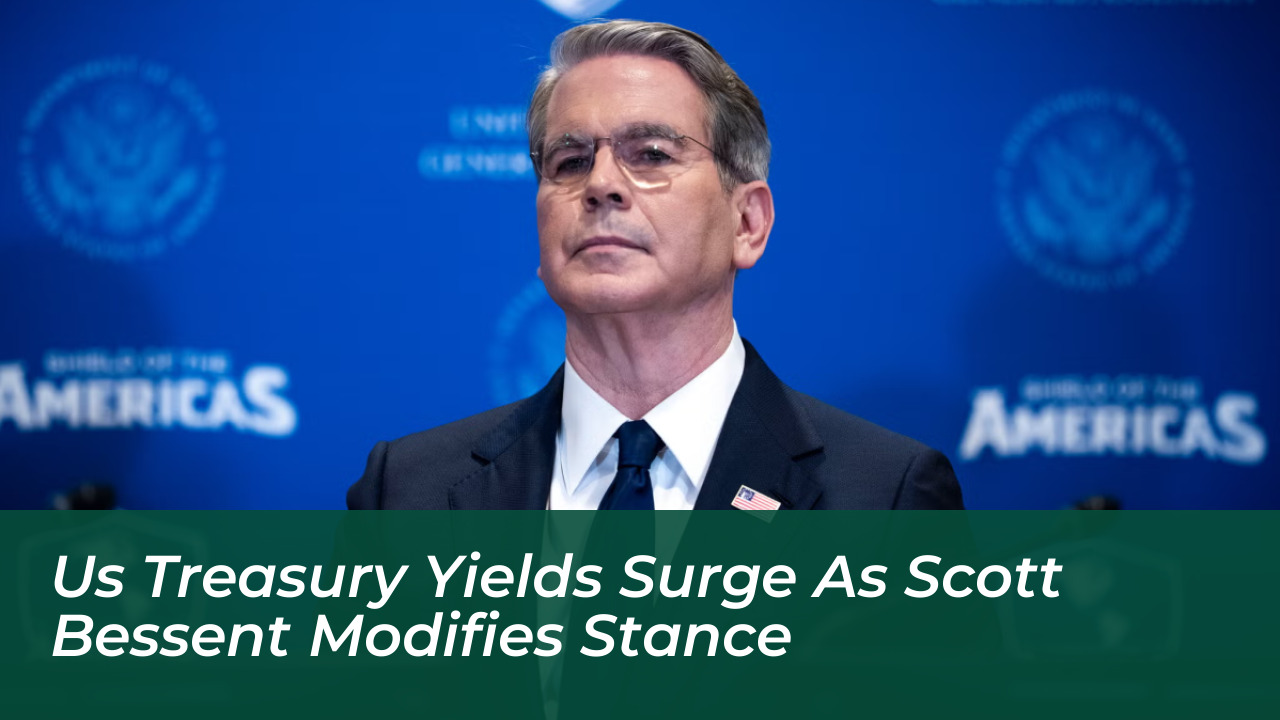



U.S. Treasury Secretary Scott Bessent acknowledged that he cannot unilaterally control the bond market. Borrowing costs surged to multiyear highs following his previous warnings to financial investors, according to an interview published Saturday. The Treasury chief softened his earlier stance. He clarified that while he described himself as “the house” in overseeing federal debt, he recognized that market participants who bet against him could still win individual trades.
The adjustment in tone follows a turbulent period for fixed-income markets. A beefed-up buyback operation and repeated efforts by the administration failed to permanently suppress long-term borrowing costs.
The Evolution of Treasury’s Market Stance
Earlier in the week, Treasury Secretary Bessent had publicly challenged traders during an event in Texas. He declared, “I am the house now. And you can bet against me if you want.” This aggressive rhetoric accompanied the Treasury Department’s announcement that it would triple the normal size of its buyback operation to purchase up to $6 billion of longer-dated government debt.
However, the intervention fell short of what parts of Wall Street had anticipated. Some investors braced for figures ranging between $7 billion and $10 billion. Consequently, the move drove yields higher rather than lower. The benchmark 10-year Treasury yield climbed to 4.841%, reaching its highest level since November 2023. Meanwhile, the 30-year bond yield breached the closely watched 5.3% threshold.
Faced with the market’s resilient upward pressure on yields, Bessent adopted a more measured perspective over the weekend.

“The house doesn’t win every hand, the house plays the percentages,” said Scott Bessent, Treasury Secretary. “Everyone in the market knows, you don’t win every hand, you win over time.”
Broader Pressures Driving the Yield Surge
A convergence of macroeconomic factors has exacerbated the bond market volatility, including:
- Rising Oil Prices: Brent crude futures climbed past $100 a barrel amid escalating geopolitical tensions in the Middle East, intensifying market-wide inflation anxieties.
- Federal Debt Expansion: Total U.S. government debt has surpassed $40 trillion, accompanied by an 11.8% year-over-year jump in Treasury issuance.
- Monetary Policy Expectations: Growing odds of a Federal Reserve interest rate hike have added upward pressure across both short- and long-dated government securities.
Market analysts note that the Treasury possesses substantial liquidity tools, including drawing down the Treasury General Account (TGA). However, defending specific price levels against broader macroeconomic fundamentals remains an uphill battle. As bond yields continue to test official resolve, the administration’s evolving strategy highlights the limits of fiscal intervention in the face of persistent global market pressures.