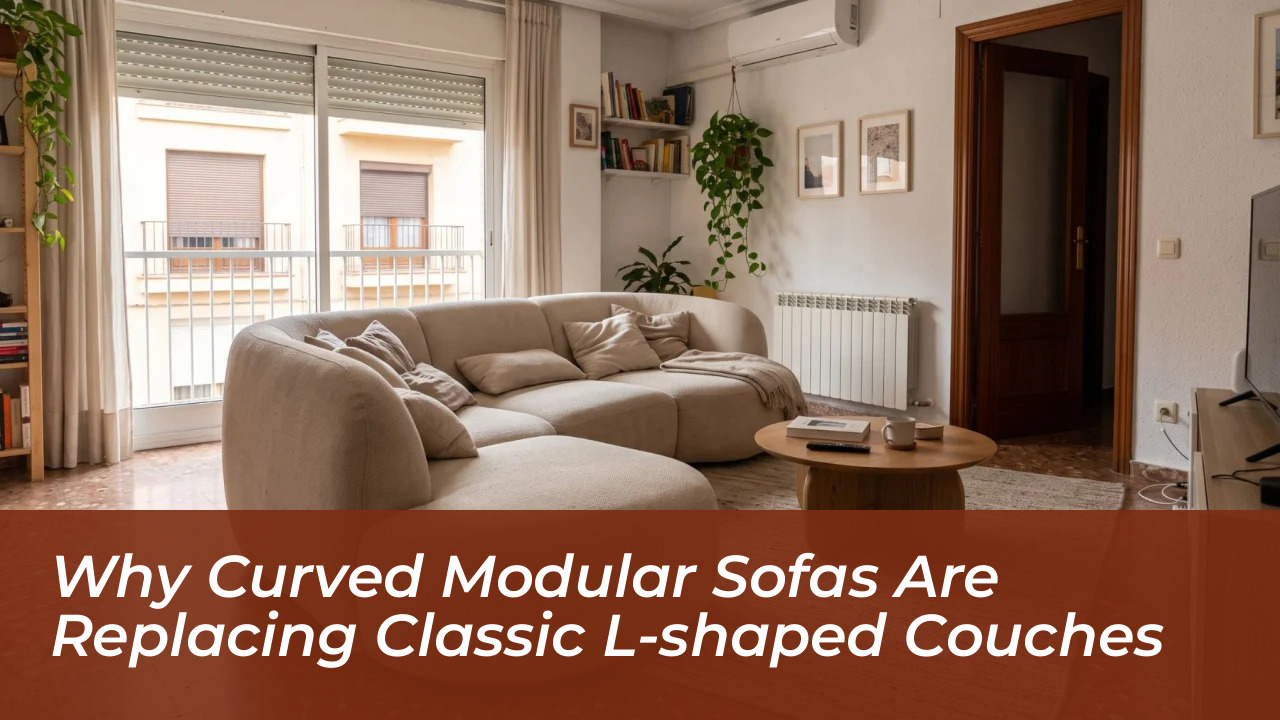

Classic sofas with an L-shape are gradually disappearing from modern living rooms. For decades, traditional corner sectionals have been the go-to choice for space optimization and comfort. However, a major shift is taking place in interior design. A new sofa trend has emerged that significantly improves space efficiency, visual flow, and contemporary style: freestanding modular sofas with curved, organic shapes.
Many interior designers agree that fixed blocks with rigid, sharp corners are losing prominence in favor of flexible, fluid seating systems. Whether you are furnishing a sprawling open-concept house or looking for smart layout solutions for a compact urban flat, understanding this transition can completely transform your living space.
The Rise of the Edge-Free Living Room Trend
Traditional L-shaped sofas are rigid, straight, and prone to swallowing up valuable living room floor space. Their bulky arms and fixed right angles create heavy visual blockades. In contrast, modern curved sofa designs make it possible to rearrange the living room on the fly, adding or removing modular pieces as needed, or redistributing them to fit evolving architectural layouts.
The trend heavily embraces soft, rounded silhouettes inspired by organic design and the Italian soft-form movement of the 1960s and 1970s. With no hard corners, these sculptural seating options dramatically improve traffic flow. They eliminate the visual heaviness typical of traditional sectionals, making them exceptionally well-suited for contemporary open-plan homes.
Why Curved Sofas Are Perfect for Small Apartments
When moving into a more compact apartment or a home with an unconventional layout, conventional sectionals often fail to adapt. By contrast, modular curved sofas offer incredible flexibility. Their individual elements adapt completely to new walls and tight corners without making the room feel cramped.
Unlike L-shaped corner sectionals that tend to clutter a room, curved sofas visually expand the space. Their softness and the absence of sharp points make a room feel brighter, more attractive, and inherently inviting. A curved design naturally encourages socialization. The gentle arc directs people toward one another during conversation, fostering a warmer, more intimate living room atmosphere reminiscent of a modern conversation pit.
Top Designer Examples Spearheading the Curve Trend
Top furniture brands and international design studios are fully embracing this shift away from boxy geometries. Notable pieces shaping contemporary living rooms include:
- René by Meridiani: Designed by Andrea Parisio, this two-sided modular system is conceived to be approached from every angle, composing continuous islands ideal for generous or contract environments.
- DS-600 Snake by de Sede: Created by Ueli Berger, Eleonore Peduzzi-Riva, Heinz Ulrich, and Klaus Vogt, its sinuous leather or fabric modules combine into endless fluid configurations.
- Cosy Curve by MDF Italia: Features a soft, enveloping design expanded with island modules that make composition highly fluid and dynamic.
- Venise by Lema: Moves beyond linear traditions to draw fluid compositions designed specifically to foster connection and conviviality.
- Simposio by Saba Italia: Inspired by Scandinavian-Japanese Japandi aesthetics, it delivers soft, enveloping curves that invite a quiet, flexible embrace.
How to Integrate Curved Seating Into Your Home Layout
To get the most out of a curved sofa, interior design professionals recommend letting the piece breathe rather than pushing it flat against a wall. Consider these practical placement tips:
- Float the Sofa: Position a curved sofa near the center of the room or use it to anchor a distinct conversation zone, utilizing a round area rug to reinforce its perimeter.
- Balance the Sines: Balance soft, sinuous lines with clean horizontal planes, such as a geometric or organic coffee table and sharply defined shelving units.
- Layer Textures: Amplify the cozy, enveloping visual effect with tactile upholstery fabrics like bouclé, rich velvet, or textured wool.
- Opt for Compact Accents: In smaller apartments where a full curved sofa may not fit, introduce softness via an enveloping armchair or a swivel easy chair.
Frequently Asked Questions About Curved Sofas
Are curved sofas practical for small living rooms?
Yes. While it may seem counterintuitive, curved sofas lack sharp corners and bulky square arms, which helps them visually open up tight floor plans. Modular versions also allow you to scale the size of the sofa to match your exact room dimensions.
Do curved sofas take up more space than L-shaped sectionals?
Not necessarily. Because they do not have rigid, protruding right angles that dictate a strict corner placement, they can often be tucked into conversational layouts or floated cleanly in the middle of a room to optimize walkways.
What shape of coffee table works best with a curved sofa?
Round, oval, or organic kidney-shaped coffee tables pair exceptionally well with curved sofas. They echo the gentle lines of the seating and make navigating around the furniture much easier compared to rectangular tables with sharp corners.
Can modular curved sofas be rearranged?
Most modern curved designs are built from modular components. This means you can separate, add, or reconfigure individual sections as your living arrangements, family size, or apartment layouts change over time.
What decorating styles match curved furniture?
Curved furniture is remarkably versatile. It fits seamlessly into Japandi minimalism, mid-century modern aesthetics, contemporary open-plan spaces, and soft Scandinavian interiors.