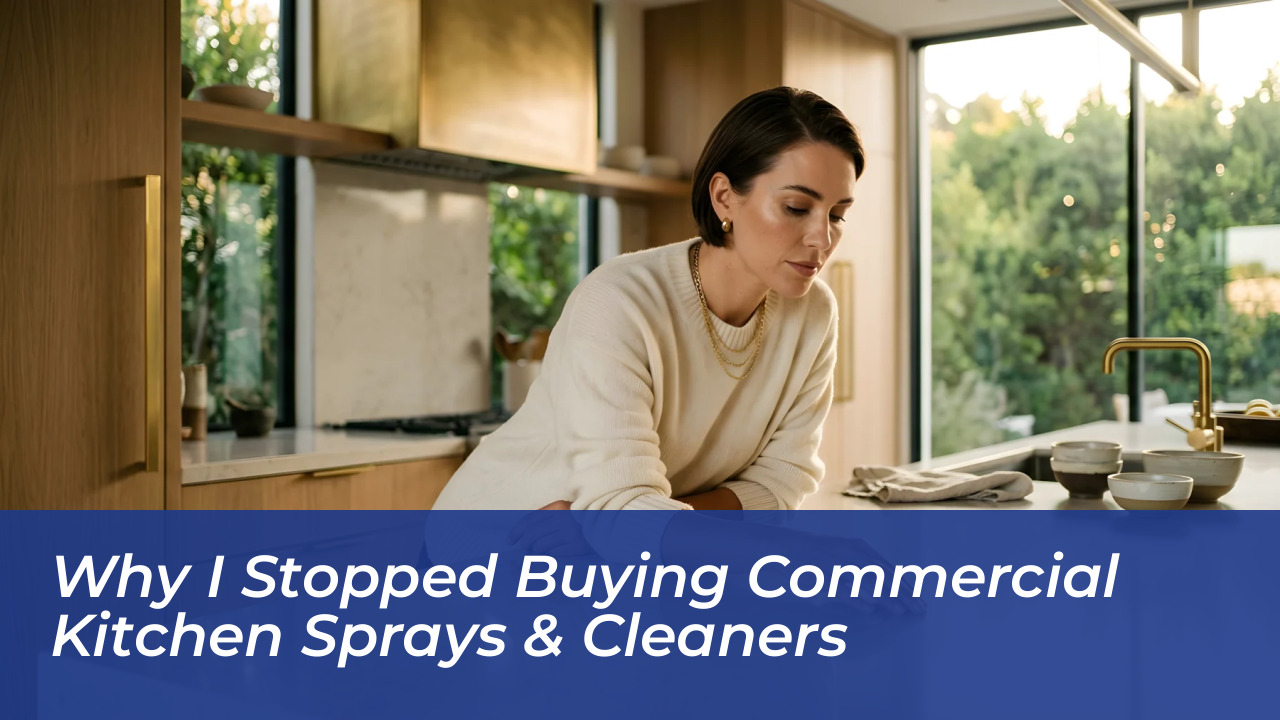
Commercial kitchen cleaning sprays and aerosol products promise easy grease removal and instant cleaning. However, routine use often leaves behind greasy film, damages delicate countertop sealants, and releases strong synthetic fragrances over food prep surfaces. Dropping these store-bought bottles solves kitchen grime buildup at the root and keeps your food spaces clean without lingering chemical layers.
Due to high traffic on this story, please verify you are not a bot to instantly unlock the remaining content. Takes only 5 seconds!
Verify & Continue ReadingEvery trip down the cleaning aisle brings brightly colored bottles that boast heavy-duty power. For years, keeping a multi-surface spray near the cooktop felt normal. Over time, though, surfaces like sealed granite, quartz, and laminate develop a tacky haze that resists wiping. The culprit behind this film is rarely kitchen grease itself. Instead, the problem comes from conventional cleaners, which rely on synthetic surfactants, ammonium compounds, and artificial perfumes designed to cling rather than evaporate cleanly.
The Hidden Downsides of Commercial Countertop Cleaners
Most commercial formulas break down dirt quickly, yet they demand thorough rinsing to clear hard surfaces. When sprayed on counters and wiped with a dry paper towel, these active ingredients dry in place. This creates an invisible, sticky layer that attracts dust, cooking oils, and pet hair.
Beyond dulling surfaces, repeated exposure to strong alkaline or acidic agents alters delicate finishes:
- Acidic Sprays: Break down microscopic seals on natural stone, leading to permanent etching and discoloration around prep areas.
- Alkaline Agents: Cause glossy synthetic counters to develop cloudy spots where the surfactant matrix will not lift without heavy friction.
- Non-Volatile Residues: Trap airborne cooking fats, gradually turning smooth prep areas into sticky grease magnets.
Indoor air quality presents another daily challenge. Kitchens concentrate heat, steam, and ventilation, which rapidly vaporizes synthetic scents and volatile components. Trapping these compounds in an enclosed space leads to persistent chemical odors that clash with fresh ingredients.
Surface Reactions and Residue Buildup
Different countertop materials react unpredictably to store-bought formulas. The chemical compounds that break down oil in high-efficiency degreasers can dry out composite surfaces or strip protective waxes from natural wood butcher blocks.
Here is how commercial sprays impact various kitchen surfaces:
- Sealed Granite and Marble: Harsh solvents erode sealants, creating microscopic pores that absorb food stains.
- Engineered Quartz: High-alkaline residues leave cloudy marks under direct task lighting.
- Solid Hardwood Butcher Block: Alcohol and detergent carriers strip natural protective oils.
- Stainless Steel Backsplashes: Surfactants produce streaks and trap ambient oil droplets along grain lines.
Busting the Deep-Sanitization Myth
A common assumption is that raw food prep areas require aggressive disinfectants after every meal. In everyday home cooking, standard soap and warm water remove microbes, grease, and debris without coating the cutting zone in toxic disinfectants.
True chemical disinfection requires surfaces to stay visibly wet with a sanitizer for several minutes-a rule rarely followed in home kitchens. Quick spray-and-wipe habits merely move active compounds around without meeting the time required for sterilization, leaving chemical residue without any germicidal benefits.
Practical Steps to Clean Food Surfaces Without Residue
Moving away from aerosol cans and plastic trigger sprays requires only basic household supplies that rinse completely and protect high-traffic finishes:
- Wash with basic dish liquid: Combine warm water with a few drops of unscented dish soap in a reusable spray bottle. This lifts grease through mechanical action without leaving heavy polymer films.
- Wipe down with damp microfiber: Use a dedicated damp microfiber cloth to pick up lifted oil and food particles rather than smearing them.
- Dry thoroughly with a lint-free towel: Removing moisture immediately prevents water spots, preserves stone sealers, and eliminates streaks.
- Target stubborn grease with baking soda paste: For baked-on cooktop splatters, apply a soft paste of baking soda and water, let it rest for five minutes, and wipe away gently.
Relying on physical removal rather than heavy chemistry maintains a clean kitchen while cutting grocery expenses. Switching away from commercial cleaning sprays keeps your meal prep spaces genuinely fresh, residue-free, and safe for everyday family cooking. Take a close look at your countertops under natural light to spot any hidden film or product buildup, and embrace a simpler routine.
Frequently Asked Questions
Are commercial kitchen sprays bad for countertops?
Yes. Routine use can leave sticky surfactant films that attract dust and degrade protective sealants on natural stone, quartz, and laminate surfaces over time.
Do I need hospital-grade disinfectants for daily kitchen cleaning?
No. In standard home cooking, basic dish soap and warm water combined with physical wiping are enough to remove food debris and grease without leaving toxic chemical residues.
How can I clean stubborn grease without harsh chemicals?
A simple paste made from baking soda and water applied to grease splatters for five minutes can lift tough buildup without scratching or chemical exposure.
Why do commercial cleaners leave counters looking hazy?
Most commercial cleaners contain active ingredients that require thorough rinsing. When simply buffed dry, these ingredients dry in place to form a dull, sticky haze.
What is a safer alternative to aerosol cooking sprays?
Switching to a refillable glass oil mister allows you to use 100% pure cooking oil with zero propellants, emulsifiers, or aerosol chemicals.