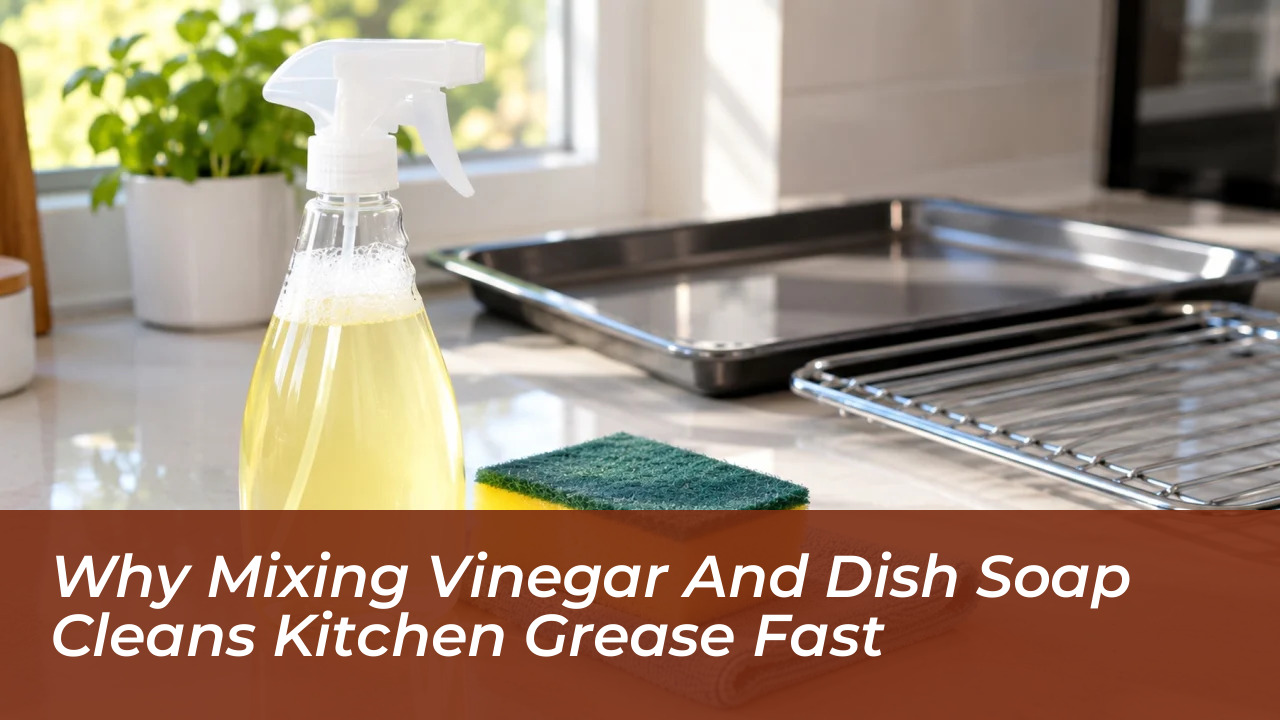

Cleaning an oven or grease-coated racks is one of the most tedious chores in the kitchen and a major weekend time-waster. However, a growing number of people have found a simple hack using everyday household items: a splash of white vinegar mixed with dish soap. This viral cleaning combination has become immensely popular on social media because it acts as a powerful all-purpose degreaser, capable of dissolving and wiping away oily grime with minimal physical effort.
The solution works wonders on range hoods, exhaust fans, pots, baking sheets, tile, sturdy countertops, and even oven glass stained with burned-on splatters. Understanding the science behind this mixture helps explain why it outperforms many expensive commercial products.
Why the Mix of Vinegar and Dish Soap Is So Effective Against Grease
The success of this homemade cleaner lies in the fact that each ingredient performs a distinct, coordinated chemical job:
- White Vinegar: Contains acetic , which chemically attacks heavy grease molecules and sticky grime, weakening their grip on surfaces while neutralizing unpleasant odors.
- Dish Soap: Loaded with specialized surfactants that surround the softened particles, encapsulate them, and allow them to lift completely away with a cloth without re-depositing on the surface.
In short, the vinegar breaks down the structural bond of the grease while the dish soap lifts it away. This dual-action approach cuts scrubbing time and effort in half compared to using a single product. Additionally, the mixture is significantly cheaper than commercial degreasers, leaves a streak-free, shiny finish on stainless steel and glass, and eliminates the need to breathe in harsh industrial aerosol fumes.
How to Prepare and Apply the Degreaser Spray
Making your own all-purpose kitchen degreaser takes less than a minute. Follow these simple steps:
- Combine one part white vinegar, one part warm water, and a generous tablespoon of liquid dish soap in a spray bottle.
- Shake gently to blend the ingredients.
- Spray the solution directly onto the greasy surface.
- Let it sit for two to five minutes to break down the grime.
- Wipe away the residue using a clean microfiber cloth.
Important Safety Note: Always avoid using acidic mixtures like vinegar on natural stone surfaces such as marble or granite, as the can dull or permanently etch the finish. Additionally, never mix this vinegar and soap solution with bleach, as the combination creates toxic chlorine gas that is dangerous to the respiratory tract.
How to Clean Greasy Oven Racks Without Wasting Time
Oven racks coated in stubborn, carbonized grease require a slightly different approach to minimize effort. You can save time by soaking the racks while cleaning the interior of the oven separately.
The Soaking Method
- Place your greasy racks in a deep baking dish or a large basin.
- Cover them completely with very hot water.
- Add a good splash of white vinegar and a generous tablespoon of dish soap, stirring slightly.
- Allow the racks to soak for 15 to 30 minutes while you clean the inside of the oven.
- Wipe the racks down with a sponge: the hardened black grime will have transformed into a soft paste that slides right off without scraping the metal.
- Rinse thoroughly with clean water and dry completely before reinserting them into the oven.
Tackling Tough, Caked-On Carbon
When oven racks have accumulated years of baked-on black grease, vinegar and dish soap alone may need reinforcement from baking soda. Before submerging the racks, mix baking soda with a small amount of water to form a thick paste. Rub this paste over the entire metal surface, paying special attention to corners and wires where thick grease builds up.
Once coated, spray the paste-covered racks with white vinegar. This triggers a harmless fizzing foam that helps loosen caked-on buildup. Finally, submerge the racks in boiling water and a splash of dish soap, leaving them to soak for at least an hour. Afterward, remove the softened crust using steel wool (for cast-iron racks) or a soft sponge (for enameled or nonstick coatings) to avoid scratching.
Frequently Asked Questions
Can I use apple cider vinegar instead of white vinegar for cleaning grease?
White vinegar is strongly recommended because it is clear and lacks the natural colorings and sugars found in apple cider vinegar, which can leave sticky residues or stains on light-colored surfaces.
Why shouldn’t I mix vinegar with dish soap in the laundry?
While vinegar and dish soap work wonderfully in the kitchen, mixing vinegar directly into laundry detergent causes a neutralization reaction that cancels out the cleaning power of the surfactants in the detergent. In the laundry room, vinegar should always be reserved for the final rinse cycle.
How long can I store this DIY grease mixture?
Because it contains water and dish soap, the mixture can be stored in a spray bottle for several weeks. However, for maximum effectiveness, making a fresh batch every few weeks is ideal.
Will this mixture scratch stainless steel appliances?
No, the ingredients themselves are non-abrasive. However, always use a soft microfiber cloth or non-scratch sponge when wiping down stainless steel to maintain its mirror finish.