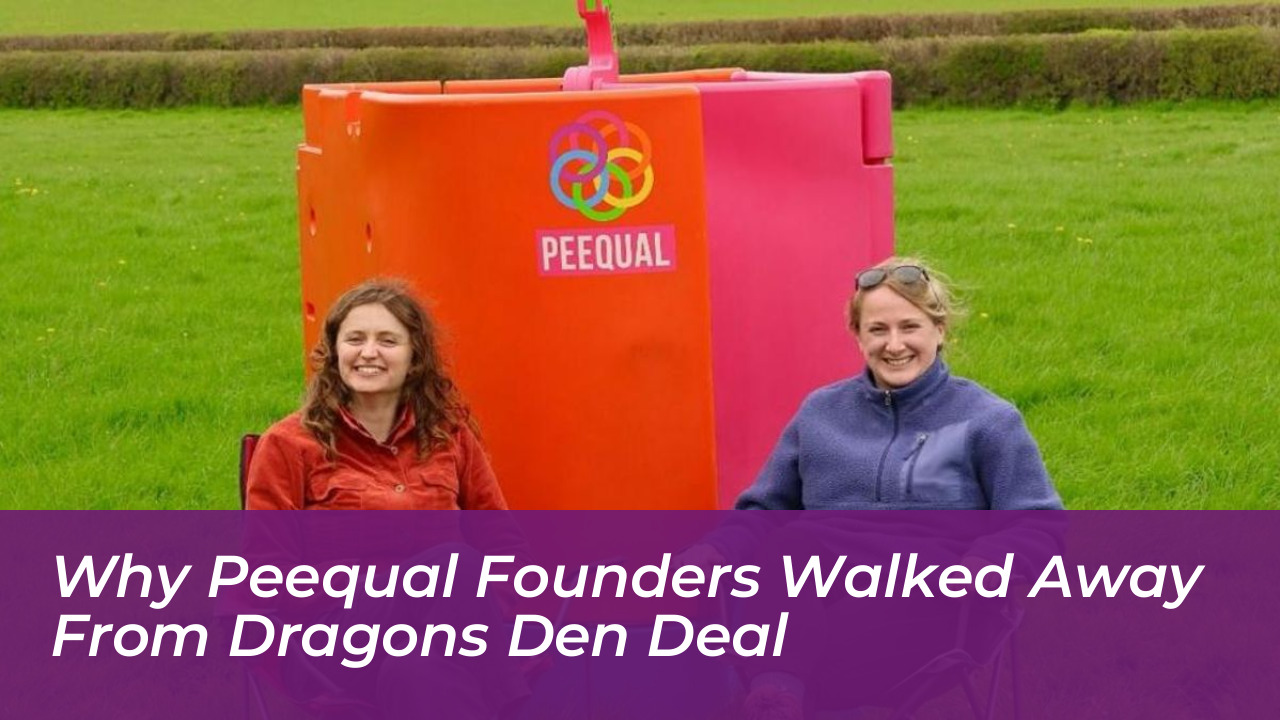
The high-profile appearance of PEEQUAL founders Amber Probyn and Hazel McShane on the BBC television show captured the attention of millions. Yet, the real story began after the studio lights turned off. This touch-free female urinal startup made headlines when the co-founders walked away from a confirmed investment offer. This decision highlights the complex realities of television pitches, equity negotiations, and long-term business strategy for early-stage hardware companies.
- Introduction to the PEEQUAL Dragons Den Decision
- The Financial Reality Behind the Television Deal
- Pressure Under the Studio Lights
- The Due Diligence Phase and Term Sheet Re-Evaluation
- Engineering Innovation in Event Sanitation
- Solving the Festival Queue Crisis
- Sustainable Manufacturing and Ergonomics
- Post-Show Growth and Independent Scaling
- Market Impact and Brand Resilience
- Navigating Modern Manufacturing Hurdles
- Comparative Analysis of the PEEQUAL Growth Trajectory
- Strategic Lessons for Hardware Startups
- Television Offers Are Not Final Contracts
- Prioritizing Capital Table Health Over Immediate Exposure
- Frequently Asked Questions
- Why did PEEQUAL turn down Deborah Meaden?
- Did PEEQUAL secure funding after leaving the show?
- What specific problem does PEEQUAL solve in the events industry?
- Are television investment agreements legally binding immediately?
- How has PEEQUAL expanded since the television appearance?
Introduction to the PEEQUAL Dragons Den Decision
Pitching on primetime television offers massive exposure, but it also places founders under intense scrutiny. When Amber Probyn and Hazel McShane stepped into the den, they presented a bold solution to an everyday festival frustration. Their pitch secured a live investment offer from entrepreneur Deborah Meaden. Initial excitement filled the room as the partnership seemed locked in for the future of the company.
However, the surprising twist arrived after the cameras stopped rolling. During the private due diligence phase, both parties mutually agreed to step away from the contract. PEEQUAL remained independent, choosing to pass on the televised capital injection to protect its corporate structure. This move surprised viewers who assume that a handshake deal on screen equals a finished partnership.
At its core, PEEQUAL is an innovative touch-free female urinal designed specifically for outdoor festivals and large public gatherings. The company addresses a persistent logistical failure in event management through clever engineering. By declining the television deal, the founders proved that protecting long-term equity matters more than accepting the first financing offer that comes along.
The Financial Reality Behind the Television Deal
Pressure Under the Studio Lights
The environment inside a television pitch studio is intentionally high pressure. Founders must deliver flawless pitches while cameras capture every micro-expression. Securing a live offer from a seasoned investor like Deborah Meaden feels like the ultimate validation after months of preparation. The immediate rush of adrenaline often clouds the complex financial implications of the proposed contract.
Television agreements operate differently than standard venture capital negotiations. The initial handshake represents a principle of agreement rather than a final binding contract. Once the excitement fades, founders must dive into the fine print. This review process often uncovers unexpected equity stakes and financial obligations that alter the original value proposition.
The Due Diligence Phase and Term Sheet Re-Evaluation
Due diligence acts as the reality check for any business partnership. During this phase, accountants and lawyers examine the company books, intellectual property, and operational forecasts. For PEEQUAL, this process revealed that the equity requested for the investment did not align with their growth projections. Walking away required immense discipline, especially given the public nature of the agreement.
Hardware startups face unique financial pressures compared to software companies. Manufacturing molds, securing patents, and scaling physical inventory require substantial upfront capital. Giving away too much equity early on restricts future fundraising rounds. Founders must carefully balance the immediate cash flow needs against the long-term dilution of their capitalization table.
Engineering Innovation in Event Sanitation
Solving the Festival Queue Crisis
Anyone who has attended a multi-day music festival knows the frustration of endless restroom lines. A stark gender disparity defines public restroom waiting times at large-scale events. Traditional portable plastic cubicles create severe bottlenecks, resulting in lost time and miserable user experiences for women.
PEEQUAL solves this crisis with a patented, squat-style, open-air design. This layout optimizes spatial throughput, allowing users to enter and exit six times faster than standard portable toilets. The modular structure eliminates the mechanical failure points common in traditional mobile sanitation units while significantly reducing water waste.
Sustainable Manufacturing and Ergonomics
Sanitation design requires a deep understanding of human ergonomics and environmental impact. The PEEQUAL structure was engineered specifically for female anatomy to improve user comfort, speed, and hygiene standards. By utilizing sustainable materials and a touch-free approach, the company aligns with the modern push toward eco-friendly festival operations.
Despite walking away from the televised financial backing, the founders utilized the broadcast to amplify their market presence. Pitching a novel hygiene concept to millions of viewers accelerated consumer awareness far beyond traditional marketing channels. This visibility laid the groundwork for lucrative business-to-business partnerships.
Post-Show Growth and Independent Scaling
Rejecting a high-profile television offer rarely spells disaster for resilient entrepreneurs. In fact, the national broadcast served as an aggressive catalyst for alternative funding opportunities. Following their appearance, the co-founders secured capital through specialized angel syndicates and grants dedicated to sustainable, female-led enterprises.
This fresh influx of capital allowed PEEQUAL to scale manufacturing output and expand across the United Kingdom and continental Europe. By retaining a healthier capitalization table, the founders preserved operational control. They successfully converted prime-time publicity into strong commercial contracts with major event promoters.
Market Impact and Brand Resilience
Standing firm against high-stakes pressure builds immense market credibility for young companies. Industry peers took notice of the founders’ refusal to compromise on valuation. Media outlets frequently cite this case study as a masterclass in strategic boundary setting.
Consumer loyalty surged as festival-goers rallied behind the independent brand ethos. Public sentiment favored a female-led team taking control of their own manufacturing destiny. This organic grassroots backing translated directly into record-breaking ticket and event booking inquiries.
Navigating Modern Manufacturing Hurdles
Scaling hardware manufacturing involves complex supply chain logistics and strict regulatory compliance. Raw material costs fluctuate unpredictably across global markets. Independent founders must maintain tight fiscal control over every production run.
Supplier relationships require careful negotiation to secure favorable volume discounts without upfront equity trades. PEEQUAL leveraged its television exposure to negotiate better terms with European manufacturing partners. This strategic leverage protected profit margins during critical early expansion phases.
Comparative Analysis of the PEEQUAL Growth Trajectory
| Metric or Milestone | Televised Pitch Phase | Post-Show Independent Phase |
|---|---|---|
| Investor Partner | Deborah Meaden (Declined) | Private Angel Syndicates and Grants |
| Equity Retained | Higher dilution risk | Optimized for future Series A rounds |
| Market Visibility | Massive consumer awareness boost | Targeted B2B festival partnerships |
Strategic Lessons for Hardware Startups
Television Offers Are Not Final Contracts
Agreements made inside a television studio are agreements in principle. They require comprehensive legal review and financial due diligence before any funds transfer. Founders must maintain the courage to walk away if the final term sheet compromises company health.
Prioritizing Capital Table Health Over Immediate Exposure
Prime-time television offers incredible marketing value, but founders must weigh the long-term cost of giving away double-digit equity. Avoiding predatory equity demands keeps the startup attractive to future institutional venture capital firms.
Frequently Asked Questions
Why did PEEQUAL turn down Deborah Meaden?
The co-founders mutually agreed with Meaden to step away after re-evaluating the financial terms and equity requirements during the post-show due diligence process.
Did PEEQUAL secure funding after leaving the show?
Yes. Although they declined the televised offer, the founders successfully secured alternative private investment from angel syndicates and sustainable business grants.
What specific problem does PEEQUAL solve in the events industry?
PEEQUAL designs touch-free, open-air female urinals that drastically reduce queue times and improve sanitation efficiency at outdoor festivals and large public events.
Are television investment agreements legally binding immediately?
No. Deals made on shows like Dragons Den require formal contract drafting, legal review, and financial verification before becoming legally binding.
How has PEEQUAL expanded since the television appearance?
The company successfully scaled manufacturing capacity and established lucrative partnerships across major UK and European festival circuits.