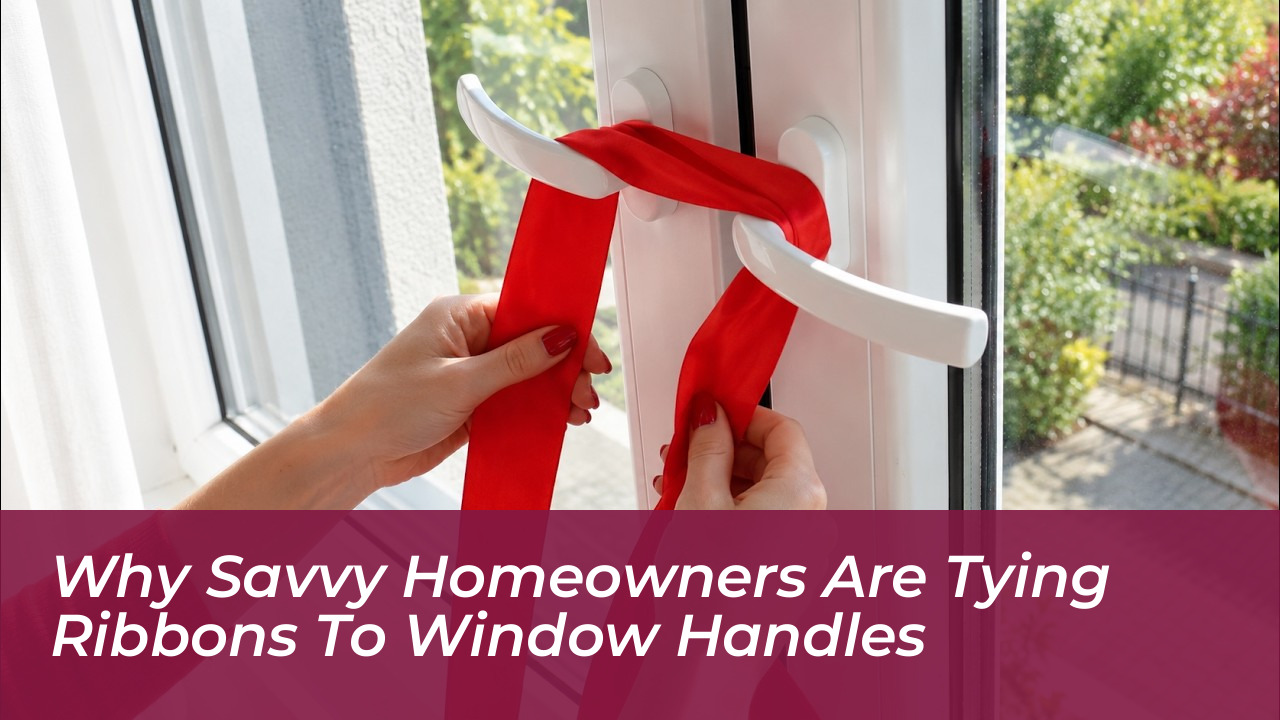

Wrapping a decorative ribbon around an upright window handle creates an immovable tension anchor. This allows anyone to tie symmetrical presentation bows in seconds without needing a second pair of hands. The sturdy metal fitting provides the exact counter-resistance required to knot satin or grosgrain tightly, resolving a common wrapping frustration. Yet the humble casement fitting is only the starting point for smart domestic adaptations.
Across the United Kingdom, where fluctuating weather, draughty glazing, and escalating energy bills present constant challenges, windows can double as powerful thermal regulators and practical workhorses using basic pantry supplies. From lowering seasonal heating waste to lifting stubborn discolouration off aged uPVC, simple domestic adaptations yield remarkable results without professional intervention.
The Physics Behind the Ribbon Anchor
Anyone who has attempted to package a present knows the primary obstacle: slack. Without sustained pressure at the central crossover point, traditional ribbon unspools before the final knot can be secured. By looping your ribbon around a fixed window handle, the fitting absorbs the lateral pull.
This leaves both hands free to weave precise loops, fold neat swallowtail ends, and pull the centre tight. It transforms an awkward chore into a streamlined, thirty-second task. This clever repurposing highlights a broader principle that cost-conscious households are embracing: making existing domestic fixtures work harder.
Slashing Thermal Loss with Simple Household Barriers
Domestic heat escapes rapidly through poorly insulated panes, placing heavy demands on central heating systems during bitter winters. While modern double glazing performs admirably, older units and rental properties frequently bleed warmth through thermal bridging. Budget-friendly materials provide an unexpected defence against seasonal draughts and conductive heat loss.
- Bubble wrap glazing: Lightly misting clean window glass with water from a spray bottle creates enough surface tension to hold ordinary bubble wrap firmly in place without adhesives. The trapped pockets of air create a secondary insulating barrier, cutting conductive chill across vulnerable panes.
- Thermal foil shields: Lightweight emergency space blankets, cut to size and secured across frames, act as radiant barriers. During deep winter snaps, the reflective side directed inward bounces radiant indoor heat back into living spaces rather than allowing it to escape outdoors.
- Aluminium backing for radiators: Positioning reflective kitchen foil or thermal sheets directly beneath window sills behind radiators prevents rising warmth from being absorbed into external masonry walls.
Tackling Yellowed uPVC and Streaky Panes
While thermal management protects household budgets, glass and frame maintenance directly affects indoor natural light. Over time, ultraviolet exposure and airborne grime cause white uPVC frames to take on a dingy, yellowish patina that off-the-shelf detergents rarely shift. Harsh abrasive scourers permanently score plastic frames, creating microscopic grooves where grime gathers faster.
A balanced, non-destructive alkaline paste offers a safer restoration method. Combining baking soda with a small amount of fresh lemon juice produces a mild mixture that lifts oxidation naturally. Working the paste over yellowed frames with a soft cotton pad dissolves surface stains without degrading the plastic finish.
For the panes themselves, commercial glass cleaners frequently leave behind a foggy silicone residue. Switching to a traditional solution of white distilled vinegar and warm water, wiped clean with dedicated microfibre cloths, eliminates streaking completely and leaves glass spotless under direct sunlight.
Natural Evaporative Cooling for Stifling Summer Spells
When summer heatwaves hit homes, windows often turn rooms into uncomfortable greenhouse traps. Reversing seasonal window tactics provides immediate relief without the expense of running portable air conditioning units.
Securing a damp cotton bed sheet or large towel across an open window frame using heavy-duty binder clips activates natural evaporative cooling. As incoming summer breezes filter through the moist fabric, water evaporates, absorbing thermal energy and lowering ambient indoor temperatures. Pairing this technique with external-facing reflective thermal blankets blocks punishing solar gain before it penetrates the glass, shielding bedrooms throughout the warmest hours of the day.
Minor adjustments to everyday fixtures can deliver significant dividends in household comfort, energy efficiency, and convenience. Taking time to assess your windows proves that expensive upgrades are not always required to achieve great results.
Have you tested any of these simple window adaptations in your own home? Share your results and favourite household shortcuts in the comments below.