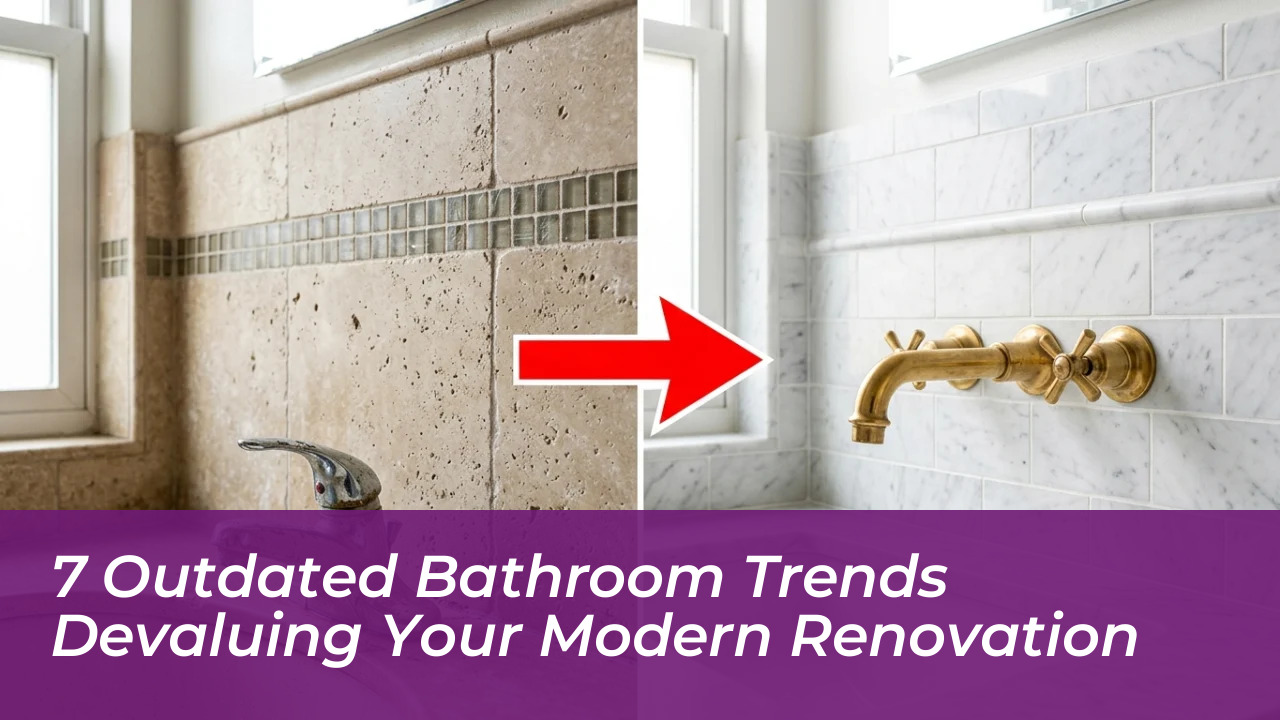

When pouring thousands of dollars into a home renovation, the last thing any property owner expects is for the space to instantly feel dated. Yet, relying on short-lived micro-trends or overly complex installations can devalue high-traffic rooms faster than almost any other remodeling mistake. Experienced interior architects and designers caution that the line between enduring luxury and an aesthetic trapped in the previous decade frequently comes down to material authenticity and structural simplicity.
To ensure a high-end washroom withstands changing tastes, leading designers have identified seven specific choices that routinely undermine modern layouts, along with the timeless alternatives that should replace them.
1. Faux Metal Hardware and Cheap Finishes
Cheap finishes on cabinet pulls and faucets undermine an otherwise solid layout. Alexis Warren, founder of Alexis Warren Designs in Charlotte, North Carolina, stresses that any bathroom hardware not crafted from real metal should be eliminated. Selecting authentic unlacquered brass or polished nickel ensures fixtures acquire a natural patina over time rather than peeling or showing premature wear.
2. Travertine and Cold Porcelain Flooring
Flooring selections demand equal care. Travertine tile, widely installed during past remodeling cycles, frequently reads as dated in contemporary settings. Designers recommend opting for marble, limestone, quartzite, or classic penny tile instead.
“I love incorporating natural stone into a bathroom,” Warren notes. “It brings depth, texture, and character, and it truly never goes out of style.” Conversely, stark, cool-toned porcelain tiles that lack texture create a clinical, uninviting environment.
3. Hyper-Coordinated “Matchy-Matchy” Suites
A persistent misconception is that a cohesive bathroom requires every accessory, faucet, and mirror to match in an identical store-bought suite. MK Smith Boykin, co-founder of Charlotte-based Smith Interiors, advises against hyper-coordinated aesthetics. Instead of identical collections, spaces gain enduring character through layered curation founded on quality stone, classic plumbing fixtures, and varied hardware finishes.
4. High-Tech Showers and Multi-Component Complexity
Elaborate shower systems frequently introduce structural liability behind freshly installed tile. Michael Winn, founder of McLean, Virginia-based WINN Design + Build, points out that multi-component layouts involving body sprays, rain heads, and proprietary digital interfaces significantly amplify failure points.
“Body sprays, a rain head plus a handheld, and a digital control panel each add another valve or wire inside the wall, and the parts are often proprietary. When the manufacturer discontinues a cartridge 10 years from now, you end up opening tile to fix a drip.” – Michael Winn, WINN Design + Build
Similarly, oversized showers can feel vast and cold, whereas smaller, thoughtfully designed footprints maximize cozy luxury and leave room for statement bathtubs.
5. Decorative Accent Tile Bands and Bold Geometrics
Horizontal ribbons of glass mosaic or contrasting accent tile create an equally frustrating trap. Because these strips sit directly in the surrounding field, they cannot be updated without demolishing the surrounding waterproofed installation. Shannon Kadwell, kitchen and bath director at Anthony Wilder Design/Build in Maryland, adds that bold geometric tile prints and aggressive graphics anchor rooms to narrow micro-trends and spark rapid visual fatigue.
6. High-Contrast Grout Grids
Grout contrast represents another quiet visual hazard. Dark grout paired with bright tile constructs a busy grid effect that dominates the room’s energy and traps dirt. Matching the grout color closely to the tile surface creates a unified plane, making modest bathrooms feel dramatically larger and significantly calmer.
7. Exposed Open Shelving and Flat-Front Cabinetry
While exposed floating shelves remain a popular social media trope, they introduce routine maintenance headaches into moisture-prone rooms by inviting dust accumulation and visible clutter. Replacing exposed display cubbies with concealed cabinetry, tailored vanity drawers, reeded fronts, or mirrored medicine chests protects essentials while preserving visual order.
Designer-Approved Alternatives Summary
- Faux Metal Hardware: Unlacquered brass or polished nickel
- Travertine Floor Tile: Marble, limestone, or classic penny tile
- Accent Tile Strips: Continuous, seamless tile layouts
- Digital Shower Controls: Classic, repairable mechanical valves
- High-Contrast Grout: Tonal grout matched closely to tile color
- Open Shelving: Concealed storage, tailored drawers, and medicine cabinets
- Flat-Front Vanities: Reeded profiles, inset cabinetry, or furniture-style legs
Evaluating long-term repairability and material authenticity before sealing plumbing behind custom walls prevents expensive teardowns later. Focusing on raw metals, understated natural stone, and thoughtful spatial curation ensures a renovation outlasts fast-moving aesthetic cycles.