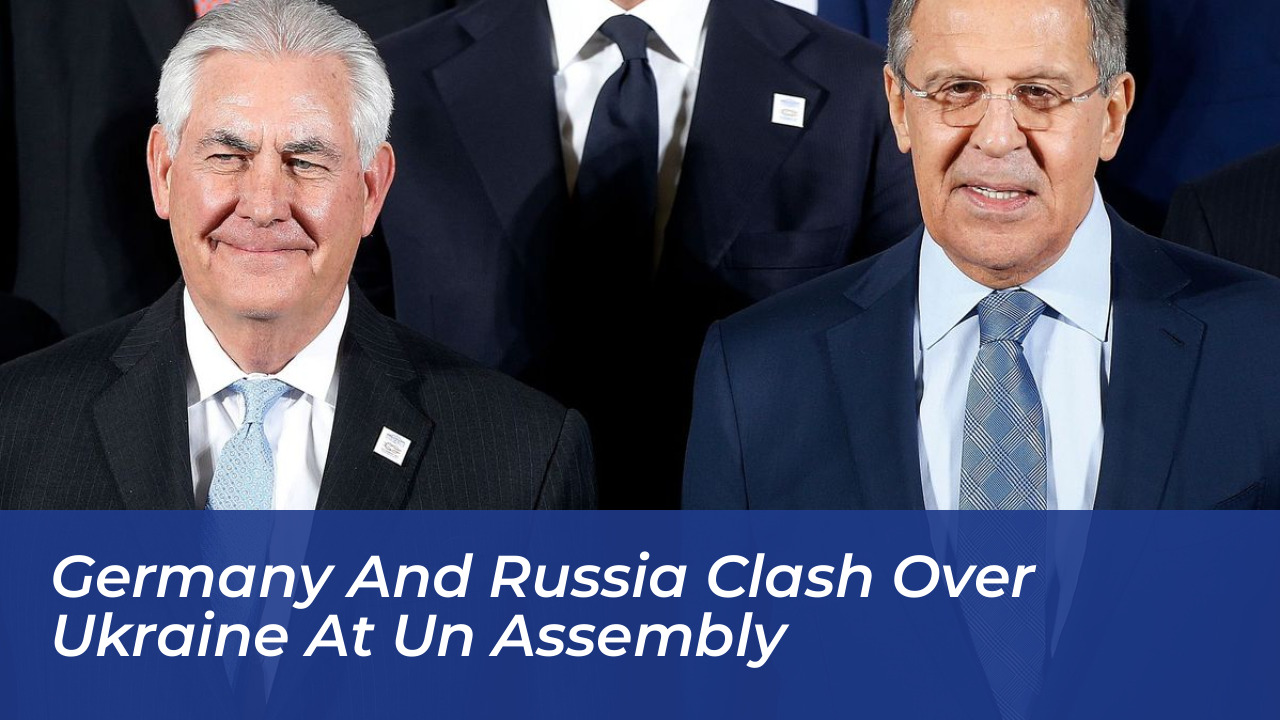
The 81st session of the United Nations General Assembly in New York witnessed a rare and tense diplomatic confrontation as German Foreign Minister Johann Wadephul sat down with his Russian counterpart, Sergey Lavrov. This high-stakes encounter marked the first direct face-to-face interaction between senior officials from Berlin and Moscow since the full-scale invasion of Ukraine began in 2022. Rather than yielding a breakthrough, the closed-door discussions exposed a total breakdown in diplomatic communication, highlighting unbridgeable differences over sovereignty, security architectures, and the terms of any future peace.
- Background to the New York Clash
- Deterioration of Bilateral Ties
- Setting the Stage at the UN General Assembly
- Fundamental Disagreements on Peace and Sovereignty
- Deadlocked Negotiations
- Competing Definitions of Peace
- The Historical Context of European Security
- An Existential Threat to Post-War Architecture
- Legal and Moral Obligations
- Civilian Casualties and Accountability
- The Human Toll of the Conflict
- War Crimes and Non-Negotiable Accountability
- The Debate Over Unconditional Ceasefires
- Dueling Perspectives on Hitherto Hostilities
- Tactical Maneuvering Versus Genuine Peace
- Germany’s Long-Term Commitment to Kyiv
- Military and Financial Backing
- The Three-Pillar Peace Strategy
- Global Repercussions of the UN Clash
- Paralysis in Multilateral Diplomacy
- Outlook for a Negotiated Settlement
- Frequently Asked Questions
- Why did the German and Russian foreign ministers meet at the UN?
- What were the main outcomes of the Wadephul-Lavrov meeting?
- What is Germany’s stance on peace negotiations?
- Why did Germany close Russian consulates prior to the UN assembly?
Background to the New York Clash
Deterioration of Bilateral Ties
Bilateral relations deteriorated sharply prior to this summit amid mounting security threats across Europe. Berlin ordered the expulsion of several diplomatic staff and the closure of multiple Russian consulates across Germany. This dramatic escalation followed credible intelligence findings revealing a foiled Russian sabotage operation involving a drone attack targeting Leipzig airport. The discovery shattered remaining diplomatic norms and pushed the two nations to the brink of complete severance in formal ties.
The accumulation of hostile intelligence reports forced the German government to reassess its domestic security posture. Critical infrastructure protection became a primary focus for federal agencies guarding against covert disruptions. Against this backdrop of severe geopolitical friction, the diplomatic environment in Berlin turned strictly adversarial.
Setting the Stage at the UN General Assembly
Despite the hostile climate, German Foreign Minister Johann Wadephul entered the New York discussions hoping to establish a diplomatic off-ramp. International pressure mounted for major powers to find a path toward humanitarian relief and conflict stabilization. However, the German delegation encountered immediate resistance and uncompromising hardline positioning from Russian representatives upon entering the room.
The atmosphere inside the meeting room reflected the profound distrust generated by years of continuous warfare. Russian diplomats maintained a rigid stance, showing no inclination to moderate their geopolitical demands. This opening posture immediately signaled that the diplomatic engagement would fail to bridge the existing gulf between the two nations.
Fundamental Disagreements on Peace and Sovereignty
Deadlocked Negotiations
Following the intense closed-door session, German leadership confirmed that both nations remained diametrically opposed on every vital issue. The German foreign envoy presented constructive proposals focusing on immediate de-escalation and humanitarian stabilization inside Ukraine. Moscow summarily rejected these overtures, demonstrating zero willingness to alter its underlying military objectives or engage in genuine compromise.
The gap between the negotiating parties proved insurmountable because their fundamental aims directly contradict one another. Berlin operates from a framework of international law and sovereign equality. Moscow operates from a framework of territorial conquest and sphere-of-influence dominance.
Competing Definitions of Peace
Berlin demands absolute adherence to the territorial integrity of Ukraine pursuant to the United Nations Charter. German officials argue that lasting security is impossible if borders can be rewritten through armed force. Conversely, Moscow conditions any future talks on substantial territorial concessions and the complete cessation of Western military aid to Kyiv.
These competing definitions make mediation nearly impossible for international observers. One side seeks the restoration of international law, while the other demands the formal surrender of sovereign territory as a baseline for discussion.
The Historical Context of European Security
An Existential Threat to Post-War Architecture
Germany frames the ongoing conflict not as a localized border dispute, but as an existential threat to the rules-based international order established after World War II. Eighty years after the founding of the United Nations, Berlin argues that permitting military aggression and sham referenda to redraw international borders sets a catastrophic global precedent.
Allowing sovereign nations to be dismembered by stronger neighbors invites global instability. Every government watching the conflict understands that the erosion of European security standards threatens international stability across every continent.
Legal and Moral Obligations
International law strictly prohibits the acquisition of land through military force. When sovereign nations face unprovoked invasions, the global community bears a legal and moral obligation to uphold defensive protocols under Article 51 of the UN Charter. Ignoring these legal boundaries dismantles the global deterrence framework designed to prevent widespread warfare.
German policymakers emphasize that upholding these legal principles is non-negotiable. Compromising on fundamental legality encourages future aggressors to test the boundaries of international law elsewhere.
Civilian Casualties and Accountability
The Human Toll of the Conflict
The human cost of the war remains a primary driver of Western opposition to Russian military actions. UN monitors document over 13,000 civilian deaths resulting from sustained aerial bombardment, artillery shellings, and ground offensives targeting dense population centers. Continuous attacks on residential districts and civilian infrastructure violate international humanitarian law on a daily basis.
Millions of displaced citizens continue to suffer the psychological and physical trauma of sustained displacement. The systematic destruction of hospitals, schools, and housing units demonstrates a calculated strategy to break the civilian will to resist.
War Crimes and Non-Negotiable Accountability
International investigators highlight severe war crimes committed in occupied territories, including the forced deportation of Ukrainian children and the mistreatment of prisoners of war. Germany’s official stance maintains that accountability for these war crimes is a mandatory prerequisite for any eventual normalization of diplomatic relations.
Impunity for mass atrocities undermines the foundations of global justice. Western allies agree that lifting sanctions or restoring normal ties without war crimes tribunals would reward illegal violence.
The Debate Over Unconditional Ceasefires
Dueling Perspectives on Hitherto Hostilities
German and Ukrainian leadership strongly back an immediate, unconditional ceasefire to stop civilian destruction and stabilize the region. Kyiv has repeatedly endorsed this approach to halt the devastation of its infrastructure. However, this desire for peace encounters constant military obstruction from Moscow.
Russian tactical deployment of diplomatic messaging constantly clashes with reality on the ground. Continuous drone and missile strikes against civilian energy grids reveal the true nature of Russian strategy.
Tactical Maneuvering Versus Genuine Peace
Western intelligence and diplomatic assessments conclude that Moscow uses ceasefire rhetoric for tactical military repositioning rather than actual de-escalation. Every purported peace overture is swiftly followed by intensified missile barrages against population centers.
This duality convinces European observers that current Russian diplomatic overtures lack sincerity. Until military actions align with peaceful rhetoric, Western capitals remain deeply skeptical of any negotiation framework proposed by Moscow.
Germany’s Long-Term Commitment to Kyiv
Military and Financial Backing
Federal Chancellor Friedrich Merz and the German foreign ministry reaffirmed sustained support for Ukraine for as long as necessary. This unwavering backing includes the provision of advanced air defense systems, artillery supplies, and logistical frameworks designed to secure national sovereignty.
German industrial and financial contributions ensure that Ukrainian forces maintain the material resources required for sustained defense. This long-term commitment sends a clear signal to Moscow regarding Western resolve.
The Three-Pillar Peace Strategy
- Primacy of the UN Charter and strict adherence to international legal norms.
- Full Ukrainian ownership of any peace formula, ensuring no negotiations occur behind Kyiv’s back.
- Deterrence against rewarding aggression to protect the global community from future geopolitical land grabs.
Global Repercussions of the UN Clash
Paralysis in Multilateral Diplomacy
The public disagreement in New York highlights the systemic paralysis currently affecting multilateral diplomacy. Traditional security forums struggle to enforce compliance when a permanent member of the UN Security Council engages in direct territorial conquest. This institutional deadlock frustrates member states seeking collective security guarantees.
Developing nations watch these outcomes closely as a crucial precedent for global sovereignty and territorial defense. The inability of the UN to stop the conflict forces regional powers to reassess their own strategic security needs.
Outlook for a Negotiated Settlement
As the war enters its fifth year of major escalation, the prospects for a negotiated settlement remain dim. The New York meeting demonstrates that until fundamental objectives shift, the diplomatic stalemate will persist.
Germany and its European Union allies remain fully committed to isolating Moscow economically while reinforcing Ukrainian defensive capabilities. The diplomatic freeze at the United Nations indicates that the conflict will likely be decided by endurance and battlefield realities rather than diplomatic compromise.
Frequently Asked Questions
Why did the German and Russian foreign ministers meet at the UN?
Johann Wadephul and Sergey Lavrov met on the sidelines of the 81st UN General Assembly to test the possibility of de-escalating the war in Ukraine, marking the first direct high-level diplomatic meeting between Berlin and Moscow since the 2022 invasion.
What were the main outcomes of the Wadephul-Lavrov meeting?
The meeting produced zero agreements, with both sides experiencing fundamental disagreements on ceasefire conditions and the path to peace in Ukraine.
What is Germany’s stance on peace negotiations?
Berlin advocates for an immediate, unconditional ceasefire followed by negotiations led entirely by Ukraine, ensuring no illegally seized territory is retained by the aggressor and that the UN Charter remains respected.
Why did Germany close Russian consulates prior to the UN assembly?
Berlin ordered consulate closures following intelligence discoveries that Russian operatives planned a sabotage operation involving a drone attack targeting Leipzig airport.