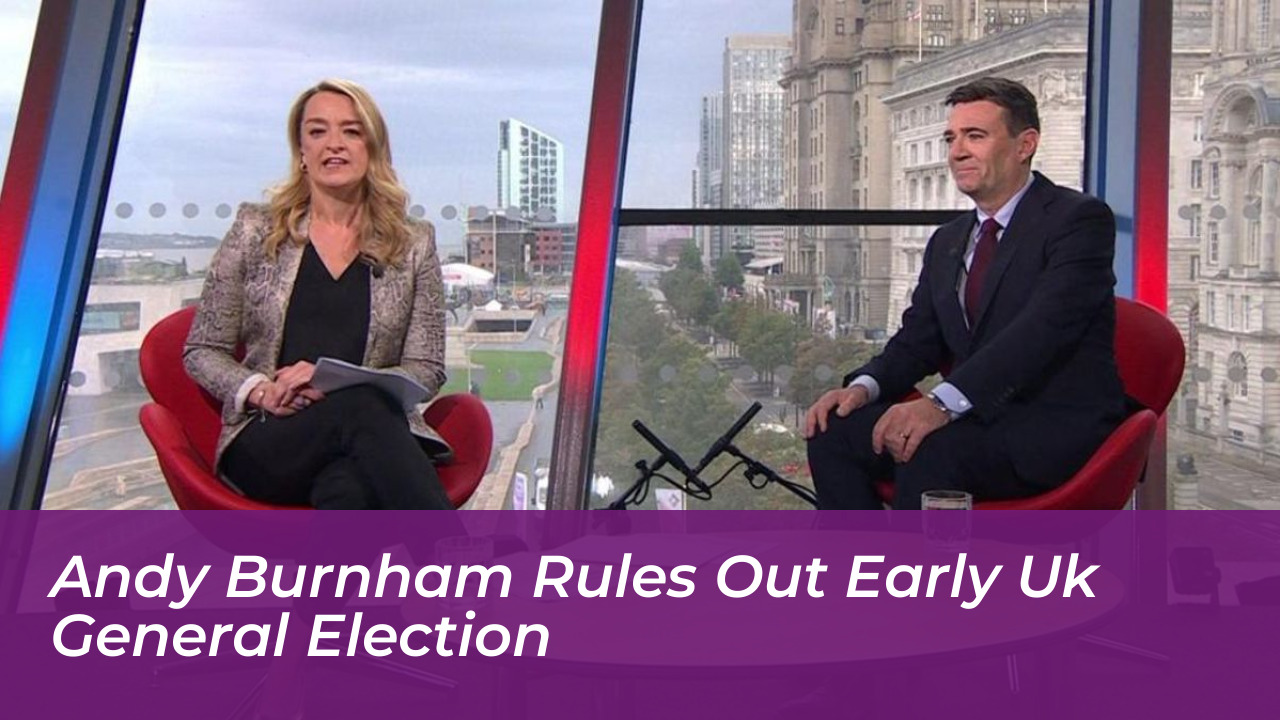
Prime Minister Andy Burnham has officially put an end to weeks of mounting speculation by formally ruling out an early general election. Speaking ahead of the Labour Party annual conference in Liverpool, the Prime Minister made it clear that his administration will prioritize long-term domestic policy delivery and economic stabilization over tactical electoral maneuvering, with the next national vote officially scheduled for 2029.
- Prime Minister Andy Burnham Refuses Early General Election Speculation
- The Political Landscape Behind the Decision
- Polling Dynamics and Parliamentary Risk
- Addressing Opposition Pressure and Voter Mandate Debates
- Economic Priorities and the October 28 Budget Focus
- Treasury Restructuring and Key Advisers
- Structural Reforms and Long-Term Governance
- Public Reception and Local Government Impacts
- International Relations and Global Trade Strategy
- Frequently Asked Questions
- Why did Prime Minister Andy Burnham rule out an early election?
- When is the next United Kingdom general election scheduled?
- What are the key economic priorities for the upcoming October Budget?
- How are regional authorities responding to the decision?
Prime Minister Andy Burnham Refuses Early General Election Speculation
Speculation regarding a potential snap poll gathered momentum following Labour’s modest recovery in national voting intention surveys since Burnham assumed leadership in July 2026. Political commentators suggested that calling an early election might offer the new Prime Minister an individual mandate. However, Burnham quickly shut down these rumors during a series of regional media interviews, stating that the public expects administrative delivery rather than endless political campaigning.
All of this chatter about an early election can be knocked dead right now, Burnham noted during an interview with ITV Calendar. The British public wants a leader who is new in office to get straight to work on delivering practical solutions, rather than putting self-serving politics ahead of pressing national needs. This firm stance establishes a clear policy baseline before his first Labour conference as party leader, steering attention away from electoral tactics and toward governance.
The Political Landscape Behind the Decision
Andy Burnham stepped into Downing Street during a turbulent political summer following Sir Keir Starmer’s departure. Since taking office, his primary objective has centered on stabilizing party unity and re-engaging core voter bases across Northern England and urban industrial centers. While his succession created an immediate surge in party morale, it also triggered immediate demands from political opponents who argued that a change in the premiership requires a fresh public mandate.
Constitutional realities, however, support Burnham’s decision to stay put. British law does not require an immediate general election simply because a governing party changes its leader. Downing Street intends to utilize its existing parliamentary majority to fulfill statutory responsibilities through the remainder of the five-year term. Governing effectively brings more respect from voters than repeatedly running back to the ballot box.
Polling Dynamics and Parliamentary Risk
Recent national polling figures highlight why Downing Street remains deeply cautious about holding a snap election. While Labour leads its primary political rivals, the margins remain tight, creating significant operational risks under the UK first-past-the-post voting system. BMG Polling data for The i Paper places Labour in the lead at 27 percent, with Reform UK close behind at 23 percent, and the Conservative Party standing at 20 percent.
Additional tracking from YouGov shows Labour baseline voting intention rising to 18 percent from 13 percent in May 2026. Yet, seat-by-seat electoral modeling indicates that a snap vote under current margins risks producing a hung parliament. While the right-of-center vote remains fractured between Reform UK and the Conservatives, Labour faces potential losses in competitive marginal seats, making an early campaign an unnecessary gamble.
Addressing Opposition Pressure and Voter Mandate Debates
Opposition leaders continue to press aggressively for an immediate public vote. Nigel Farage and Reform UK have demanded an immediate public mandate for Burnham’s administration, arguing that voters cast ballots in 2024 for a platform led by Keir Starmer rather than Burnham updated legislative program. Public sentiment remains divided on this issue, with a Survation poll revealing that 51 percent of respondents favor holding a new general election following the prime ministerial transition.
Burnham remains unfazed by these pressure tactics, maintaining that parliamentary democracies award mandates to governing parties rather than individual leaders. By prioritizing administrative stability, the government aims to prove its capability through legislative achievements rather than seeking validation at the polls.
Economic Priorities and the October 28 Budget Focus
Economic governance represents the absolute central pillar of Burnham’s argument against an early election. Downing Street is directing all executive resources toward the upcoming Autumn Budget, scheduled for presentation on October 28, 2026. Household finances across the United Kingdom face persistent pressure from high inflation rates and escalating utility costs as winter approaches.
Cost-of-living mitigation stands as the absolute top priority for Downing Street. Government planners are actively preparing for targeted household electricity tax reductions to cushion families against winter demand spikes. Entering an intense election campaign cycle would halt this critical economic relief legislation, a risk Burnham refuses to take.
Treasury Restructuring and Key Advisers
To prepare the Treasury for the upcoming fiscal announcement, Chancellor John Healey restructured his senior advisory team. Healey appointed Ravinder Athwal, a Cambridge-educated economist who previously authored Labour 2024 policy manifesto, as his senior special adviser. This appointment signals a concerted push to translate fiscal goals into actionable tax and spending plans.
Structural Reforms and Long-Term Governance
Beyond fiscal policy, Burnham administration is pressing forward with major structural reforms designed to reshape public infrastructure. Plans include establishing public control of regional water networks to replace thirty years of private sector oversight. This move aims to end speculative corporate dividend payouts and increase state infrastructure reliability across the country.
At the same time, Downing Street continues to address pressing border security challenges and ongoing small boat crossings across the English Channel. By focusing on these concrete policy areas, Burnham aims to build a durable record of achievement that will speak for itself when the next general election arrives in 2029.
Public Reception and Local Government Impacts
Regional mayors and municipal leaders have largely welcomed the Prime Minister decision to focus strictly on legislative work. Regional authorities need consistent financial backing from Westminster to complete urban transport upgrades. Avoiding an election distractions ensures that local funding streams remain uninterrupted over the coming months.
Local councils across the midlands and northern England anticipate direct engagement with cabinet ministers regarding housing investments. Sustained administrative focus allows municipal bodies to plan multi-year infrastructure developments without political interference. This cooperative governance model strengthens local delivery networks.
International Relations and Global Trade Strategy
Foreign policy objectives also require steady leadership without the disruption of a sudden national ballot. Downing Street aims to finalize key bilateral trade agreements with European partners throughout late 2026. Maintaining a consistent negotiating team prevents friction with international allies and safeguards British economic interests.
Global markets respond positively to political stability within the United Kingdom. Currency valuations and investor confidence remain steady as international stakeholders recognize the government long-term operational commitment. Stability reassures foreign investors seeking reliable regulatory environments.
Frequently Asked Questions
Why did Prime Minister Andy Burnham rule out an early election?
Andy Burnham ruled out an early election to focus entirely on domestic policy delivery, economic relief, and long-term governance rather than engaging in tactical electoral games.
When is the next United Kingdom general election scheduled?
The next United Kingdom general election is scheduled to take place as planned in 2029, as British law does not mandate a fresh vote upon a change in party leadership.
What are the key economic priorities for the upcoming October Budget?
The primary economic focus centers on tackling inflation, reducing household utility costs, and implementing targeted electricity tax reductions ahead of the winter season.
How are regional authorities responding to the decision?
Regional leaders and mayors support the choice to prioritize legislative delivery, ensuring that vital local infrastructure and housing funding remains fully secure.