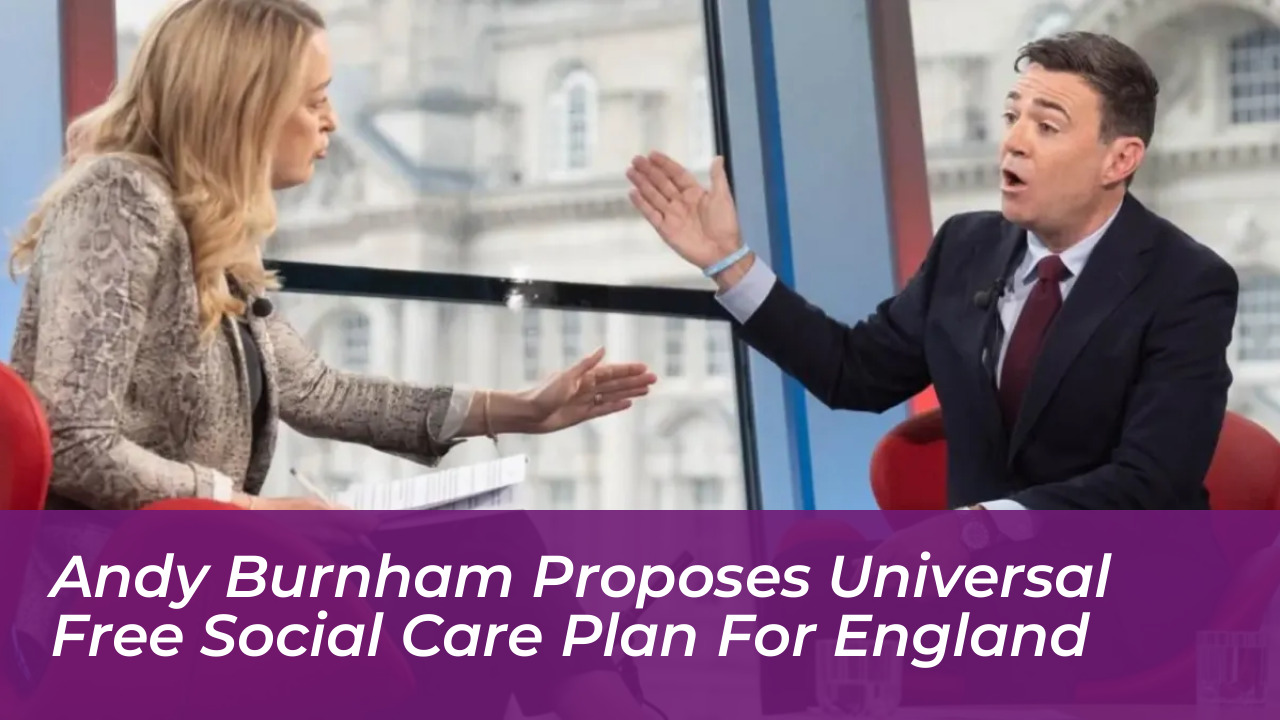
Greater Manchester Mayor Andy Burnham has announced plans to establish a universal, free-at-the-point-of-use social care system across England. Speaking on the BBC’s Sunday with Laura Kuenssberg as the Labour Party conference opened in Liverpool, Burnham confirmed that these NHS-style proposals will form a core part of Labour’s next general election manifesto.
The overhaul targets England’s current adult social care network, where state help for home assistance and daily tasks is restricted to individuals with savings below £23,250. This creates a disparity with systems already operating in Scotland and Wales. Burnham criticized the current framework as severely inequitable for vulnerable families, comparing its impact to the American healthcare model.
“I’m going to rip the plaster off, if I can put it that way, because someone has to do it,” Burnham stated, addressing the political hurdles and potential public backlash surrounding large-scale public finance reforms. He maintained that true leadership requires taking decisive action despite potential controversy.
Key Elements of the Proposed Reform
- Universal Coverage: Designed so that “everyone contributes, everyone is covered,” mirroring foundational NHS principles.
- Timeline: Implementation will wait until after the 2029 general election to ensure proper planning and public testing via the party manifesto.
- Independent Review: Whitehall troubleshooter Baroness Casey has been asked to accelerate her social care review to help determine the best operational structure.
- Cross-Party Consensus: The government aims to initiate cross-party talks to avoid traditional political point-scoring and build lasting agreement.
Burnham noted that the personal experience of watching his late father, Roy-who had Alzheimer’s and passed away earlier in the month-heavily influenced his determination to tackle the issue. He praised the dedication of care workers, emphasizing that their vital contributions often go unnoticed by the political class.
While opposition figures have raised concerns regarding potential tax increases to fund the initiative, Burnham rejected estimates suggesting an annual cost of £18bn, calling that figure too high. He stressed that any changes will be developed carefully without imposing undue strain on public finances, with further details expected during his conference address.