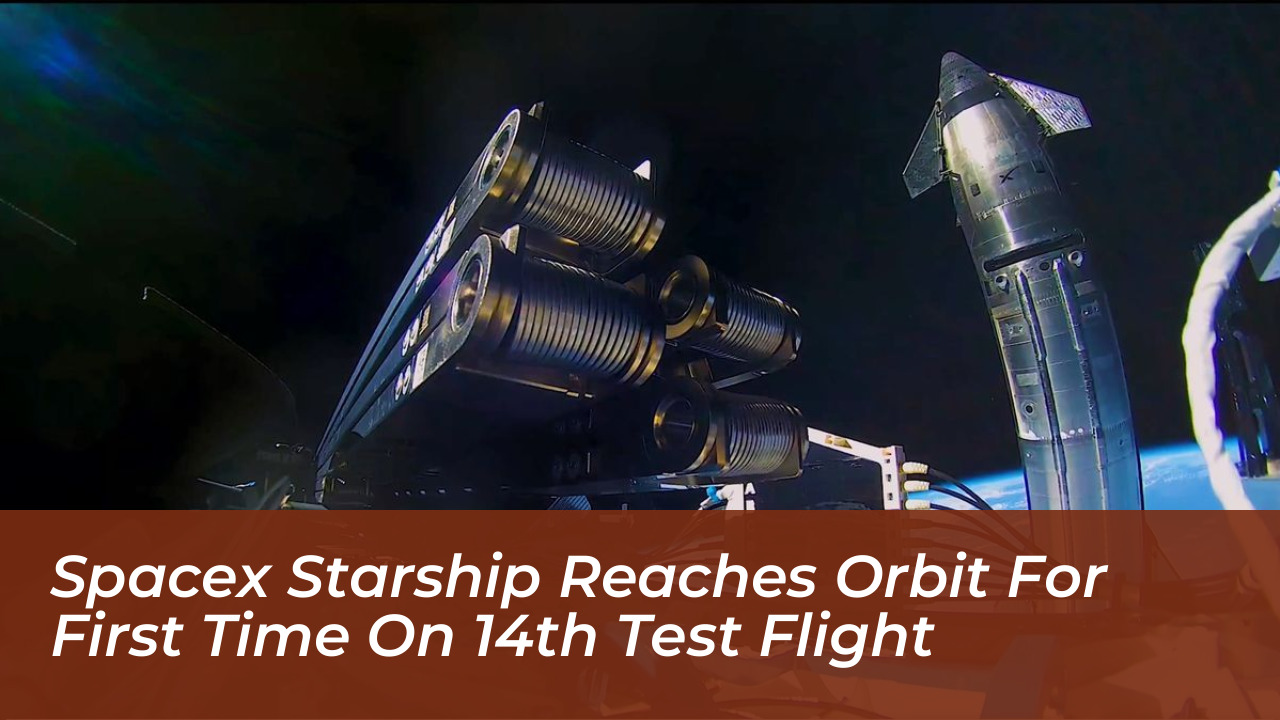
SpaceX achieved a historic milestone on September 28, 2026, as its Starship rocket successfully reached Earth orbit for the first time. The uncrewed spacecraft launched from the company’s Starbase facility in South Texas at 7:48 a.m. local time, marking the 14th full-scale test flight of the massive launch system.
Overcoming Technical Challenges
The mission encountered uncertainty when one of the spacecraft’s Raptor engines shut down during ascent. Although mission control initially questioned if orbit remained possible, engineers analyzed flight data and determined the vehicle could proceed. Roughly 26 minutes after liftoff, the rocket successfully reached orbital velocity.
Deployment of Starlink V3 Satellites
Once in orbit, Starship deployed 26 next-generation Starlink V3 satellites. These units provide significantly higher capacity than previous versions. SpaceX officials noted that a single Starship launch of V3 satellites delivers the same network capacity as approximately 20 flights of the smaller V2 mini satellites launched via the Falcon 9 rocket.
Early Mission Conclusion
The original flight plan intended for the spacecraft to remain in orbit for nine hours to complete six laps around the Earth. However, mission controllers concluded the flight early. The upper stage performed a controlled re-entry and splashdown in the Pacific Ocean three hours after launch. SpaceX stated this decision ensured vehicle safety and prioritized data collection from the successful orbital insertion.
Strategic Importance for SpaceX
The success of Flight 14 is a critical step in SpaceX’s roadmap, which includes:
- NASA Artemis Missions: Validating the rocket for future lunar landings and docking exercises.
- Full Reusability: Refining the technology to return the Super Heavy booster and the Starship upper stage to the launch pad.
- Scaling Starlink: Using Starship’s massive payload capacity to expand global internet coverage rapidly.
- Commercial Expansion: Transitioning Starship from a developmental test vehicle to a workhorse for regular commercial and scientific missions.
Future Outlook
Following this orbital debut, SpaceX will focus on perfecting spacecraft recovery. Elon Musk has discussed plans to catch returning hardware using mechanical arms at the launch site. With the company now valued at approximately $2 trillion following its June initial public offering, pressure to maintain momentum remains high as SpaceX prepares for upcoming NASA Artemis III and IV mission requirements.