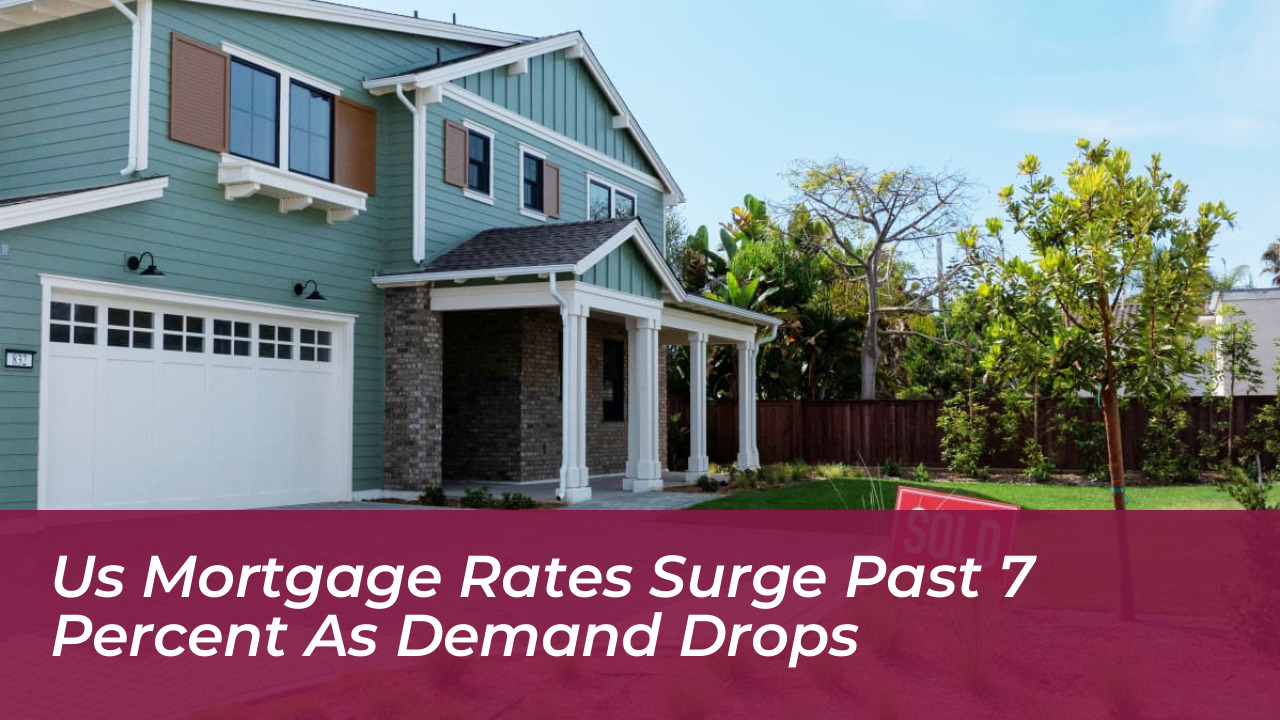
United States mortgage rates have crossed the critical seven percent threshold, reaching levels not seen since January 2025. Data from the Mortgage Bankers Association and Freddie Mac confirms that the average contract interest rate for a 30-year fixed-rate mortgage has climbed to 7.12 percent. This sudden jump brings immediate challenges for both buyers and sellers across the country, transforming the dynamics of the residential real estate market.
- Anatomy of the Seven Percent Mortgage Rate Surge
- Understanding the New Benchmark Levels
- The Direct Link to Treasury Yields
- Macroeconomic Catalysts Driving Borrowing Costs Up
- Federal Reserve Policy Shifts and Inflation Realities
- Energy Markets and Geopolitical Pressure Points
- Immediate Impact on the United States Housing Market
- The Plunge in Purchase and Refinance Demand
- The Psychological Barrier of Seven Percent
- Dilemmas Facing Homebuyers and Sellers
- Challenges for Prospective Homebuyers
- Strategic Choices for Home Sellers
- Actionable Strategies for Navigating High Mortgage Rates
- Optimizing Personal Financial Profiles
- Leveraging Market Tactics and Lender Shopping
- Future Outlook for the Housing Sector
- Key Indicators to Monitor
- Frequently Asked Questions
- Why did mortgage rates cross seven percent?
- How does a seven percent rate affect home buyers?
- Are home prices expected to drop because of high rates?
Anatomy of the Seven Percent Mortgage Rate Surge
Understanding the New Benchmark Levels
Recent market data confirms that the average contract interest rate for a 30-year fixed-rate mortgage with conforming loan balances of $832,750 or less has hit 7.12 percent. Compared against historical levels observed since January 2025, this spike represents a notable tightening of credit conditions. Borrowers face a stark contraction in their overall purchasing power as every upward tick in the rate eats away at their loan eligibility limits.
This rapid escalation makes homeownership significantly more expensive. Buyers who qualified for a specific loan amount just a few months ago now find themselves priced out of their target neighborhoods. The market is adjusting to a reality where cheap financing is a relic of the past.
The Direct Link to Treasury Yields
Mortgage rates do not operate in a vacuum. They track closely with the yield on the 10-year U.S. Treasury note. Recently, the 10-year Treasury yield surged to 5.11 percent, marking a multi-year high driven by persistent economic inflation and mounting investor anxiety regarding federal debt levels.
When investors demand higher returns to hold government debt, lenders pass those costs directly onto consumers in the form of elevated home loan rates. Bond market volatility remains the primary engine driving these borrowing benchmarks higher week after week.
Macroeconomic Catalysts Driving Borrowing Costs Up
Federal Reserve Policy Shifts and Inflation Realities
The Federal Reserve plays a central role in shaping the broader financial environment. The central bank raised its benchmark interest rate by a quarter percentage point, marking a decisive move to cool an overheating economy. Core inflation remains at 3.4 percent, sitting well above the strict two percent target set by policymakers.
Financial analysts project potential additional monetary tightening before the end of the year if consumer price indexes fail to show sustained downward momentum. This aggressive stance keeps upward pressure on all forms of consumer debt, particularly long-term housing loans.
Energy Markets and Geopolitical Pressure Points
Global commodity markets continue to exert a heavy influence on domestic borrowing costs. Brent crude oil prices are sustaining levels above $100 per barrel, driven by ongoing supply constraints and international geopolitical conflicts. These high energy prices fuel broader inflation expectations across the supply chain.
Energy volatility feeds directly into bond market fluctuations. When fuel and production costs remain stubbornly high, inflation proves sticky, forcing lenders to price in greater economic risk when issuing long-term fixed loans.
Immediate Impact on the United States Housing Market
The Plunge in Purchase and Refinance Demand
The immediate reaction to high borrowing costs is a sharp contraction in market activity. Home loan application volumes dropped by 1.5 percent over the recent tracking week as prospective buyers retreated to the sidelines. Refinance applications declined by three percent, resting at their lowest point since February 2025.
Compared to the same period in the previous year, refinance volume stands down 62 percent. This massive drop effectively eliminates any financial incentive for homeowners to restructure their existing debt, freezing the refinance market entirely.
The Psychological Barrier of Seven Percent
While the shift from 6.9 percent to 7.12 percent represents a modest mathematical change, the seven percent figure carries heavy psychological weight. This barrier triggers deep hesitation among buyers who view seven percent as a line in the sand for affordability.
Consider the mathematical impact on a median-priced home of approximately $429,000. A single percentage point increase in mortgage rates adds hundreds of dollars to monthly payments and tens of thousands of dollars in total interest over the life of the loan. This reality drives the growing trend of prospective buyers pausing their purchasing decisions indefinitely.
Dilemmas Facing Homebuyers and Sellers
Challenges for Prospective Homebuyers
Purchasers face substantial reductions in overall buying power and strict loan eligibility limits. Financial planners advise buyers to build rate volatility into their personal budgets, anticipating swings of up to 50 basis points prior to closing.
Some buyers now shift toward alternative financing structures like adjustable-rate mortgages to lower their initial monthly payments. However, these products carry inherent risks if interest rates remain elevated over the medium term.
Strategic Choices for Home Sellers
Sellers face difficult choices in a cooling market. They must weigh potential price reductions against removing their properties from the market entirely. This standoff contributes to constrained housing inventory across many regional markets.
To bridge the affordability gap, many sellers now utilize seller concessions, offering credits that help buyers offset high borrowing costs or fund temporary interest rate buydowns.
Actionable Strategies for Navigating High Mortgage Rates
Optimizing Personal Financial Profiles
Borrowers cannot control macroeconomic policy, but they can optimize their personal financial profiles to secure the most competitive lender pricing. Targeting credit scores of 740 or higher is essential for accessing the best rates available.
Borrowers should pay down revolving debt aggressively to improve their debt-to-income ratios before submitting a formal loan application. Increasing down payments to 20 percent or more also eliminates private mortgage insurance and reduces the total principal exposed to high interest rates.
Leveraging Market Tactics and Lender Shopping
Shopping around is more critical than ever. Borrowers must compare loan terms, origination fees, and discount points across multiple financial institutions. Small differences in lender fees add up to thousands of dollars over the course of a transaction.
Utilizing temporary interest rate buydowns funded through seller concessions provides another viable path to ease initial payment pressure. Strategic timing of rate locks based on upcoming economic data releases also helps protect buyers from sudden market spikes.
Future Outlook for the Housing Sector
Key Indicators to Monitor
The future trajectory of the housing sector depends on upcoming inflation reports, employment data, and energy supply stability metrics. If global commodity pressures ease, bond yields may retreat, offering some much-needed relief to the housing market.
However, risk factors remain high. Persistent energy pressures and additional monetary tightening by the Federal Reserve could keep borrowing costs elevated near or above the seven percent threshold for the foreseeable future, demanding careful planning from all market participants.
Frequently Asked Questions
Why did mortgage rates cross seven percent?
Mortgage rates increased due to rising 10-year Treasury yields, persistent core inflation, and ongoing Federal Reserve monetary tightening.
How does a seven percent rate affect home buyers?
Higher rates reduce overall purchasing power and increase monthly mortgage payments significantly for median-priced homes.
Are home prices expected to drop because of high rates?
Sellers are currently holding back inventory or offering concessions rather than slashing listing prices drastically.