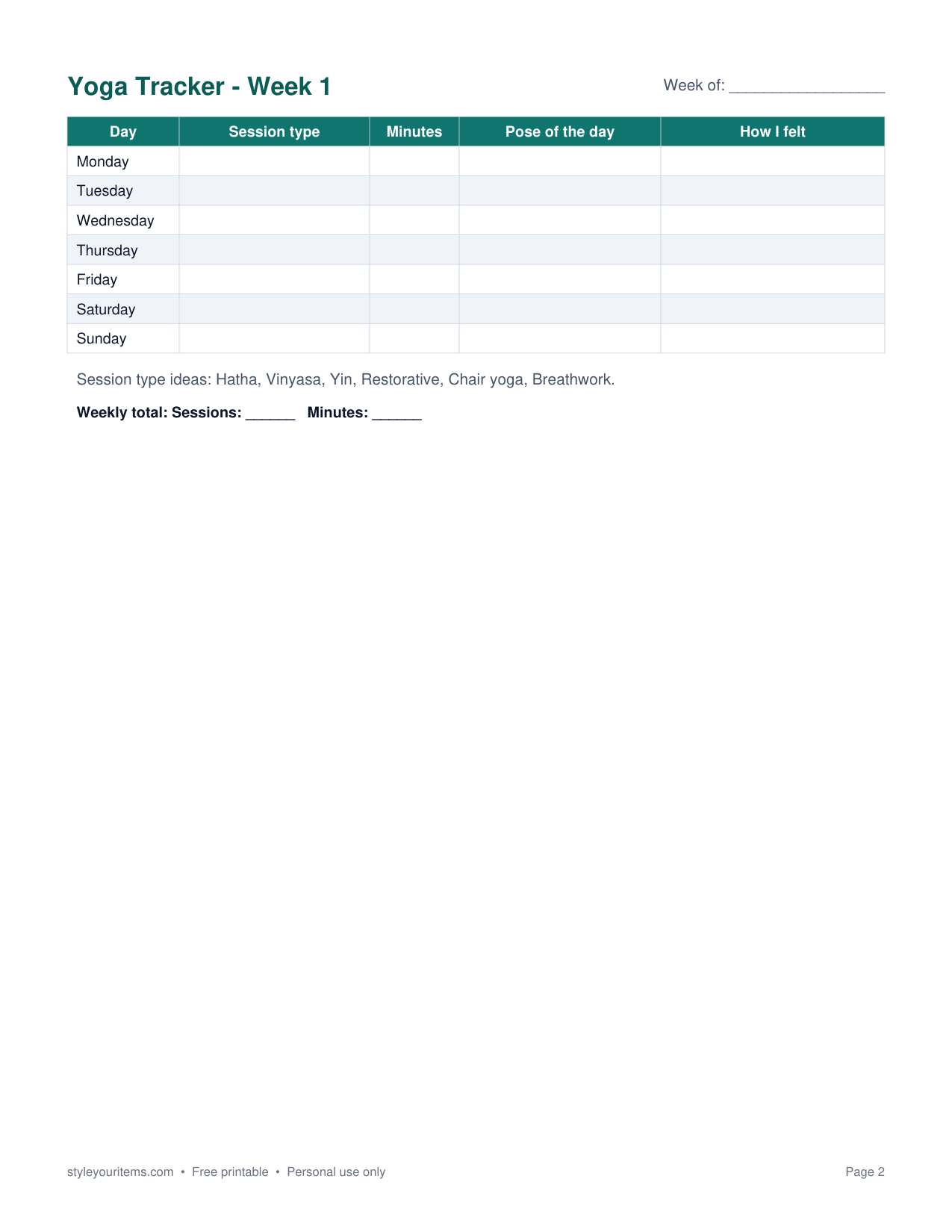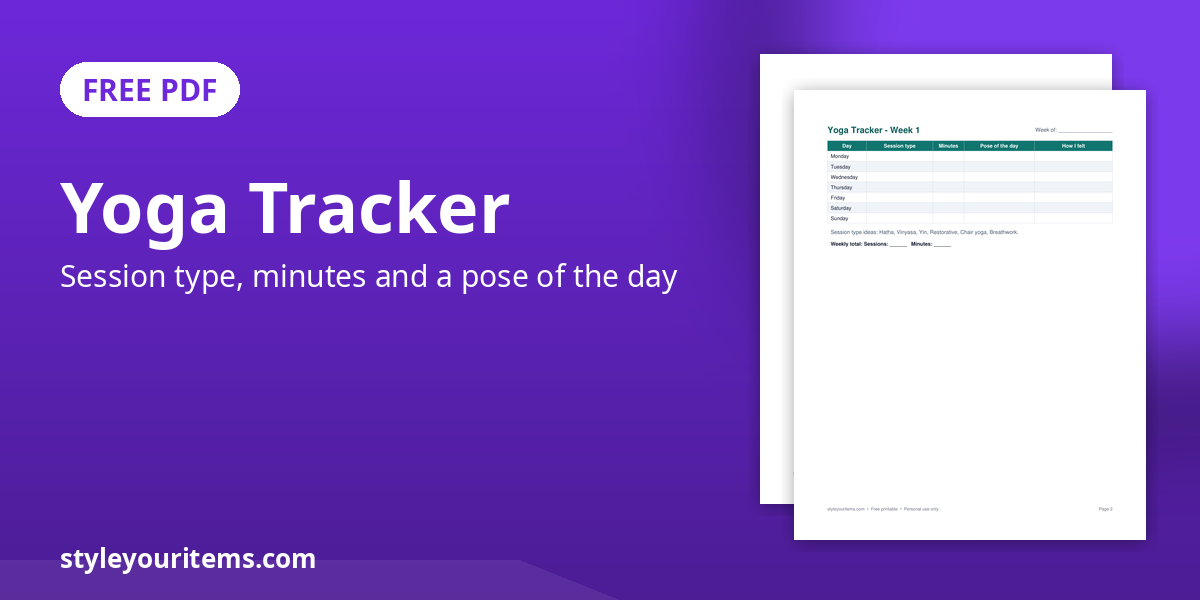
Yoga is easy to start and easy to lose. A few good sessions, then a busy week, then the mat stays rolled up in the corner and nobody can quite say when the habit stopped. The problem is rarely motivation. It is memory. Without a record, every missed week feels like the first one, and every good week is forgotten by the next. This free printable yoga tracker fixes that with a small weekly log: the day, the type of session, how many minutes you practised, a pose of the day, and how you felt afterwards.
The PDF has six pages: a cover, four weekly logs, and a poses-to-try page. Each weekly log has seven rows, one per day, so a single print covers a month of practice. The poses page lists fifteen common poses, from mountain pose to legs up the wall, with a tick box and a date line for each, so you can work through them one at a time instead of doing the same three poses forever. Print a fresh set each month, keep it next to the mat, and fill in a row before you roll the mat up. Thirty seconds, while the feeling is still fresh.
What to write in the session type box
The tracker does not ask for a perfect yoga vocabulary. It asks for enough detail that next month you can see what you actually did. These are the types most people use, and the log has room for all of them.
- Hatha. Slow, held poses, plenty of breathing room. Good for beginners and for tired days. Write “Hatha, 20 min” and you know exactly what happened.
- Vinyasa. Poses linked with breath, moving from one to the next. The one that leaves you warm. If you followed a video, write the video name in the notes so you can find it again.
- Yin. Long, passive holds, mostly on the floor. Three to five minutes per pose. The session type for stiff hips and long days at a desk.
- Restorative. Props, blankets, almost no effort. This is a real session, not a skipped one. Ticking it counts, and the “how I felt” box is where it earns its keep.
- Chair yoga. Seated and supported poses. The right choice when standing balance is hard, when you are recovering, or when the only free time is at your desk. Our workout log is the companion sheet if you also lift weights or run, since this tracker is for yoga only.
- Breathwork. Ten minutes of breathing practice with no poses at all. It still belongs on the log. A month with four breathwork sessions and no asana is still a month of practice.
How to use the tracker for a month
- Pick a realistic number of sessions. Two or three a week beats a grand plan of daily practice that collapses on day four. Write the number at the top of the first weekly page and judge yourself against it, not against someone else’s routine.
- Choose one pose of the day, every session. It can be the pose you found hardest, the one you finally held for a full breath, or the one you want to try next time. The poses page is your list: tick a pose when you try it, date it, and move on. Fifteen poses is a good season of work.
- Fill in “how I felt” in two words. “Calmer”, “less stiff”, “tired but glad”, “frustrated”. Two words are honest and fast, and after a month they show a pattern no fitness app shows: which sessions leave you better than they found you.
- Count minutes, not perfection. A ten-minute session on a busy day counts fully. Write the real number, even if it is small. The weekly total at the bottom of each page is there to add up, and small numbers that add up beat big numbers that never happened.
- Look back before you print the next month. Which session type did you return to? Which pose kept appearing as pose of the day? That is your practice telling you what it wants. The 30-day fitness challenge calendar is a good next step if a month of yoga has you wanting a bigger streak.
- Rest is a row too. Leave a day blank without guilt, but do not leave a week blank without noticing. The blank rows are the tracker’s quiet warning system, and they work best when you see them on paper rather than in your head.
One thing this tracker will not do is teach you yoga. If you are new, learn the poses from a qualified teacher or a reputable beginner course before you practise alone, and stop if anything hurts. Sharp pain is not a stretch. The tracker is for recording a practice you already know how to do safely. You will find it in the Health, Habits and Wellness collection, next to the workout log, the weight tracker and the intermittent fasting tracker.
Frequently asked questions
How many sessions a week should I aim for?
Two or three is a solid start for most people, and it is enough for the tracker to show a pattern. Daily practice is fine if it is already your habit, but do not set a daily target in your first month and then feel you have failed on day five.
Do I need to know all fifteen poses on the list?
No. The list is a menu, not a test. Tick a pose when you try it, leave the rest for later, and add your own poses in the margins if your practice includes others. The weight tracker works the same way: a simple log that gets more useful the longer you keep it.
Can I use this tracker for other exercise too?
It is built for yoga, with a session type box and a pose of the day. For running, swimming or gym work, the workout log is the better sheet, with sets, reps and distances. Keep the two logs side by side if you do both.
What if I miss a whole week?
Leave it blank and start again on the next weekly page. A blank week is information, not failure, and the tracker is undated, so a missed week costs you nothing. The habit survives if the sheet is still next to the mat.