Healthy eating usually fails in the kitchen on a Tuesday night, not at the shops on a Saturday. You come home tired, nothing is ready, and the easiest meal wins. Meal prep fixes that by moving the decisions to Sunday, when you have time and energy. Cook the grains, chop the vegetables, grill the protein, and the whole week becomes assembly instead of cooking from scratch.
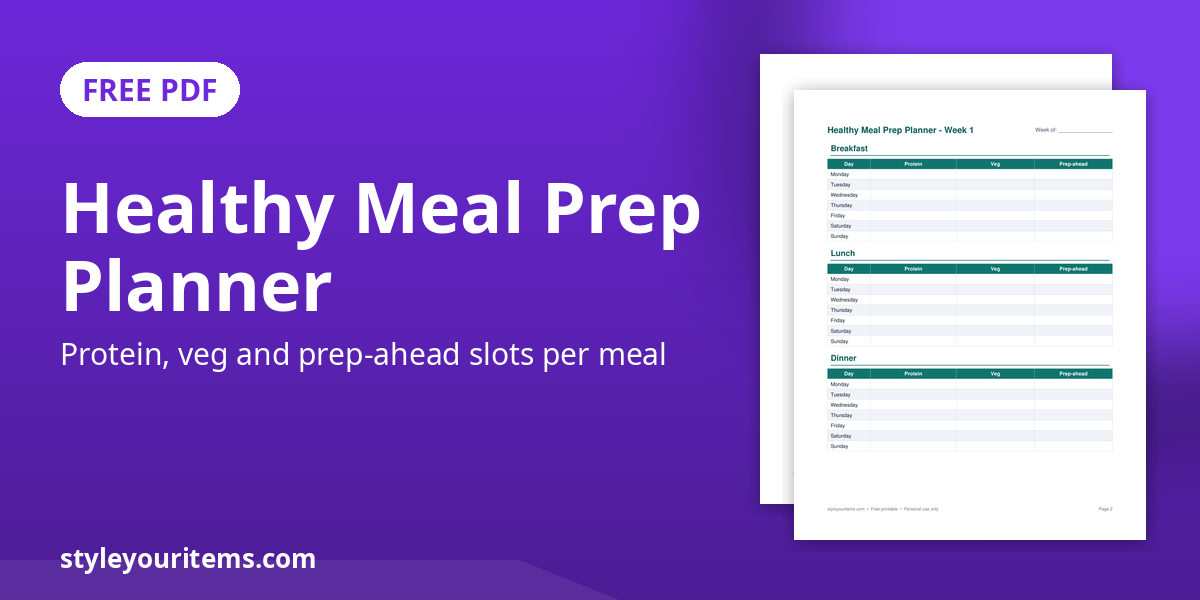
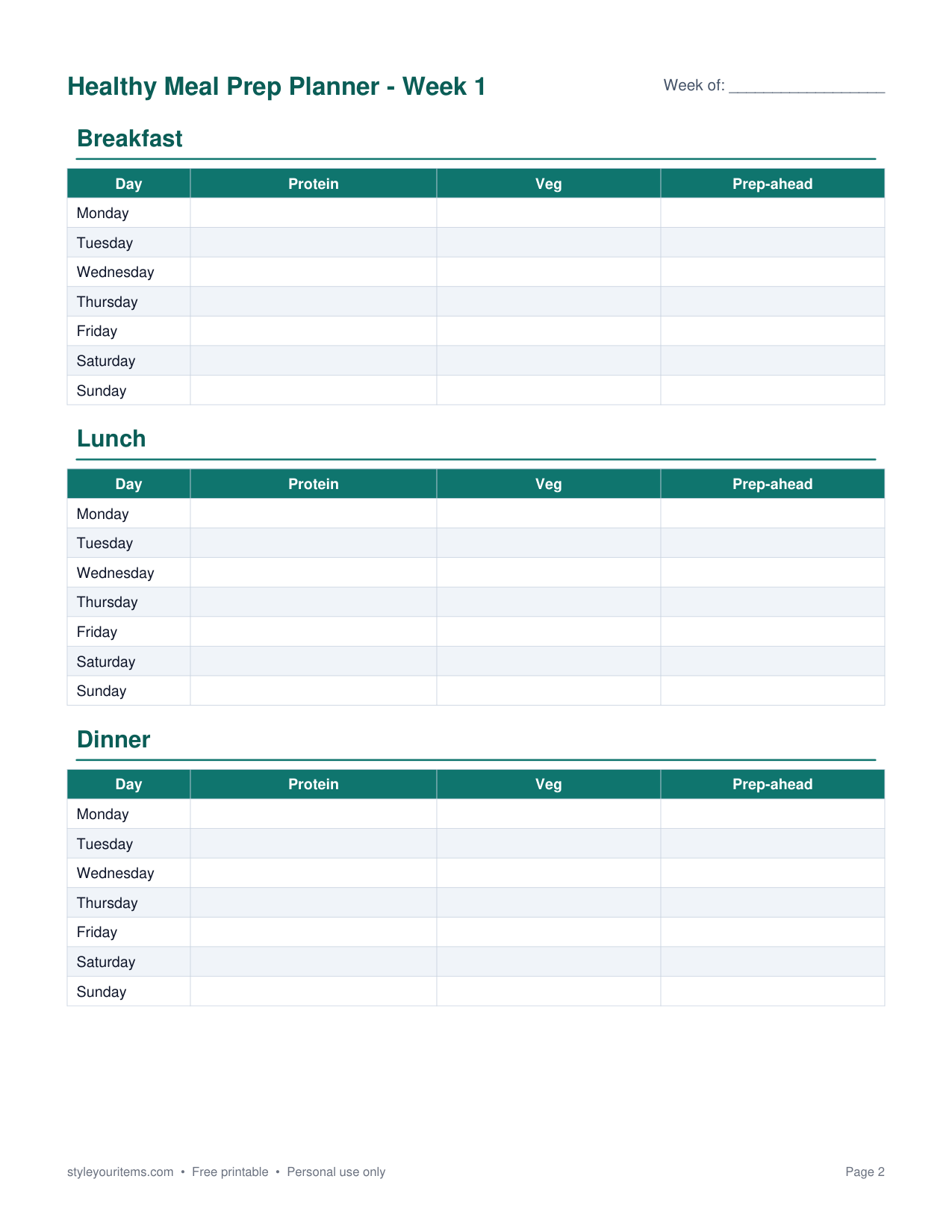
This free printable healthy meal prep planner is built for that Sunday habit. Each weekly spread has three sections, breakfast, lunch and dinner, and every day has three slots: protein, veg and prep-ahead. The protein slot keeps the meal filling, the veg slot keeps it balanced, and the prep-ahead slot records what you can cook or chop in advance. Four weekly spreads cover a month, a Sunday prep-ahead checklist keeps the cooking session on track, and a healthy swaps page gives you an easy replacement whenever a recipe calls for something you would rather skip. It sits well next to our free printable weekly meal planner for the weeks you want a plain meal plan, and you can browse the full Health, Habits & Wellness collection for more.
What is on each page of the PDF
The PDF has seven pages: a cover, four weekly spreads, a Sunday prep-ahead checklist and a healthy swaps page. Here is what each one holds.
| Page | What it holds | How to use it |
|---|---|---|
| Cover | Title and a list of what is inside | Print once and keep it as the front of your folder |
| Weeks 1 to 4 | Breakfast, lunch and dinner tables, each with protein, veg and prep-ahead columns for all seven days | Fill in one spread per week, on Sunday, before you shop |
| Sunday prep-ahead checklist | Seven suggested prep jobs plus blank lines for your own | Tick each job as you finish it during the Sunday cooking session |
| Healthy swaps | Six common swaps, such as brown rice for white rice and Greek yogurt for mayonnaise | Check it when a recipe calls for something you want to replace |
The prep-ahead column is the heart of the planner. “Chop peppers and onions” on Monday’s dinner row means Sunday’s cooking session has a job attached to it, and Tuesday’s dinner is ten minutes faster because of it. The free printable monthly meal planner plans a whole month of dinners on one grid if you want to plan further ahead, while this planner stays focused on one week at a time.
Five steps to a week of healthy meals
- Plan the week on Sunday, before you shop. Sit down with the planner and fill in the protein and veg columns first. Four proteins repeated across the week is plenty: chicken, eggs, beans and fish cover most families.
- Write the prep-ahead job next to each meal. For every dinner, ask what can be done on Sunday. Rice can be cooked, vegetables can be chopped, chicken can be grilled. If nothing can be prepped, the meal is probably too complicated for a weeknight.
- Shop from the planner, not from memory. Read the protein and veg columns and make the list from them. Shopping from the plan is what stops the extra snacks and fizzy drinks from landing in the trolley.
- Cook in one Sunday session. Work through the prep-ahead checklist in order: grains first, then protein, then vegetables, then snacks and sauces. Two hours on Sunday saves about half an hour every weeknight.
- Review on Saturday night. Look back at the week and circle what worked. Which protein ran out? Which veg went uneaten? Next week’s plan starts from those two answers, not from scratch.
Movement and water matter as much as food, so this planner pairs well with our free printable workout log and the free printable water tracker. One week of planned meals plus one week of tracked water is a solid, honest start.
Six swaps to start with
- White rice to brown rice or cauliflower rice. Same meal, more fibre, and you stay full for longer.
- Sugary cereal to oats with fruit. Oats take three minutes and keep you going until lunch, where cereal leaves you hungry by ten.
- Crisps to carrot sticks and hummus. The crunch is the same, and the hummus adds the protein the crisps never had.
- Fizzy drinks to water with lemon. Keep a jug in the fridge so the easy option is also the healthy one.
- Mayonnaise to Greek yogurt. Works in sandwiches, dressings and dips, with far less fat and real protein.
- White bread to wholemeal bread. The simplest swap of all, and it changes every sandwich you make.
Do not try all six swaps in the first week. Pick one, live with it for a week, and add the next one when the first feels normal. The free printable intermittent fasting tracker is there if you want to track eating windows as well, but the planner works perfectly well on its own.
Questions people ask
Do I have to prep every meal?
No. Prep the dinners and two or three lunches, and leave breakfasts simple. Oats, eggs and fruit need no prep at all, and the planner still helps because the protein and veg columns stop breakfast from becoming toast alone.
How long does the Sunday session take?
About two hours for a full week, including washing up. Start with one hour and three jobs from the checklist, and add more jobs as the session becomes a habit.
Can I use it for one person?
Yes. The planner does not care how many people eat. Halve the quantities, keep the same meals, and use the prep-ahead column for single portions in small boxes.
Sunday Cooking Feels Long Only Until Monday Dinner Is Ready
Sunday cooking feels long only until Monday dinner is already in the fridge. That first evening is the payoff for the whole session. You come home tired, open the fridge, and the grains are cooked, the vegetables are chopped, and the protein is ready to warm through. The planner is built around that moment. Each day has three slots, protein, veg and prep-ahead, so you can see at a glance what is already done and what still needs ten minutes on the stove.
- Start the grains first. Rice and other grains cook while you do everything else, and they keep well for the week.
- Cook the protein next. Chicken, eggs, beans or fish, whichever the week needs, cooked in one batch while the grains finish.
- Chop the vegetables while the protein rests. Peppers, onions and the rest go into boxes, ready to add to any meal.
- Finish with the snacks and sauces. A small box of snacks and a sauce or dressing turn a plain plate into a meal you look forward to.
Work through the Sunday checklist in that order and the session stays calm, about two hours for a full week. The checklist has seven jobs, and ticking them off in order means nothing is left in the fridge half finished. If the session runs short, do the grains and the protein and leave the snacks: those two jobs carry the week, and the rest can be chopped on the night itself.
What a Finished Week Looks Like on the Planner
By Saturday night, a finished planner tells a small story. The protein column shows what you actually ate, not what you planned to eat, and the veg column shows whether the week was balanced or whether the same vegetable appeared four nights running. That is why the review on Saturday night matters. It takes five minutes, and it makes next Sunday easier, because you know which protein ran out, which meal was too fiddly, and which swap, like brown rice for white rice, was so easy you barely noticed it.
| Prep job | Done on Sunday | Used during the week |
|---|---|---|
| Grains | Cooked in one batch | Base for lunches and dinners |
| Protein | Cooked and boxed | Warmed through each evening |
| Vegetables | Chopped and stored | Added to plates as needed |
| Snacks and sauces | Boxed and dressed | Kept ready for hungry afternoons |
Four weekly spreads cover a month, so the same pattern can run again with different meals. Keep the finished spreads for a month and you will have a record of what your household actually eats, which is a better shopping list than any recipe book. Start with one swap, keep the grains and protein ready, and let the rest of the week look after itself.