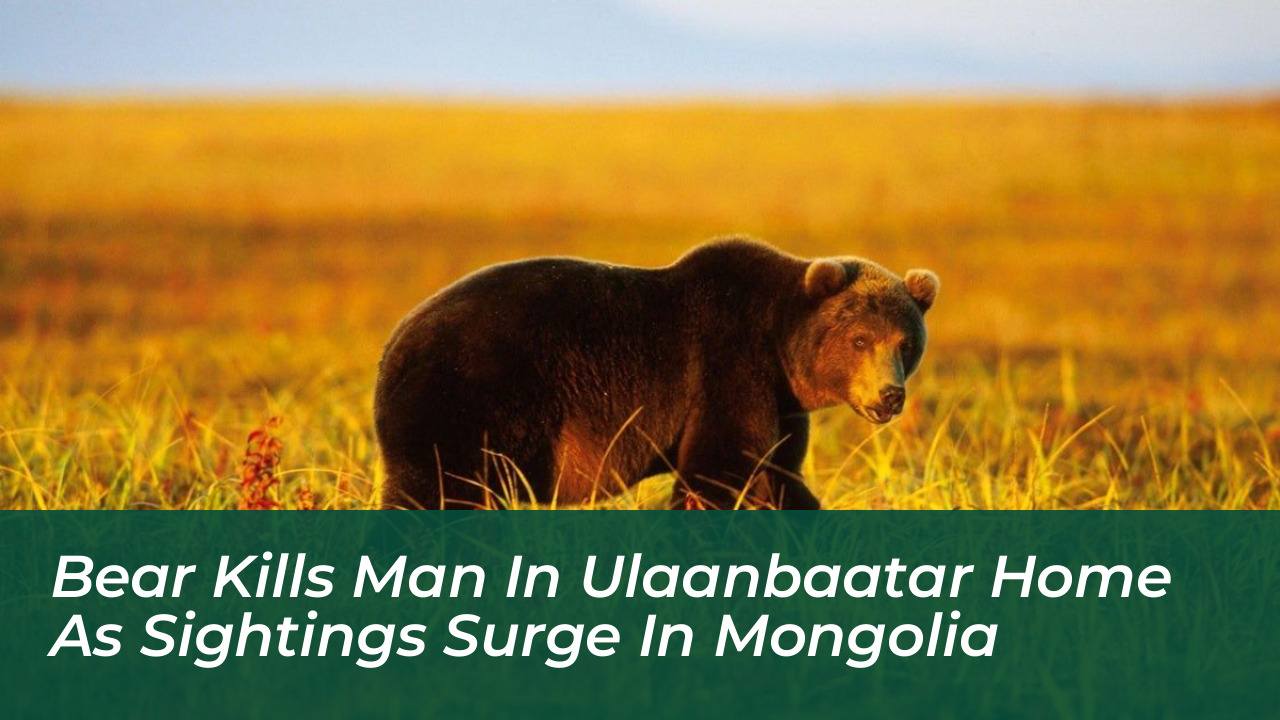

A fatal bear attack occurred on the outskirts of Ulaanbaatar, Mongolia, on Wednesday night. A man in his 40s was killed, and a woman in her 50s was left in serious condition. The attack took place inside their home, a traditional nomadic dwelling called a ger, in the Bayanzurkh district.
Munkhbayar M., chief of the city’s environment department, reported that the injured woman escaped the dwelling and alerted neighbors. She is currently receiving medical treatment. A specialized team of 35 rangers has been deployed to track the animal.
Rising Bear-Human Conflict in Mongolia
This incident reflects a broader trend of increased bear sightings across Mongolia. Official data shows 754 reported sightings across 11 provinces and the capital in 2026. In Ulaanbaatar, 24 sightings have been confirmed this year, a sharp increase from two in 2018 and one in 2019.
Authorities are investigating why bears are moving closer to human settlements. Preliminary findings suggest that climate change and food scarcity are forcing bears to leave their natural habitats. In the eastern province of Khentii, a bear was found with an empty stomach, leading the government to ban the harvesting of nuts and berries in mountainous regions to preserve food for wildlife.
Government Response and Safety Measures
The Mongolian government has implemented several measures to reduce risks to the public:
- Issuing bear-hunting permits across eight provinces.
- Equipping rural rangers with tranquilizer dart guns.
- Issuing public warnings for residents to remain vigilant and report all bear sightings immediately.
Environmental officials noted that roughly 80 percent of the 754 reported sightings involved female bears with cubs. Experts suggest that these bears may display more defensive and aggressive behavior while searching for food. Similar trends have been documented in other regions, such as Japan, where rural depopulation and shifting food availability are driving increased human-wildlife interactions.
“The causes are complex and include variations in food available-something potentially linked to climate change-as well as rural depopulation,” environmental experts stated regarding the nationwide trend.
As the search for the bear involved in the Bayanzurkh attack continues, local authorities have advised the public to exercise extreme caution, especially in areas bordering the wilderness, until the animal is captured.