

Food banks across the United States face an unprecedented operational squeeze. Reduced federal food supplies, tighter assistance rules, and soaring transportation costs collide with record community demand. In rural communities especially, where grocery stores are few and poverty rates are high, organizations that provide emergency groceries report that dwindling resources have reached alarming lows.
According to an NBC News survey of 48 large food banks across 35 states and Washington, D.C., nearly three-quarters of the organizations experienced an increase in visitors compared with the previous year. More than 80% reported receiving less food or funding through the U.S. Department of Agriculture (USDA). Simultaneously, they grapple with higher fuel costs to transport what little they can secure.
The Impact of Federal Cuts on USDA Food Distribution
The strain on local pantries stems largely from recent reductions and funding freezes implemented by the federal government. In March, the USDA cut $500 million from The Emergency Food Assistance Program (TEFAP). This cornerstone initiative purchases food from domestic agricultural producers and routes it to food banks nationwide. Historically, TEFAP has supplied more than 20% of all distributions managed by Feeding America, a nationwide network supporting over 200 food banks and 60,000 meal programs.
In addition to the TEFAP cuts, the administration slashed $500 million from the Local Food Purchase Assistance Cooperative Agreement Program. This initiative previously enabled state, tribal, and territorial governments to purchase fresh produce, meat, and dairy directly from nearby farmers.
“The urgency of this crisis cannot be overstated,” said Vince Hall, chief government relations officer for Feeding America, describing TEFAP as “rural America’s hunger lifeline.”
Rural areas bear the brunt of these reductions. While federal programs might cover a fraction of urban food distribution, they often account for 50% or more of the food supplied to individuals in rural, isolated communities.
Struggles on Tribal Reservations and in Appalachia
The convergence of shrinking aid and elevated food prices forces many families and community leaders to seek alternative survival strategies. In Duck Valley, a remote reservation straddling Idaho and Nevada that is home to the Shoshone-Paiute Tribes, residents face severe food desert conditions. The sole local grocery store features prices too high for many families. The next-closest supermarkets sit more than 100 miles away in Mountain Home, Idaho, and Elko, Nevada.
Brandy Bull Chief, local director of a federal food distribution program for tribes, noted that the local food pantry had to reduce its operations to just two weeks a month in March because of sparse shipments. When the pantry opened in 2020, it served 10 to 20 households monthly. Today, that number exceeds 60 households, ranging from teenagers living on their own to elderly residents needing basic staples between paychecks.
To cope with the shortfall, community outreach specialists like Reggie Premo with the University of Nevada-Reno Extension run workshops to teach residents how to grow their own produce. “We’re just trying to bring back how it used to be in the old days, when families used to grow gardens,” Premo said.
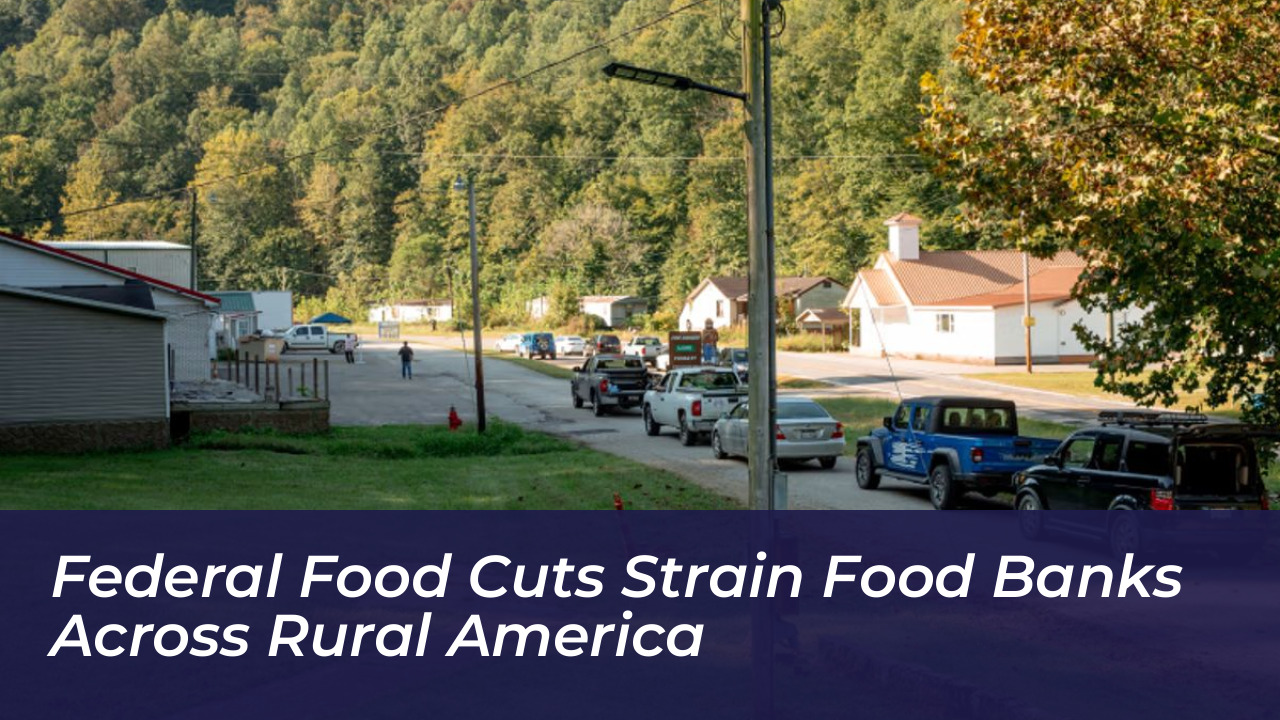
Meanwhile, in Dunlow, West Virginia, volunteers like Bill Likens distribute limited supplies to families who sometimes drive more than 30 miles for groceries. Facing Hunger Foodbank, which supplies Likens’ pantry and other distribution centers across Appalachia, reported a 25% increase in people seeking assistance over the past year. During that same timeframe, its available federal food supplies declined by a third.
Broader National Toll on Food Banks and Farmers
The crisis extends far beyond Appalachia and the Mountain West. Organizations in Nebraska, Texas, Illinois, and California report record-breaking numbers of clients alongside drastic drops in incoming commodities.
- Food Bank for the Heartland (Nebraska & Iowa): Experiencing four times the demand seen in 2018, projecting food provisions for 580,000 households across 93 counties.
- South Plains Food Bank (Texas): Distributing approximately 121,000 food boxes annually-a 25% increase over pre-pandemic service levels.
- Food Bank of Northern Nevada: Serving an average of 160,000 people per month, representing a 76% surge compared to pre-pandemic clientele.
- Mountaineer Food Bank (West Virginia): Notified that roughly 40% of its expected April deliveries of vital proteins like cheese, eggs, and milk through TEFAP would be canceled.
Local agricultural producers who relied on USDA purchasing programs to supply pantries also suffer. Farmers who sold pork, poultry, and fresh vegetables to state-level distribution networks have lost a stable market. This leaves them and anti-hunger advocates searching for sustainable solutions.
Uncertain Futures and Legislative Outlook
With roughly 47 million Americans living in food-insecure households as of recent USDA data, advocates warn that the national food distribution network has little to no resiliency left. Additional stressors-such as economic downturns, potential policy changes to SNAP (Supplemental Nutrition Assistance Program), or natural disasters-could push pantries past their breaking points.
While an extension of the federal 2018 Farm Bill provided about $450 million for TEFAP for the year, anti-hunger leaders maintain that the remaining funds fall drastically short of covering the losses. Lawmakers continue to debate future federal spending packages, leaving food bank operators hoping for bipartisan interventions to stabilize rural food networks before supplies run dry.
“We don’t have a food shortage,” Hall said. “We have a shortage of political will.”