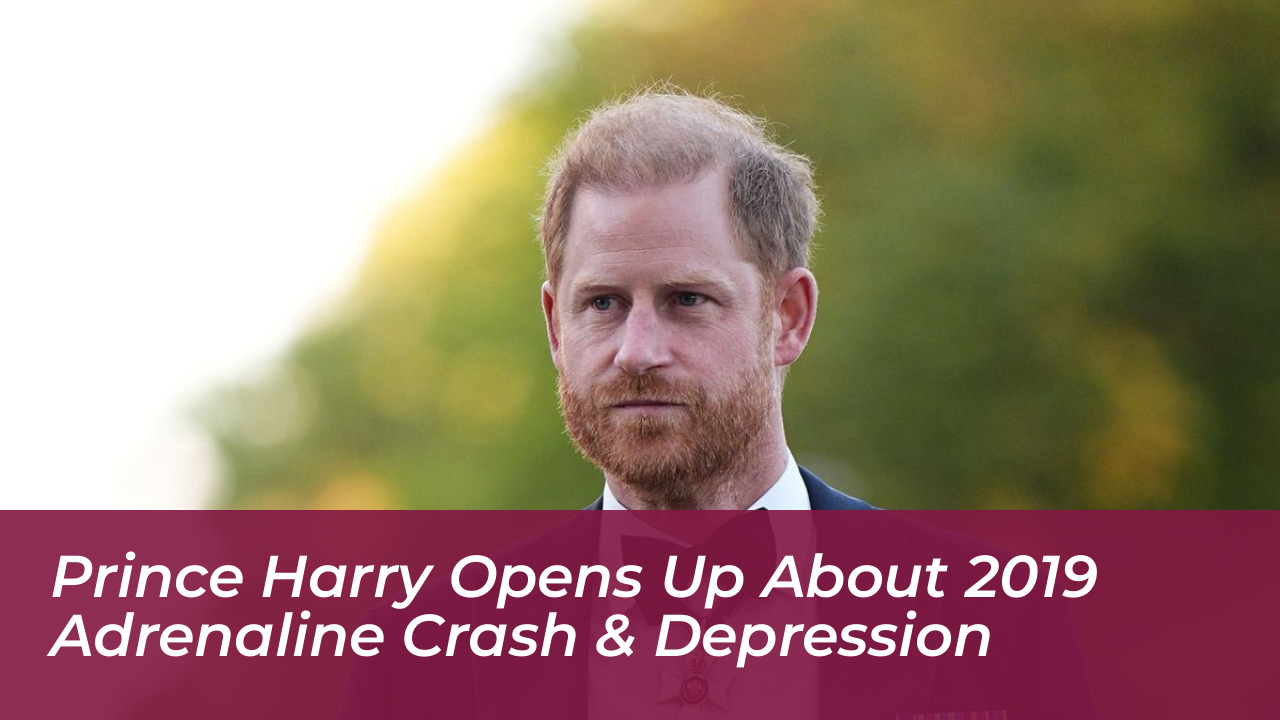
Prince Harry has opened up about the profound psychological impact he experienced after relocating to Canada with his family in late 2019. Speaking candidly during a recorded session for the online learning platform MasterClass, the Duke of Sussex revealed that leaving the high-pressure environment of the United Kingdom triggered an unexpected physical and emotional collapse.
The conversation, filmed in California and released ahead of World Mental Health Day, featured Harry speaking with neuroscientist and University of Arizona professor Dr. Mary-Frances O’Connor. Titled Redefining Grief: Building Resilience Through Loss, the masterclass session explored themes of trauma, loss, and mental health management.
According to Harry, the transition from the intense media scrutiny and demanding schedules of his life as a senior working royal to the quiet surroundings of Vancouver Island created an immediate biological shock. After stepping down from their official duties, Harry, Meghan Markle, and their young son Prince Archie sought privacy and space to process their next steps.
However, the sudden absence of chronic stress exposed a vulnerability the prince had never previously encountered.
“Being in Canada, away from the stressful environment where presumably my body was just pumped full of adrenaline, within two or three days, I experienced this adrenaline crash, something that I’d never experienced before,” Harry said during the session.
“It was as if I needed stress in order to get the adrenaline to make my brain function because I became useless around the house. I actually slipped into depression for about two weeks, and I felt like I couldn’t function without adrenaline.”
Reflecting on Lifelong Grief and Emotional Numbness
During the extensive discussion with Dr. O’Connor, Harry connected his recent adjustment struggles to the unresolved trauma surrounding the 1997 death of his mother, Diana, Princess of Wales. Harry was just 12 years old when his mother died in a Paris car crash.
Reflecting on the coping mechanisms he developed as a young man, the duke admitted that he spent decades avoiding his true emotions. He noted that serving two tours in Afghanistan as a member of the British Army during his twenties was partially an attempt to outrun his grief.
“I’d spent so long emotionally numb, to a large extent, because I felt disloyal and guilty for the possibility of being happy and joyful without her,” Harry explained. “I felt like I had to be sad and I had to be emotionally numb in order to prove to her that I missed her.”
Dr. O’Connor offered neurological context to the conversation, explaining how the human brain processes profound loss. “Your brain doesn’t register your loved one as gone-it registers them as lost,” she noted, adding that the mind continues searching until taught otherwise.
Broader Context of the Sussex Relocation
The disclosures shed new light on a turbulent period in the lives of the Duke and Duchess of Sussex. Following their brief initial stay on Vancouver Island, the family moved south to Montecito, California, in early 2020. More recently, the family has balanced time between the United States, Portugal, and a return to the United Kingdom for schooling and personal commitments.
Mental health advocates have praised public figures like Prince Harry for breaking down stigmas associated with sudden lifestyle shifts, burnout, and the physiological effects of chronic stress withdrawal.
If you or someone you know is struggling with mental health, depression, or emotional distress, confidential support is available. In the United States and Canada, you can call or text 988 to reach the Crisis Lifeline, available 24 hours a day, 7 days a week.