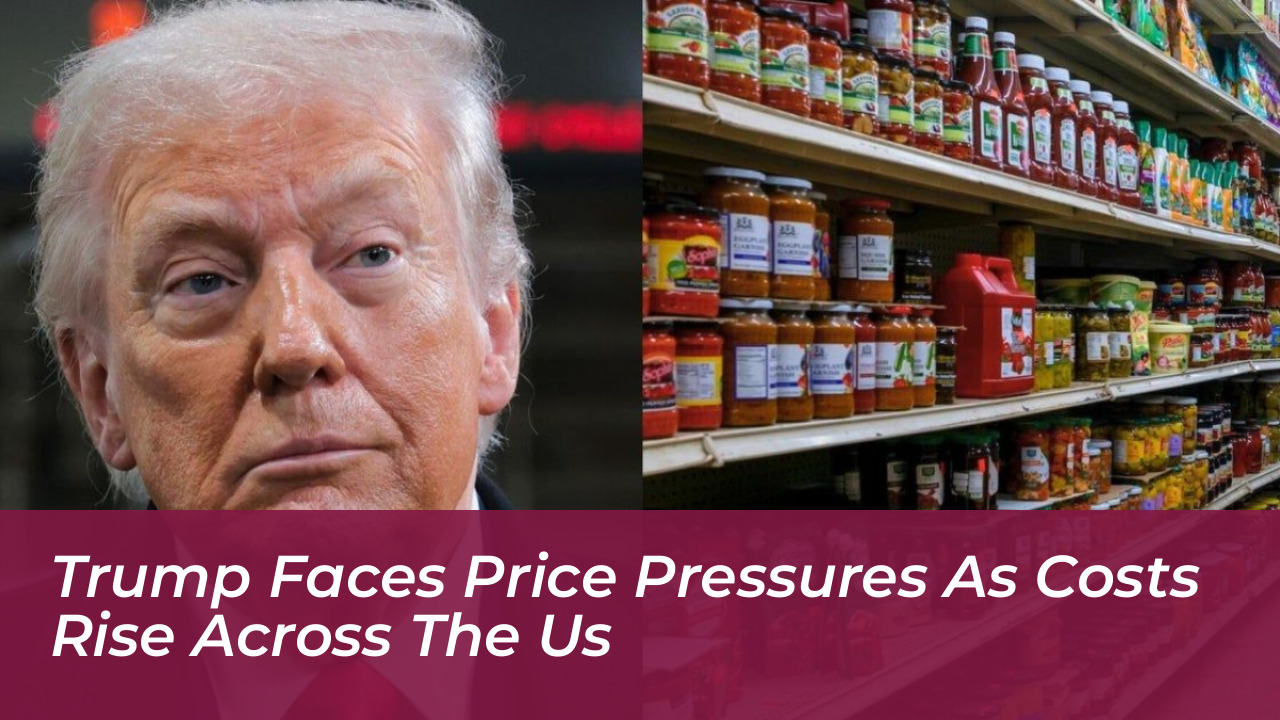

Rising costs for groceries, fuel, and household energy are challenging President Donald Trump’s promises to make life more affordable for Americans. Economic concerns are intensifying ahead of the 2026 midterm elections. Although economic growth remains solid and unemployment is low, a recent CBS News poll found that nine in 10 Americans consider prices the most important factor shaping their views of the economy.
Consumer prices have continued climbing after years of post-pandemic inflation. Research from the Federal Reserve Bank of New York found that the Trump administration’s tariffs contributed about 2.9 percentage points to inflation through February. Researchers noted that goods prices would have declined without the tariffs. Additionally, the conflict following the US and Israeli attacks on Iran in late February has disrupted oil shipments, pushing up petroleum and fuel costs. Economists surveyed by FactSet forecast that annual inflation would reach 3.6% in September, up from 3.4% in August and comfortably above the Federal Reserve’s 2% target.
Corporate Squeeze and Supply Chain Pressures
For American companies large and small, the combination of tariffs imposed under President Donald Trump’s trade policies, surging fuel prices from the Iran war, and rising interest rates is forcing executives to make tough choices. Tariffs raise the cost of materials and goods, higher fuel prices increase production and transportation costs, and higher interest rates make inventory more expensive to finance.
Auto suppliers, chemical companies, and other industrial businesses are seeing margins squeezed as they struggle to absorb higher costs. Companies that can pass higher costs to customers are better positioned, while businesses facing price-sensitive consumers risk losing demand if they raise prices too much. Big corporations with substantial cash reserves and longer-term debt are less immediately exposed to higher rates than smaller, more leveraged businesses.
Allen Eden is the owner of the 25-person Original Saw Co. in Britt, Iowa, which makes industrial power saws for wood and metalwork. He has been holding onto extra inventory as he grapples with spiking prices for aluminum, steel, and essential parts. One small bracket used for his saw motors more than doubled in price this summer, surging to $87 from $42. “It’s awful,” Eden told CNBC. “[I’m] just trying to keep more of the stuff around because I don’t know if we can get it down the road.”
Key Policy Drivers Behind Household Cost Increases
Independent economic analyses and think tanks have highlighted several core federal policies that have driven up expenses for American families during President Trump’s second term:
- Tariffs on Imports: Broad tariffs implemented across various global goods have directly elevated prices on imported products, daily staples, furniture, appliances, and pharmaceutical goods.
- The Conflict with Iran: Military actions and subsequent disruptions in the Persian Gulf have driven up gasoline and diesel prices, costing households hundreds of dollars extra at the pump.
- Clean Energy Policy Shifts: Legislation such as the One Big Beautiful Bill Act (OBBBA) repealed or curtailed specific tax credits for wind, solar, and battery manufacturing, contributing to higher residential electricity and utility rates.
- Health Care Subsidy Expirations: The expiration of the Enhanced Premium Tax Credit (EPTC) under the Affordable Care Act (ACA) marketplace has led to substantial premium increases for millions of Americans purchasing individual health insurance.
Consumer Sentiment and Political Implications
Public dissatisfaction regarding the cost of living has translated directly into polling figures. A recent CNN poll indicated that 77 percent of Americans believe President Trump’s policies have increased the cost of living in their communities. As voters prepare for the 2026 midterm elections, household budgets remain strained under the weight of higher utility bills, elevated fuel expenses, and persistent goods inflation.
While major corporations in tech and finance with significant cash reserves have weathered the higher-rate environment relatively well, middle-market manufacturers, logistics providers, and everyday consumers continue to bear the brunt of these combined financial pressures. Economists warn that as long as supply constraints, trade tariffs, and energy disruptions persist, price pressures will remain a central fixture of the American economic landscape.