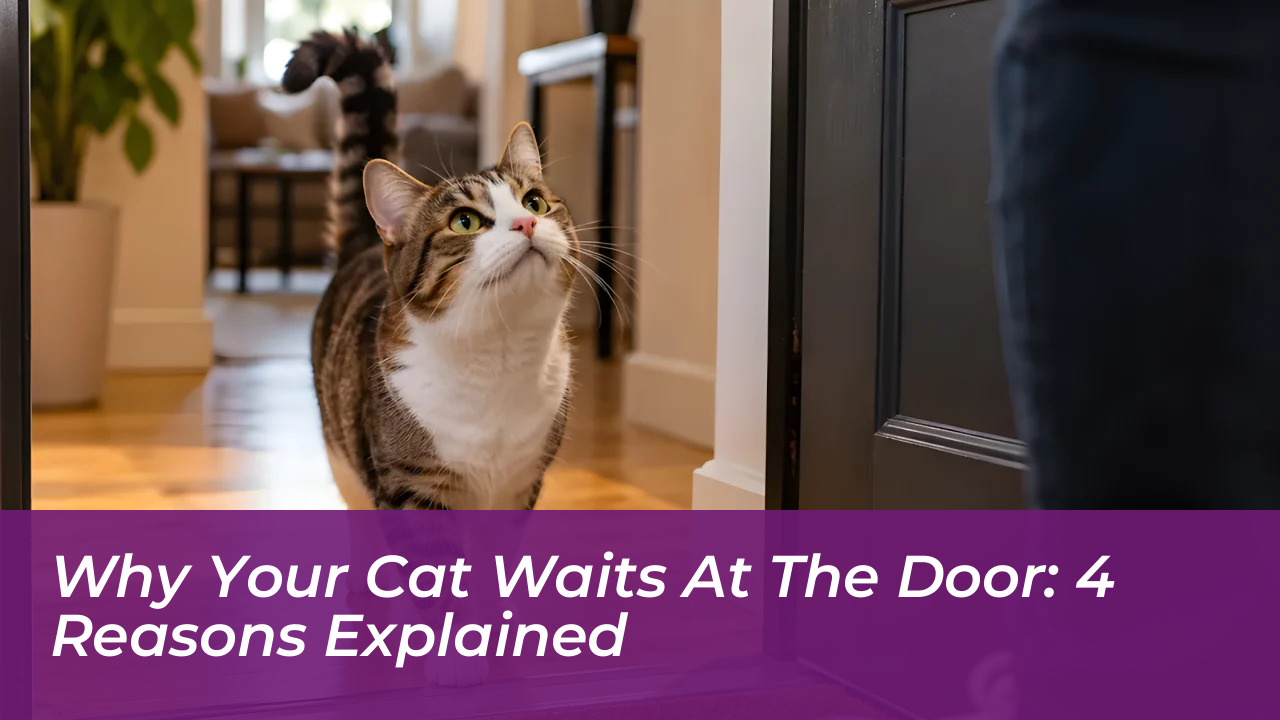

There is something undeniably comforting about walking through your front door after a long day and finding your feline friend already waiting there to greet you. While cats have a long-standing reputation for being fiercely independent, they are capable of showing deep affection and seeking out the company of their human family members. Feline behaviorists note that that daily doorstep vigil is far from accidental. It is a fascinating mix of sensory perception, daily routines, social bonding, and anticipation.
Understanding why your cat stations themselves by the entryway gives you a clearer window into their psychological and physical well-being. Here are the four primary reasons that explain this endearing behavior.
1. They Recognize the Sounds of Your Arrival
Long before you reach for the doorknob, your cat likely knows that you are just outside. Cats possess hearing capabilities that are vastly more sensitive than those of humans, allowing them to perceive a much wider range of frequencies and faint noises.
Everyday auditory cues-such as your car engine pulling into the driveway, specific footsteps in the hallway, the jingle of your keys, or the sound of the apartment elevator-become deeply familiar markers when repeated frequently. A study published in the journal Animal Cognition in 2013 demonstrated that cats can distinguish their owners’ voices from those of strangers. While this doesn’t mean they wear tiny wristwatches or know down to the second when you will appear, they recognize distinct acoustic cues that signal your approach.
2. They Have Learned Your Schedule and Daily Routines
Cats thrive on consistency and predictable household environments. They have an impressive internal circadian rhythm regulated by daylight cycles and daily routines, which allows them to anticipate regular events.
If you leave for work every morning at 8:00 AM and return home around 6:00 PM, your cat easily learns to associate those specific intervals with your homecoming. Positioning themselves near the entryway just before you turn the key becomes part of their daily routine. While they do not measure time the exact same way humans do, their behavior adapts seamlessly to repeated daily patterns and environmental cues.
3. They Seek Companionship and Social Interaction
Despite the persistent myth that domestic cats prefer total solitude, research into feline behavior shows that they form secure attachments to their caregivers much like human infants view their parents. Your presence brings comfort, relieves the mild stress of being alone all day, and restores a sense of security.
Waiting at the door is often a straightforward way to seek contact. When you walk inside, some cats approach immediately because they want to be petted, desire interactive playtime, or simply want to stay physically close to you. Every cat has a unique personality: some seek instant interaction, while others prefer to keep a calm distance, meaning not all cats express their affection in the exact same manner.
4. They Are Anticipating Food or Treats
Practical motivations also play a powerful role in feline habits. If you routinely feed your cat, provide fresh water, or offer a tasty treat shortly after walking through the front door, your cat quickly connects your return with a rewarding outcome.
Over time, this positive reinforcement conditions the animal to rush to the door as soon as they pick up on your arrival cues. In these instances, the strong expectation of food blends seamlessly with a genuine desire to interact with their favorite human.
How to Support a Healthy Doorstep Routine
While a cat waiting at the door is usually a sign of a healthy bond, it helps to manage your homecoming to keep your cat calm and secure:
- Keep greetings calm: Avoid loud noises or high-energy rushes when you first walk inside to prevent startling your cat.
- Provide environmental enrichment: Make sure your cat has window perches, puzzle feeders, and engaging toys to keep them mentally stimulated while you are away.
- Establish post-arrival play: Dedicate 10 to 15 minutes of interactive play with a wand toy shortly after returning home to satisfy their predatory drive and strengthen your bond.
Ultimately, a cat waiting by the door may be seeking companionship, anticipating their daily schedule, or looking forward to a meal. The behavior depends heavily on their individual habits, distinct personality, and the strong bond you share.
Frequently Asked Questions
Is it normal for my cat to wait by the door all day?
While sitting by the door shortly before you arrive home is completely normal, staring at the entryway for hours on end can indicate boredom, a lack of environmental enrichment, or mild separation anxiety. Ensure your home features adequate climbing spaces and window access to keep them occupied.
How can I tell if my cat’s greeting is actually separation anxiety?
A healthy greeting involves a raised tail, soft blinks, and rubbing against your legs. If your cat greets you with excessive vocalization, panting, dilated pupils, or if you find evidence of destructive scratching near the door or accidents outside the litter box, they may be suffering from separation anxiety and should be evaluated by a veterinarian.
Does door-waiting mean my cat wants to go outside?
Not necessarily. While some indoor cats are driven by pure curiosity about the outside world, many are simply waiting for you. If your cat frequently attempts to bolt through open doors, consider providing safe alternatives like window perches, a secure catio, or harness training.
Should I ignore my cat when they wait by the door?
Ignoring your cat is generally not recommended. Instead, keep your entry calm and redirect their attention with a toy or treat. Acknowledging calm behavior helps reinforce positive associations without encouraging frantic jumping or scratching.