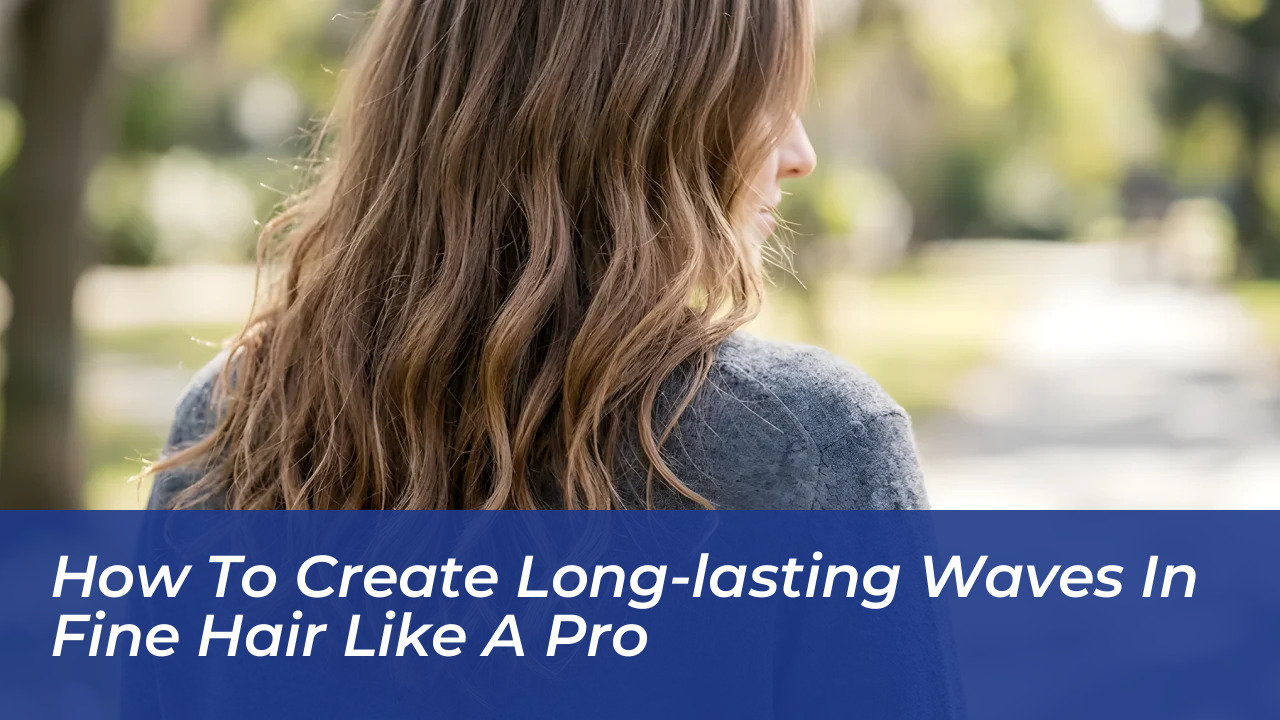

Achieving soft, natural waves is one of the most popular choices for switching up a daily hairstyle without losing an effortless look. These styles add gorgeous movement, create the illusion of greater volume, and offer a salon-quality finish without making locks look overly stiff or heavy. However, for anyone with fine and straight hair, holding that shape for more than a few hours can become an uphill battle. Even when waves are perfectly defined at first, they frequently lose their form over time, causing the hair to quickly fall back into its natural, straight state.
To avoid this common frustration, professional hairstylists recommend paying closer attention to prep work and technique rather than relying solely on high-heat tools. Spanish hairstylist Álvaro Sánchez, from the Digital Hair Academy, notes that this challenge happens frequently behind the chair and that he had to adjust his workflow to achieve lasting body. According to top stylists, the absolute master trick for long-lasting waves in fine hair comes down to a specific combination: pairing a flat iron with a quality texturizing product and setting the style with clips.
Why Fine Hair Struggles to Hold Waves
One of the primary obstacles with fine hair is an inherent lack of internal texture and grip, which makes it difficult to anchor shapes created by hot tools. Spanish hairstylist Helena Liébanas explains that using targeted texturizing products is essential because they build friction and structure into the hair fiber without making the strands rigid or unmanageable.
Juliana Aponte, a bridal hairstylist and makeup artist based in Barcelona, emphasizes that the true secret lies in a three-part method: varying the direction of the sections, applying a texturizer, and letting the style cool inside clips. These deliberate steps build a sturdy foundation from the very beginning of the routine, preventing the style from collapsing as soon as you walk out the door.
The direction in which each section is styled drastically influences the final outcome. Alternating the wave pattern-directing one section away from the face and the next one inward-creates a multidimensional finish full of natural body. Securing each wave with a pin while it cools allows the hair cuticle to lock into its new shape.
Step-by-Step Guide: Creating Natural Waves with a Flat Iron
This professional technique is straightforward enough to replicate at home and requires minimal products. The secret to success relies entirely on following the correct sequence and allowing the hair to cool completely before breaking up the shape.
- Apply a texturizer first: Distribute the texturizing product evenly section by section before introducing any heat. This creates necessary grip and ensures longevity.
- Alternate the wave direction: Begin by curving the first section away from your face, then style the adjacent section inward. Repeat this alternating pattern to build maximum movement and body.
- Secure waves with clips: Immediately after forming each wave, pin it in place while it is still warm to help the hair retain its memory.
- Release and comb gently: Once the entire head is completely cool, remove the clips and gently arrange the waves using your fingers or a wide-tooth comb for a touchable finish.
Once the style is fully set, a light mist of flexible-hold hairspray or spray wax can polish the overall look. Professionals caution against overusing heavy styling products, as excessive weight will quickly pull fine hair down and rob it of its bounce.
Essential Tips for Using a Flat Iron on Fine Hair
Beyond technique, your choice of tool and temperature settings play a massive role in preserving hair health and style longevity. Creating beautiful waves does not require cranking your flat iron up to its maximum heat setting. Instead, select a moderate temperature appropriate for delicate hair textures, and always avoid repeatedly passing the hot plates over the exact same section.
Always apply a quality heat protectant to completely dry hair before styling. Excessive, unprotected heat causes cumulative damage to the hair fiber, especially when styling routines are performed frequently.
Frequently Asked Questions About Wavy Fine Hair
Why do my waves fall flat within an hour?
Fine hair lacks natural texture and weight, which causes curl patterns to relax quickly. Skipping texturizing prep products or failing to let your waves cool completely before brushing them out are the most common reasons styles fail to hold.
Do I need a curling iron or a flat iron for better waves?
While both tools work, professional hairstylists frequently favor flat irons for fine hair because the gliding motion creates smooth, modern bends that are less prone to looking overly formal or stiff.
Will a texturizing product make my fine hair feel sticky?
Modern texturizing sprays and light mousses are specifically formulated to add grip without heavy residue. Applying them moderately to damp or dry hair before styling provides invisible support.
How can I protect fine hair from heat damage while styling?
Always use a dedicated heat protectant spray on completely dry hair and keep your styling tool at the lowest effective temperature. Avoid dwelling on sections or running the iron over the same spot multiple times.
How do I make my flat iron waves look more natural?
Once your hair has cooled and you have removed any setting clips, use your fingers or a soft bristle brush to break up the uniform pattern. Finish with a light touch of spray wax to give an undone, beachy texture.