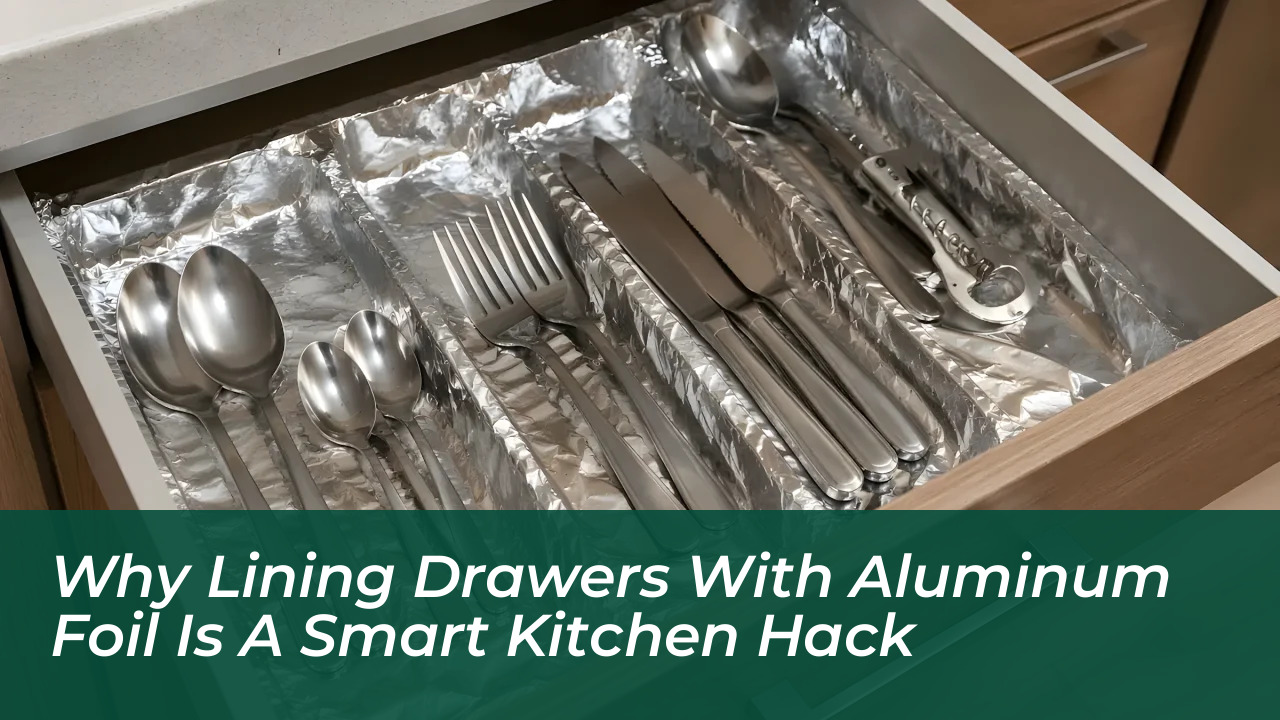

More households are turning to simple, affordable hacks to handle daily chores. Among these practical tips, lining drawers with aluminum foil has become increasingly popular in kitchens worldwide. This straightforward method has proven its effectiveness for everyday maintenance, protecting furniture spaces while keeping cleaning efforts to a minimum.
Using standard kitchen foil to line shelves or drawers offers an easy and inexpensive way to safeguard surfaces from spills, grease, and grime. Because aluminum foil acts as a reliable moisture and debris barrier, it provides a practical solution for keeping storage spaces clean, tidy, and well-preserved without requiring specialized products or extra expenses.

The Hidden Benefits of Lining Drawers With Foil
Beyond basic organization, aluminum foil delivers several distinct advantages that help extend the lifespan of kitchen furniture:
- Moisture and Stain Barrier: It prevents wood cabinets and drawers from absorbing humidity, oils, and liquids. This stops watermarks, swelling, warping, and rotting over time.
- Effortless Cleanup: If a spill, sticky residue, or crumb buildup occurs, you simply lift out the soiled foil sheet and replace it with a fresh one. This eliminates the need for heavy scrubbing.
- Better Visibility: The metallic sheen of the foil reflects ambient light into dark corners. This makes small items like measuring spoons, tea bags, and bottle caps much easier to find.
- Rental-Friendly Solution: It can seamlessly cover existing hard-to-clean stains or sticky residue inside rental properties where permanent repairs are not practical.
- Reduced Static Electricity: It helps cut down static in drawers used to store plastic bags or plastic wrap, preventing them from stubbornly clinging together.
Does It Matter Which Side of the Foil Faces Up?
A common debate among homeowners is whether the shiny or matte side of aluminum foil should face upward. Both surfaces are made from the exact same material and share nearly identical properties. The shiny side creates a slightly more mirror-like reflection, while the matte side scatters light more diffusely. For drawer lining purposes, the difference in overall brightness is minimal, meaning which side faces upward comes down entirely to personal preference.
Step-by-Step Guide: How to Line Your Drawers Properly
Applying this trick takes only a few minutes and requires no extra tools or adhesives. Follow these simple steps for a clean finish:
- Empty and Clean: Completely empty the drawer and wipe the bottom surface with a dry or lightly dampened cloth to remove all dust, crumbs, and debris. Allow the wood to dry completely.
- Measure and Cut: Cut a length of aluminum foil slightly larger than the interior footprint of the drawer, leaving an inch or two of extra margin along the edges.
- Smooth and Press: Place the foil into the drawer and use a flat, rigid card, such as an old library or gift card, to press it firmly into the corners. Smooth it outward to eliminate air bubbles and folds.
- Handle Deep Drawers: If a standard roll is not wide enough, lay the front sheet down first and place a second sheet toward the back with an overlap. Keeping the front piece on top ensures that crumbs swept forward will not catch under the seam.
How Often Should You Replace the Foil?
The lifespan of your aluminum foil liner depends entirely on how heavily the drawer is used. In low-traffic areas storing holiday serving pieces or party napkins, a liner can last for months. In frequently used spaces like silverware or utility drawers, metal utensils can cause the foil to tear or stain within a few weeks.
A simple visual cue works best. Whenever the foil appears moist, ripped, wrinkled, or spotted with food residue, pull it out, wipe the surface underneath, and install a fresh sheet.
Limitations to Keep in Mind
While aluminum foil is a fantastic, low-cost option for catching crumbs and light moisture, it has a few limitations. It offers virtually no cushioning, can tear when heavy or sharp cookware is dragged across it, and may shift if left unsecured. For heavy-duty storage or high-impact protection, purpose-made rubber or cushioned liners may still be the preferred choice. For everyday kitchen drawers, however, utilizing the roll sitting right in your pantry remains an unmatched shortcut to easy cleanliness.