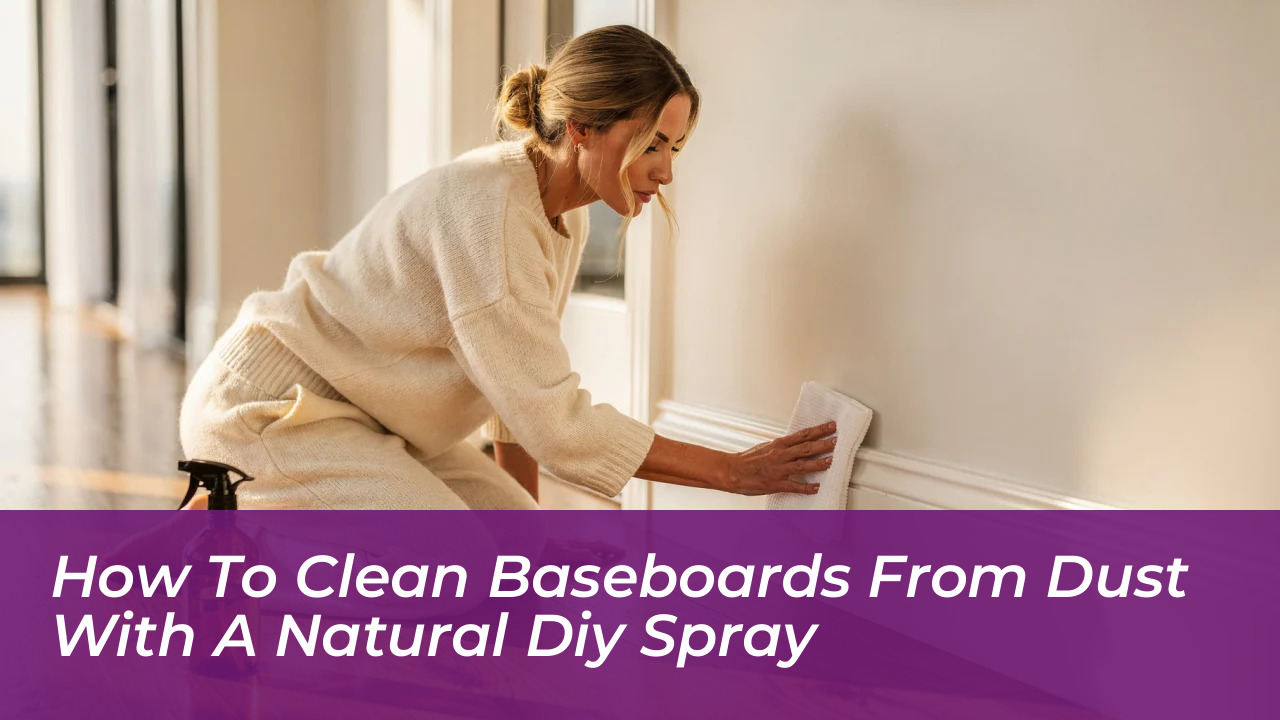

You bend down to do a quick pass with the vacuum and notice thin, grey lines of dust lining the edge of the wall. Baseboards collect dust, pet hair, and grime faster than almost any other surface in the home, especially in high-traffic hallways, behind doors, and near active entryways. Fortunately, you don’t need harsh chemical cleaners or expensive specialty products to get them spotless. All it takes is a simple DIY spray made with basic, natural ingredients you likely already have in your pantry.
Understanding why baseboards get dirty so quickly can help you maintain them more efficiently. Along the perimeter of rooms, minor drafts are constantly created by open windows, closing doors, footsteps, and running heating systems. These subtle air movements push dust, hair, and floating debris downward. If your baseboards are slightly rough, porous, or feature subtle decorative ridges, the dirt clings even more stubbornly. Because they sit low to the ground, baseboards easily go unnoticed as an afterthought until you finally tackle them during a deep clean.
The Simple Natural DIY Spray Recipe
Making your own natural baseboard cleaning spray takes just a couple of minutes and requires only a spray bottle and four common household ingredients. This solution cuts through grime while leaving behind a light, protective finish.
- Water (to act as the liquid base and spread the mixture)
- 1 tablespoon of white vinegar (or a small amount of olive oil)
- 1 teaspoon of mild dish soap (to cut through greasy buildup)
- A few drops of essential oil or a small drizzle of olive oil (for fragrance and polish)
How to Mix Your Spray
Pour the water into your spray bottle using a small funnel to avoid spills. Add one tablespoon of white vinegar or a tiny amount of olive oil. Next, mix in one teaspoon of dish soap. Finally, add a few drops of your preferred essential oil, such as lemon or eucalyptus, to leave a fresh, clean scent behind. Before each use, gently shake the bottle to blend the ingredients. If you opt for an oil-heavy mixture instead of vinegar, always stick to a very small amount to avoid making surfaces sticky.
How to Clean Baseboards Without Losing Your Mind
Cleaning baseboards doesn’t have to be an exhausting chore that leaves your knees aching. By following an efficient process, you can clean an entire room in minutes without excessive scrubbing.
1. Clear loose dust first: If your baseboards have been neglected, it is best to first go over them with a dry cloth or a vacuum attachment equipped with a crevice tool. Skipping this step turns dry dust into a muddy paste when liquid is applied.
2. Spray sparingly: Lightly mist the solution directly onto the baseboard surface without overdoing it. Avoid soaking wood trim or MDF, as excess moisture can cause swelling or damage.
3. Wipe with a soft cloth: Right after spraying, wipe the surface using a soft cotton or microfiber cloth. Pay close attention to corners and areas behind lightweight furniture where dust accumulates heavily. If your cloth gets dirty quickly, flip it often to a clean side.
Important Surface Checks Before Starting
Different materials react uniquely to moisture and natural ingredients. Keep these quick tips in mind to protect your trim:
- Varnished wood, MDF, PVC, and lacquered surfaces: Always use a barely damp cloth and avoid letting liquid pool in the joints or seams.
- Streaking prevention: Buff the surface dry immediately after wiping to prevent water spots and streaks.
- Delicate finishes: If your baseboards feature delicate or matte paint, reduce the oil content in your mixture and increase the ratio of water.
The Trick That Makes a Difference
This simple natural spray cleans while offering a light protective finish that helps repel future dust particles. Establishing a routine of wiping down your baseboards once a week, or every other week in lower-traffic homes, takes only a few minutes and ensures your home stays noticeably cleaner and fresher from the ground up.
Frequently Asked Questions
Can I use this natural spray on all types of baseboards?
Yes, this mild solution works safely on most painted wood, PVC, vinyl, and MDF baseboards, provided you use the cloth damp rather than soaking wet. Always test on a hidden corner first if you have specialty finishes.
Why should I vacuum before spraying the baseboards?
Vacuuming or dry dusting removes loose surface dirt first. If you apply liquid cleaner directly to thick dust, it turns into a muddy sludge that smears across the paint and takes much longer to clean.
How often should I clean baseboards to keep dust under control?
A quick dry dust every one to two weeks, paired with a light wipe-down using your natural spray once a month, is ideal for keeping dust and grime from building up.
Can I substitute lemon juice for vinegar in this recipe?
Lemon juice works well as a natural disinfectant and brightener, but its natural sugars can leave a sticky residue if not properly diluted and wiped down with a clean, damp cloth.
How do I prevent dust from settling on baseboards so quickly?
Wiping your baseboards with a microfiber cloth or an anti-static dryer sheet after cleaning leaves a faint coating that repels dust and slows down future accumulation.