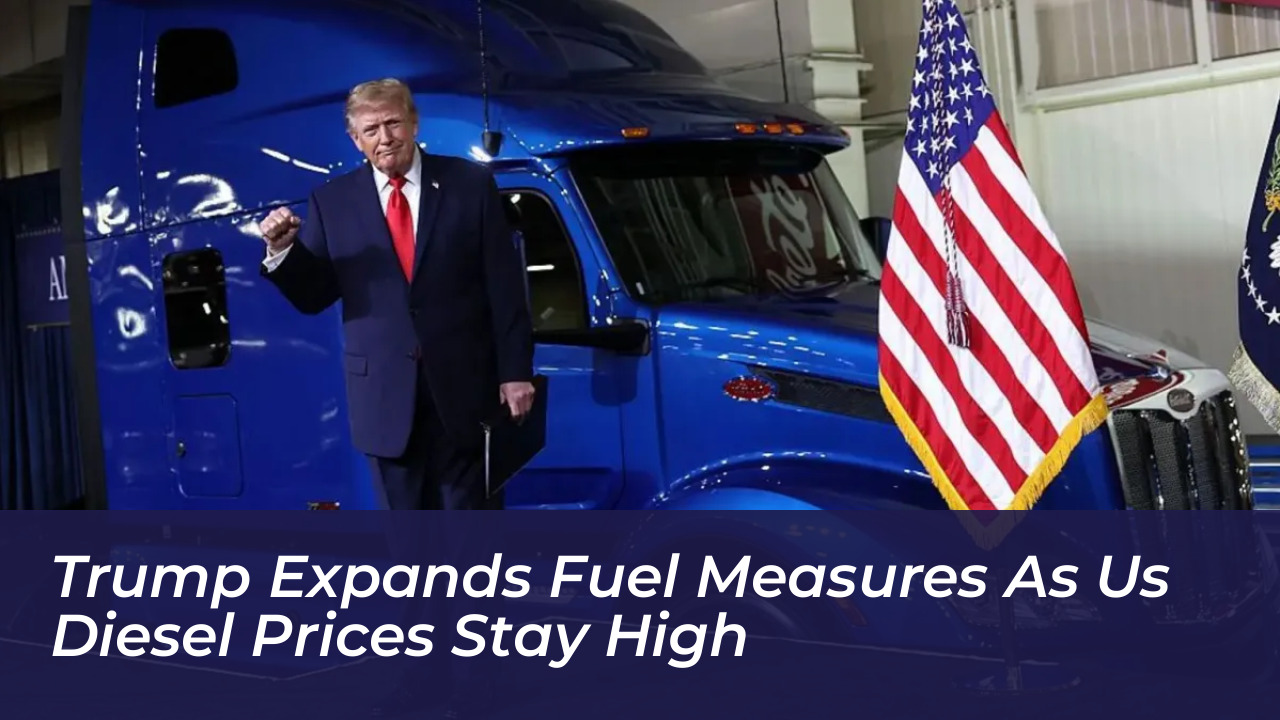

President Donald Trump is pursuing new fuel supply measures as U.S. diesel prices remain near record highs. This situation affects truckers, farmers, businesses, and voters ahead of the November midterm elections. The average U.S. diesel price reached $6.28 per gallon, according to AAA. Prices are up roughly 70% since conflicts involving Iran and Ukraine disrupted global energy markets.
To ease rising transportation and agricultural costs, the administration has promoted emergency supply releases. It has also expanded access to tax-exempt red-dyed diesel for highway use. However, industry analysts note that these measures face structural limitations as long as fundamental refining capacity and international shipping bottlenecks persist.
Executive Order on Red-Dyed Diesel
President Trump signed an executive order temporarily allowing highway vehicles to use untaxed red-dyed diesel. This fuel is typically reserved for farm operations, construction equipment, and other off-road machinery. The directive waives off-road requirements and defers the federal highway excise tax of 24.3 cents per gallon through the end of the year.
Speaking at a campaign rally in Grand Island, Nebraska, in support of Republican Sen. Pete Ricketts, Trump stated that the order would officially allow anyone to purchase tax-free dyed diesel. Administration officials highlighted that the policy aims to cut down supply-chain expenses. Ultimately, this should lower costs for consumer goods and groceries.
While the federal government has deferred tax collections and encouraged the Internal Revenue Service to focus its limited resources away from fuel tank inspections, the order does not automatically waive state excise taxes. State taxes average 35.5 cents per gallon nationwide. Therefore, overall savings depend heavily on whether individual state governments choose to follow the federal lead.
Global Supply Disruptions and Market Pressures
The current spike in fuel expenses stems from severe international energy disruptions. Shipping through the Strait of Hormuz faced significant interruptions following Middle Eastern conflicts. Meanwhile, Ukrainian strikes on refineries in Russia-one of the world’s leading diesel exporters-further tightened global supplies. China’s export restrictions have also magnified the shortfall.
In response to mounting economic pressures, G7 countries agreed to release 100 million barrels of oil and petroleum products from reserves. Although the administration initially weighed a ban on U.S. diesel exports to protect domestic supplies, officials ultimately abandoned the idea. This change came after criticism from industry groups warning that an export ban could drive up domestic jet fuel and gasoline prices.
Impact on Truckers, Farmers, and Consumers
For the agricultural sector, which forms a vital voting bloc for Republicans, soaring input costs for fuel and fertilizer have created severe operational challenges. Farm organizations, including the American Farm Bureau Federation, have welcomed moves to ease dyed diesel restrictions during the harvest season. Using existing off-road fuel reserves on public highways provides a targeted, accessible form of relief.
For long-haul truckers facing fill-up costs nearing $1,600, federal tax deferrals offer moderate relief of roughly $60 per fill-up. There is also potential for greater savings if states suspend local road taxes. Nevertheless, energy analysts like Patrick De Haan of GasBuddy and Andy Lipow of Lipow Oil Associates caution that taxation is not the primary driver of high prices. Instead, tight refining capacity and geopolitical conflict remain the core obstacles to sustained price relief.