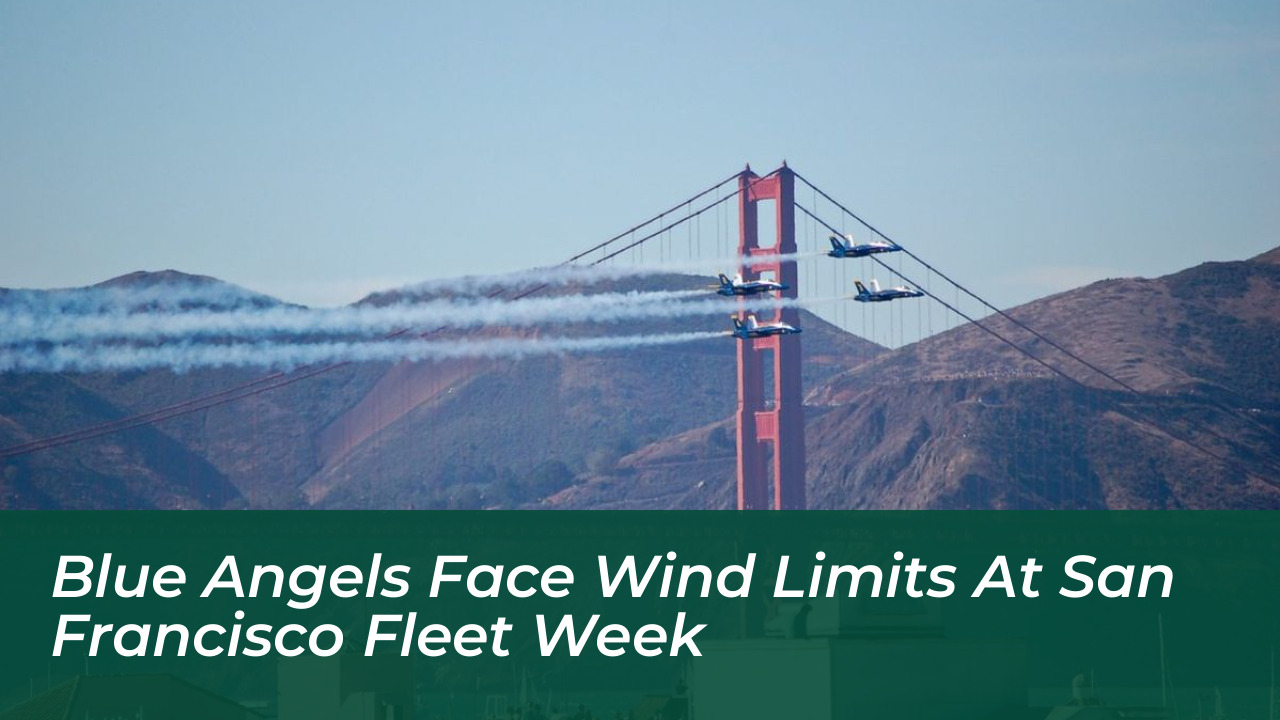

The U.S. Navy Blue Angels faced severe weather limits during the Fleet Week air show over the San Francisco Bay. Strong winds and shifting atmospheric conditions heavily impacted flight parameters. Following a Friday performance that was cut short by stubborn low fog and restricted visibility, weekend weather concerns shifted from cloud ceilings to blustery surface gales.
According to forecasts and reports from the San Francisco Chronicle, northwest winds were expected to gust up to 45 mph across parts of San Francisco, the Peninsula, and inland valleys. Surface winds directly over the bay were forecast at a sustained 20 to 25 mph. These winds were accompanied by much stronger gusts that challenged precision flight operations.
Weather Constraints and Flight Safety Protocols
Weather conditions dictate which routine the Blue Angels can safely execute during their annual demonstrations. According to the team’s operational guidelines, executing a full high-altitude air show requires a cloud ceiling of at least 8,000 feet. It also requires a horizontal visibility minimum of three nautical miles (approximately 3.45 statute miles) from show center.
Lower cloud ceilings force the flight team to adapt:
- High Show: Requires an 8,000-foot or higher cloud ceiling for complete vertical loops and rolls.
- Low Show: Requires a 4,500-foot ceiling, omitting high vertical maneuvers.
- Flat Show: Requires a 1,500-foot ceiling (which the FAA can occasionally waive to 1,000 feet), keeping maneuvers mostly level.
When high winds and gusts enter the equation, clear skies do not guarantee a standard performance. Sustained crosswinds and powerful turbulence over the water make complex formations and tight passes difficult and hazardous. This frequently results in a modified, limited show for spectators gathered along the waterfront.
Impact on San Francisco Fleet Week Events
The annual San Francisco Fleet Week celebration spans multiple days. It features civilian air acts, ship tours, the Parade of Ships, and concerts across locations such as Marina Green, Crissy Field, and Pier 39. While ship tours and static displays remain relatively unaffected by atmospheric ceilings, aerial demonstrations are entirely at the mercy of microclimate changes driven by the Golden Gate gap.
Friday’s events set a challenging precedent when low clouds hovering between 1,000 and 2,000 feet delayed the Blue Angels’ scheduled 3 p.m. appearance. Although the jets conducted weather reconnaissance and completed low-altitude formation passes, the team pulled back from its full signature routine, concluding the modified flyover just before 4:15 p.m.
As meteorological conditions transition across Northern California-brought on by broader regional weather shifts that also triggered heavy rain and high surf in Southern California-spectators attending the remaining Fleet Week performances are advised to monitor official event channels. They should also prepare for chilly waterfront temperatures made sharper by brisk gusts.