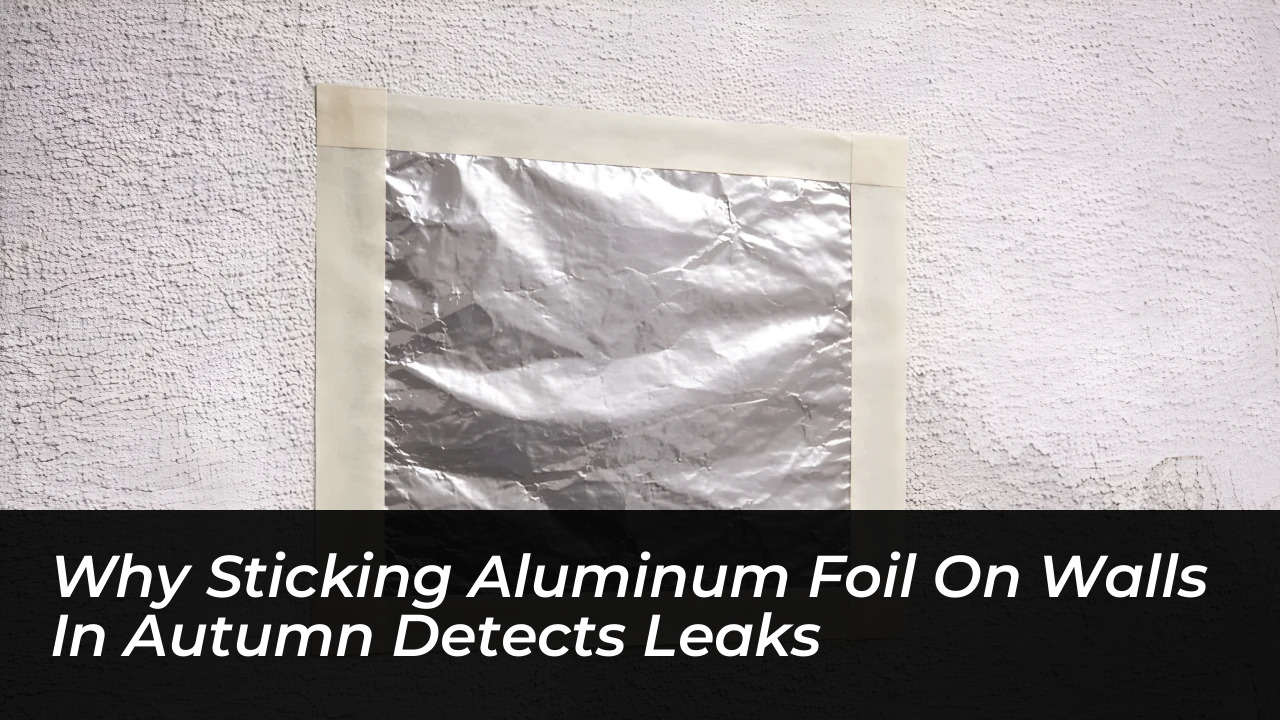

With the arrival of autumn, cooler outdoor temperatures, and the first seasonal rains, moisture on interior walls becomes one of the most common household challenges. Dark spots, peeling paint, musty odors, and damp marks hidden behind furniture are warning signs that homeowners should not ignore. To catch hidden water issues before they turn into costly structural repairs, contractors recommend a simple diagnostic method: taping a piece of aluminum foil to the wall.
While aluminum foil does not absorb moisture or fix structural defects, it serves as an effective isolation barrier. This quick, two-minute test helps homeowners determine whether a damp patch originates from indoor condensation or from water infiltrating the building from outside.
How the Aluminum Foil Wall Test Works
Executing this diagnostic trick requires only a standard sheet of kitchen aluminum foil and heavy-duty adhesive tape. The procedure isolates a suspicious wall section, blocking normal air circulation and evaporation in that specific area.
- Step 1: Select an area of the wall showing signs of dampness, peeling paint, or discoloration. Avoid surfaces covered in active mold or loose, crumbling plaster, which demand professional attention.
- Step 2: Wipe the surface thoroughly with a dry cloth to remove any immediate surface moisture.
- Step 3: Cut a square of aluminum foil large enough to cover the suspect patch completely.
- Step 4: Press the foil flat against the wall and seal every single edge tightly with tape. Ensuring an airtight seal prevents room air from reaching the space behind the barrier.
- Step 5: Leave the foil undisturbed for 24 to 48 hours before peeling it back for inspection.
Reading the Results: Condensation vs. Seepage
Once the testing window passes, inspecting both sides of the removed aluminum foil reveals the true nature of the moisture problem:
- Moisture on the wall-facing side: If water droplets or a white, powdery mineral residue called efflorescence appear on the side of the foil that touched the wall, water is moving directly through the structure. This points to internal plumbing leaks, foundation cracks, failed exterior waterproofing, or rain seeping through masonry.
- Moisture on the room-facing side: If the underside stays dry while beads of water collect on the exterior side facing the room, the issue is indoor condensation. Warm, moisture-laden air inside the house is hitting a cold wall surface and turning into liquid.
Why Autumn Triggers Wall Moisture
Autumn creates ideal conditions for condensation due to sharp temperature swings between daytime warmth and nighttime chill. As outdoor temperatures drop, indoor habits shift. Windows remain tightly closed, heating systems turn on, and activities like cooking, hot showers, and drying clothes indoors pump heavy humidity into closed spaces.
These combined factors cause walls that appeared dry throughout the summer to start developing stains and mildew as autumn sets in. Performing the aluminum foil test early in the season helps catch these micro-climates before the deep cold of winter worsens the damage.
How to Treat Surface Stains and Fix the Root Cause
Once testing identifies the source of the dampness, homeowners can take targeted action. For minor surface condensation stains, a simple cleaning solution made from equal parts white vinegar and a tablespoon of baking soda can eliminate marks in under 24 hours. Applied with a sponge and left for 30 to 60 minutes, vinegar fights mold and bacteria while baking soda deodorizes the area.
Long-term resolution requires addressing the underlying cause:
- For Condensation: Improve daily ventilation by running exhaust fans in kitchens and bathrooms, cracking windows for ten minutes daily, avoiding indoor clothes drying without airflow, and utilizing energy-efficient dehumidifiers to maintain indoor humidity between 30 and 50 percent.
- For Structural Seepage: Direct attention outside the home. Ensure roof gutters are clear, downspouts discharge water well away from the foundation, and exterior soil slopes outward to prevent rainwater from pooling against exterior walls.
When to Call a Professional
While homemade tricks and surface cleaners work well for early detection and minor humidity issues, certain signs demand immediate professional intervention. Homeowners should consult a licensed contractor, plumber, or damp surveyor if moisture reappears rapidly after cleaning, paint and wallpaper continue to peel extensively, or active mold colonies and strong musty odors persist. Ignoring deep structural water intrusion compromises building materials, degrades insulation, and poses potential respiratory risks for occupants.