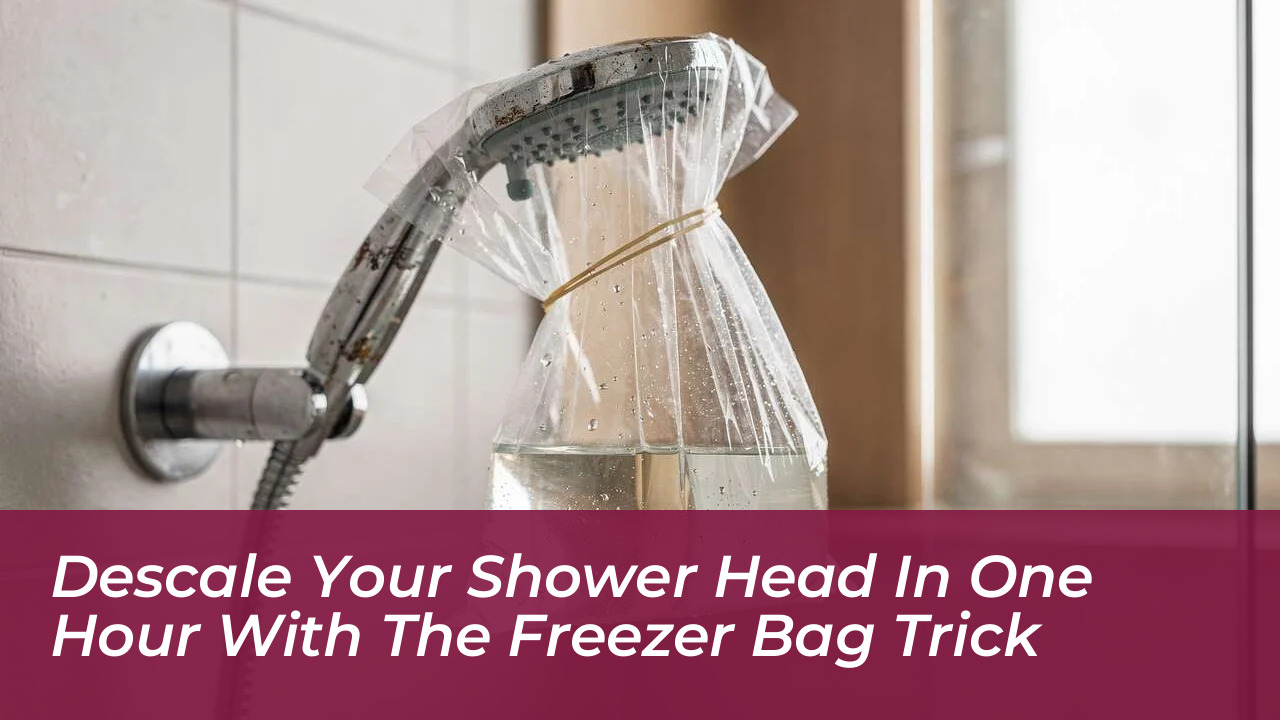

Limescale buildup in the showerhead is a problem that many homeowners know all too well. The white deposits reduce water pressure and affect both comfort and hygiene in the bathroom. Fortunately, there is a simple solution that requires minimal effort and just a few household items. With an ordinary freezer bag and vinegar, you can remove limescale in under an hour without having to unscrew the showerhead from the wall.
Many people forget to clean their showerhead regularly, even though it is an essential part of bathroom maintenance. Over time, limescale deposits build up inside the nozzles, blocking the free flow of water. The result is an uneven spray, reduced pressure, and, in the worst cases, completely clogged holes. Beyond practical issues, an uncleaned showerhead poses a health risk as moisture and limescale create an ideal environment for bacteria and mold to thrive.
Limescale and Its Effects
Limescale forms when hard water evaporates, leaving behind minerals like calcium and magnesium. These minerals bond to surfaces and create characteristic white deposits. The harder the water is in your area, the faster limescale accumulates on your fixtures.
Limescale deposits affect the showerhead in several distinct ways:
- Clogged holes significantly reduce water pressure.
- Uneven water distribution creates an unpleasant shower experience.
- Limescale damages rubber gaskets and seals over time.
- Metal finishes corrode faster beneath layers of scale.
- Energy consumption increases as water is forced through with greater resistance.

What You Will Need for the Freezer Bag Trick
Before you begin, gather a few basic items from around your home:
- A clear freezer bag of appropriate size
- Distilled white vinegar or cleaning vinegar (5-7% acidity)
- A rubber band or string to secure the bag
- An old toothbrush for detail cleaning
- A soft cloth for wiping down
Standard household white vinegar is usually sufficient for most deposits. If the buildup is especially stubborn, cleaning vinegar with a higher concentration can be used, though you should always test a small, hidden area first to protect sensitive metal finishes.
Step-by-Step Guide to Descaling Your Shower Head
Carrying out the freezer bag method requires just a few straightforward steps and takes minimal hands-on time.
1. Filling and Securing the Bag
Fill the freezer bag with enough vinegar to completely submerge the showerhead faceplate. Carefully slip the bag over the showerhead so that all the nozzles sit fully in the liquid. Use the rubber band or string to fasten the bag securely around the shower arm or pipe, making sure it is tight enough to prevent any leaks.
2. Allowing the Solution to Soak
Let the showerhead soak in the vinegar bath for 30 to 60 minutes. For plastic and chrome heads, one to two hours is safe, while brass or delicate finishes should not exceed a 30-minute cap. The vinegar gradually dissolves the mineral crust through a chemical reaction, often producing tiny bubbling signs of activity.
3. Scrubbing and Flushing
Once the time is up, remove the bag and discard the vinegar. Rinse the showerhead thoroughly with warm water. Use an old toothbrush to scrub away any remaining softened scale from the nozzles. For stubborn individual holes, a wooden toothpick can clear out remaining blockages without scratching metal finishes. Finally, run the water hot for a couple of minutes to flush out any internal residue.
The Benefits of Regular Descaling
Keeping up with regular maintenance offers clear advantages for your home and health. A clean showerhead delivers optimized water pressure, which reduces water waste and extends the lifespan of your fixtures. Eliminating mineral buildup also improves bathroom hygiene by reducing bacterial environments, ensuring a cleaner and more refreshing daily routine.
Frequently Asked Questions
How long should I soak my showerhead in vinegar?
Plastic and chrome-plated showerheads can safely soak for one to two hours. If your fixture is made of solid brass, nickel, or brushed finishes, limit the soak time to 30 minutes to protect the surface from dulling.
Can I use apple cider vinegar or lemon juice instead?
Yes, lemon juice contains citric which also dissolves limescale, and other vinegars can work in a pinch. However, distilled white vinegar remains the most cost-effective and clear option that will not leave sticky residues or unwanted scents behind.
What should I use to clear stubborn clogged holes?
Always use non-abrasive tools such as a soft toothbrush, your thumb, or a wooden toothpick. Avoid metal pins or needles, as they can scratch chrome finishes and permanently tear flexible rubber nozzles.
How often should I descale my shower head?
If you live in an area with very hard water, descaling every month is recommended. For homes with moderately hard water, once every two to three months is usually sufficient to prevent heavy crust buildup.
Will vinegar damage my rubber gaskets?
Standard household white vinegar used for normal soak times under two hours is entirely safe for the rubber O-rings and internal gaskets found in modern showerheads.