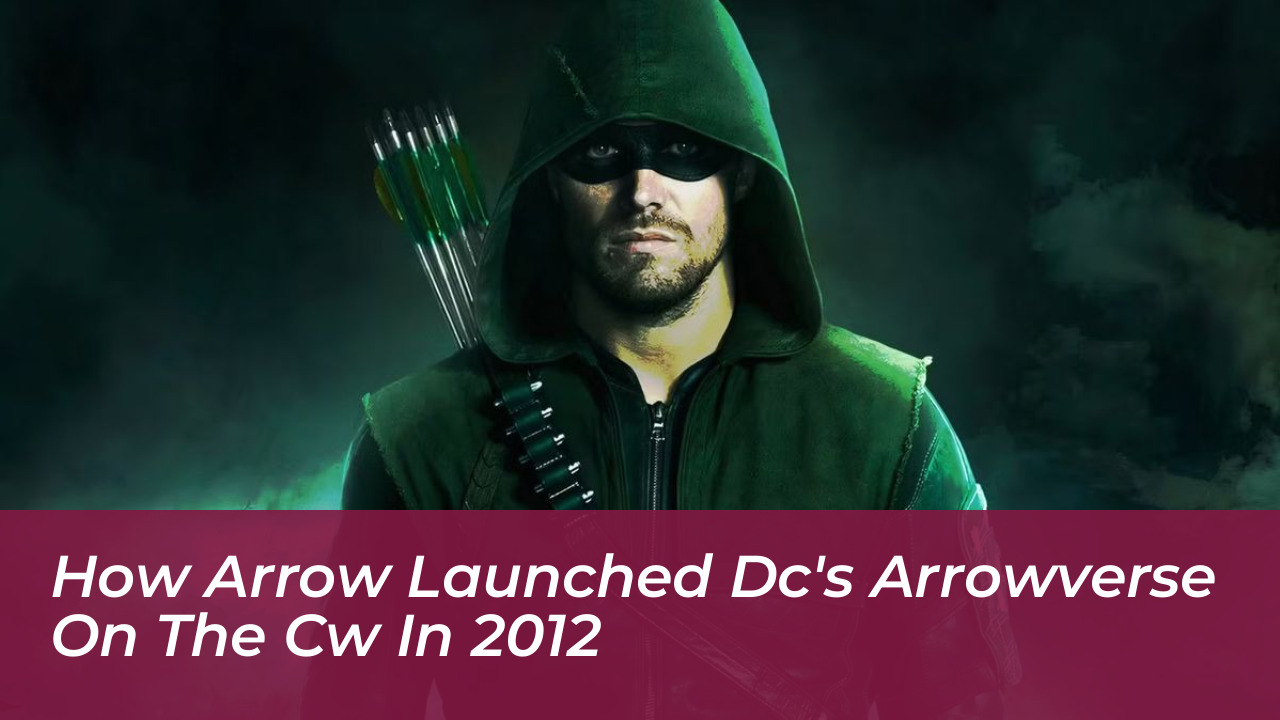

DC Comics’ television landscape changed permanently on October 10, 2012, when Arrow debuted on The CW. The series introduced a gritty, grounded approach to adapting superhero stories for television, following billionaire playboy Oliver Queen’s transformation into a hooded vigilante after surviving five years on a remote island. More than just a hit drama, the series laid the foundation for the Arrowverse, a shared television universe that eventually connected multiple DC shows through recurring characters, shared continuity, and massive annual crossover events.
Before the premiere of Arrow, The CW was struggling with modest ratings across series like Gossip Girl, 90210, and Hart of Dixie, relying heavily on Supernatural as its primary broad-appeal hit. Following executive changes that shifted the network’s focus toward a broader adult demographic, Arrow arrived as a high-stakes game-changer. Warner Bros. TV chairman Peter Roth famously warned the show’s creators just after the pilot was greenlit that if Arrow failed, the entire network would go down with it.
Revitalizing The CW and Changing Television
Drawing heavy inspiration from crime dramas and Christopher Nolan’s Dark Knight trilogy rather than colorful comic book spectacles, Arrow stood apart from its predecessor, Smallville. While Smallville chronicled Clark Kent’s journey toward becoming Superman across 10 seasons without featuring him in the full costume until its 2011 series finale, Arrow put its costumed hero front and center from day one.
The series structured its narrative around a dual timeline: Oliver Queen’s present-day crusade to save Starling City from corruption, contrasted with flashbacks detailing his brutal survival, training, and experiences on and off the island. This format resonated with audiences and gave network executives the confidence to expand into a broader multiverse.
The Expansion of the Arrowverse
The success of Arrow paved the way for an unprecedented expansion of DC properties on television, creating a sprawling shared continuity spanning nearly 700 episodes and 37 total seasons across multiple shows:
- The Flash (2014-2023): Introduced a faster, more fantastical tone while maintaining close narrative ties through crossover events.
- Supergirl (2015-2021): Initially launched on CBS before moving to The CW, eventually merging its Earth into the main continuity during the Crisis on Infinite Earths crossover.
- DC’s Legends of Tomorrow (2016-2022): Explored time-traveling misfits in the most experimental and comedic corner of the shared world.
- Black Lightning (2018-2021) & Batwoman (2019-2022): Further expanded street-level and metahuman heroics.
- Superman & Lois (2021-2024): Offered a grounded, family-focused narrative on a parallel Earth that concluded the Arrowverse era in December 2024.
Legacy of the Arrowverse
The shared universe reached its creative peak with the 2019-2020 Crisis on Infinite Earths crossover event, which adapted the iconic 1985-1986 comic storyline. The five-part event united heroes from across various television and film adaptations-including Brandon Routh reprising his Superman role and Ezra Miller making a surprise cameo-to battle the Anti-Monitor. The event culminated in Oliver Queen’s ultimate sacrifice and resurrection as the Spectre, closing out Arrow‘s flagship run in January 2020 after eight seasons.
By proving that a connected superhero television universe could match the ambition and scale of cinematic universes like Marvel’s, Arrow not only saved a struggling network in 2012 but also left an indelible mark on modern pop culture history.
Frequently Asked Questions
When did Arrow premiere on The CW?
Arrow premiered on October 10, 2012, airing its pilot episode to strong ratings that established a new direction for the network.
Who starred as Oliver Queen in Arrow?
Actor Stephen Amell starred as billionaire playboy and vigilante archer Oliver Queen throughout the show’s eight-season run.
What shows were part of the Arrowverse?
The Arrowverse included Arrow, The Flash, Supergirl, DC’s Legends of Tomorrow, Black Lightning, Batwoman, and Superman & Lois.
How many seasons did Arrow run?
Arrow ran for eight seasons, concluding its run in January 2020 following the Crisis on Infinite Earths crossover event.
Did Arrow share continuity with the Marvel Cinematic Universe?
No, Arrow was part of DC Comics’ television adaptations on The CW, entirely separate from Marvel’s film and television properties.