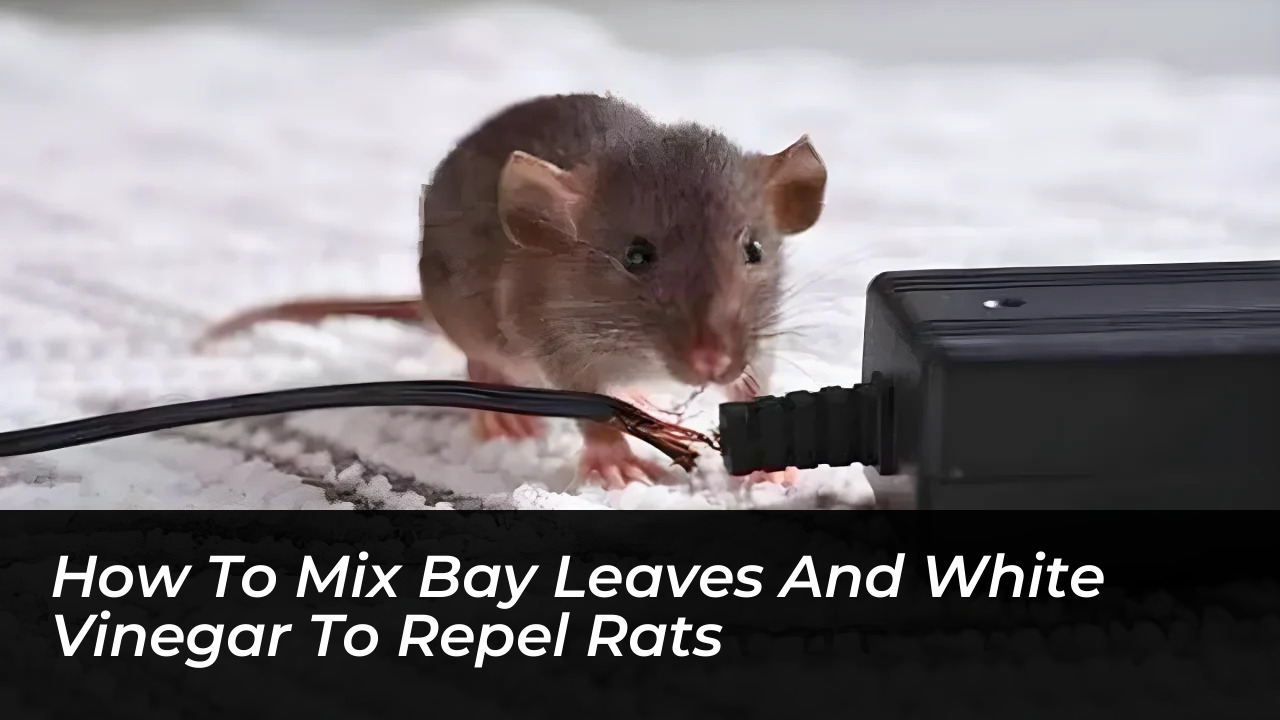

Dealing with an infestation of rats ranks near the top of the list of unpleasant household problems. While many people immediately turn to industrial chemicals or expensive commercial exterminators, safe natural alternatives are gaining popularity to stop the spread of these bothersome pests. The secret behind a highly effective and affordable solution lies in the simple combination of two everyday household items: bay leaves and white vinegar.
Both substances release scents and volatile compounds that are extremely intense and irritating to a rodent’s sensitive sense of smell. This creates an accessible, non-toxic deterrent barrier that protects your living space without putting the health of family members or pets at risk.
Why the Combination Works Against Rodents
The effectiveness of this homemade repellent comes down to the chemical properties of each ingredient. Distilled white vinegar contains acetic , which cuts through grease, neutralizes odors, and creates an acidic environment. When infused with bay leaves (*Laurus nobilis*), the liquid extracts powerful natural essential oils.
Bay leaves contain a dense concentration of active phytochemicals, most notably eucalyptol (1,8-cineole), eugenol, and linalool. Eucalyptol comprises up to 50 percent of the essential oil in bay leaves, giving off a crisp, camphoraceous scent. While humans often find the herbal aroma pleasant, pests like rats, mice, ants, and roaches possess delicate sensory receptors that are completely overwhelmed by these strong botanical compounds, forcing them to flee the area.
How to Prepare the Homemade Bay Leaf and Vinegar Repellent
Making this natural deterrent at home is inexpensive and requires no specialized gardening or deep cleaning knowledge. Follow these simple steps to prepare your spray:
- Prepare the ingredients: Gather 10 to 15 fresh or dried bay leaves and a clean glass jar, such as a mason jar. Lightly crush or crumple the leaves in your hands before placing them inside the container. Breaking the leaf cell walls accelerates the release of essential oils.
- Submerge the leaves: Pour 500 ml, or about 2 cups, of standard white vinegar into the jar, ensuring the leaves are fully submerged beneath the liquid.
- Macerate the mixture: Seal the jar securely and store it in a cool, dark place like a pantry. Let the mixture steep for 7 to 14 days, or up to 3 weeks for maximum potency, shaking the jar gently every few days. The vinegar will take on a warm amber tint and a robust herbal fragrance.
- Strain and bottle: Pour the liquid through a fine-mesh strainer or cheesecloth to remove the spent leaves, then transfer the infused liquid into a clean spray bottle.
Strategic Application to Keep Rats Away
To put this homemade repellent to work inside your home, direct application in vulnerable zones is key. Home remedy specialists recommend spraying the mixture strategically along specific entry points:
- Along baseboards and dark corners where rodents might travel unseen.
- Near ventilation vents and exterior doorways.
- Behind large kitchen appliances, refrigerators, and inside empty pantries or cabinets.
- Inside cleaned garbage cans and recycling bins to deter pests and neutralize foul odors.
For added protection, you can place whole, dried bay leaves at critical entry points where rodent activity is suspected to maintain a lingering aromatic barrier.
Other Natural Scents and Baits That Deter Rats
If you want to reinforce your natural pest control strategy, several other household ingredients can complement the bay leaf and vinegar spray:
- Mint: Essential oils or fresh sprigs placed in corners release a strong menthol scent that drives rodents away immediately.
- Cayenne pepper or hot vinegar: Applied as a spray, it irritates their respiratory tracts and forces them to evacuate the area.
- Crushed garlic: The intense sulfur compounds are entirely unbearable to a rat’s sensitive sense of smell.
- Diluted ammonia: Its pungent odor successfully mimics the presence of predators or danger.
Frequently Asked Questions
How long does the bay leaf and vinegar mixture last?
When stored in a sealed glass container in a cool, dark place, the infused vinegar remains potent and effective for about 6 months.
Can I use fresh bay leaves instead of dried ones?
Yes, fresh bay leaves work well, though they may require a slightly longer infusion period to fully break down and release their essential oils into the vinegar.
Is this mixture safe to use around household pets?
Generally, diluted vinegar and bay leaf scent are non-toxic and safe for home use. However, you should avoid spraying it directly on surfaces where pets eat or sleep, as concentrated essential oils can sometimes cause mild sensitivities.
Will the vinegar smell linger in my house?
The pungent smell of white vinegar dissipates quickly as it dries, leaving behind the subtle, woodsy, and herbal fragrance of the infused bay leaf oils.
Does this spray kill rats or just repel them?
This mixture is strictly a natural deterrent and repellent. It does not kill rodents; instead, its overwhelming scent disrupts their navigation and sensory paths, causing them to abandon your living space voluntarily.