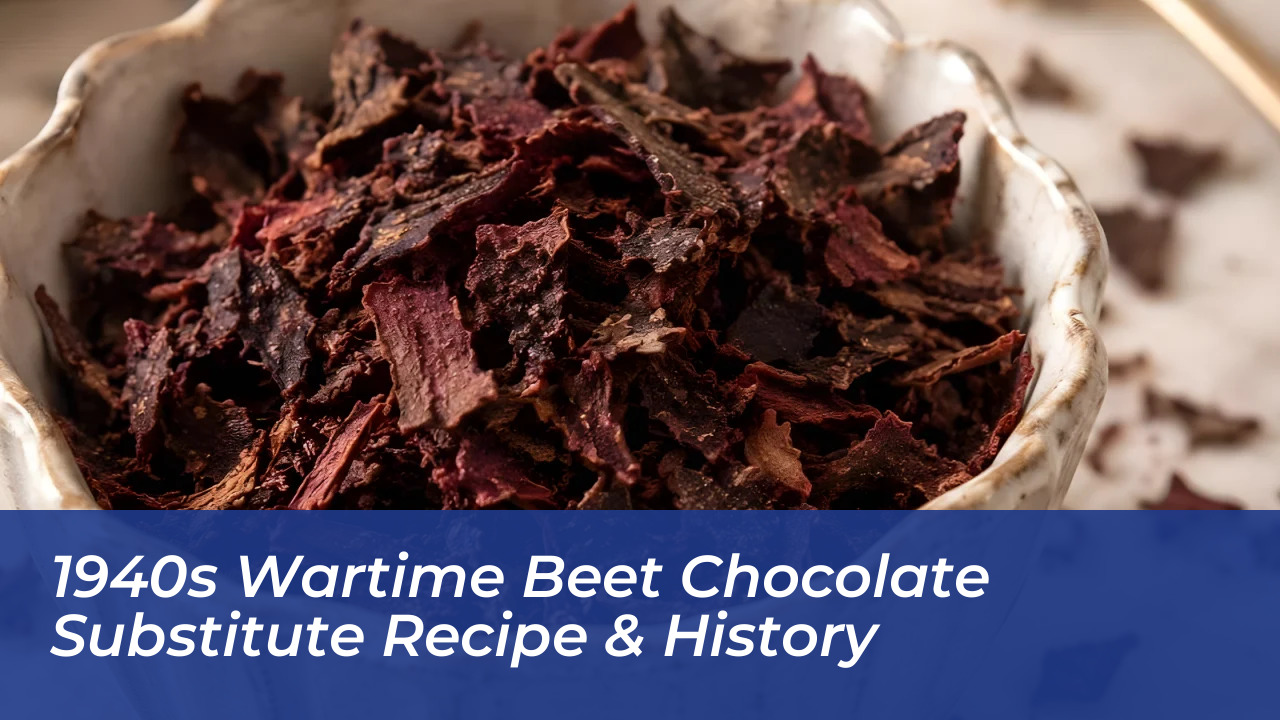

During the height of wartime shortages, households across Europe faced severe restrictions on imported goods like sugar and cocoa. To satisfy sweet cravings without access to traditional sweets, home economists and magazines shared remarkably creative kitchen solutions. In 1943, the Finnish publication Emäntälehti published a peculiar recipe detailing how to transform an ordinary root vegetable into a makeshift chocolate substitute.
While British kitchens relied on mashed potatoes and carrots to stretch scarce ingredients, Scandinavian resourcefulness turned toward beets. This unusual method required patience and basic preservation techniques to extract flavor and color from the garden crop.
The 1943 Emäntälehti Beet Chocolate Recipe
The wartime recipe was designed to maximize local crops. By slow-drying and grinding raw beets, home cooks could produce a dark powder intended to mimic the appearance and application of chocolate in cooking.
Ingredients
- Raw beets (freshly harvested and washed)
Step-by-Step Instructions
- Step 1: Peel the raw beets and cut them into the smallest possible cubes or thin shavings to ensure even drying.
- Step 2: Spread the prepared beet pieces evenly onto a baking sheet lined with parchment paper.
- Step 3: Dry the beets slowly in an oven at approximately 120 °F (50 °C) for 5 to 6 hours. According to the original 1943 text, the process is complete when the natural pigment transfers onto the parchment paper, turning a deep chocolate brown.
- Step 4: Grind the dried beet pieces into a fine powder using a hand mill, or crush them thoroughly in a mortar.
Once processed, this homemade beet powder was recommended for use as a substitute for cocoa and chocolate in various household baking and cooking applications.
The Ingenuity of Wartime Substitutes
The beet chocolate recipe from Emäntälehti highlights a broader global history of culinary adaptation during times of conflict. From the United States military’s development of dense, bitter Ration D chocolate bars to British Ministry of Food campaigns featuring “Potato Pete,” wartime cooks constantly reinvented everyday foods.
Although a root vegetable powder could never truly replicate the rich fats and complex flavors of real cacao, these historical methods demonstrate the extraordinary lengths to which previous generations went to maintain a sense of normalcy and comfort during challenging eras.
Frequently Asked Questions
Why did people make chocolate substitutes in the 1940s?
Strict rationing during World War II severely limited the import and availability of luxury goods like sugar, coffee, and cocoa, forcing populations to invent clever alternatives.
How did the 1943 Emäntälehti recipe turn beets into chocolate?
The recipe required peeling and dicing raw beets, slow-drying them in a low-temperature oven until they achieved a deep brown color, and then grinding them into a fine powder.
Did beet powder taste like real chocolate?
While it could not replicate the exact taste of cocoa, the deep coloration and earthy sweetness provided a visual and functional substitute in basic wartime cooking and baking.
What other vegetables were used as substitutes during WWII?
Governments and magazines frequently recommended potatoes, carrots, parsnips, and even oats to create mock spreads, fudge, and binding agents for baked goods.