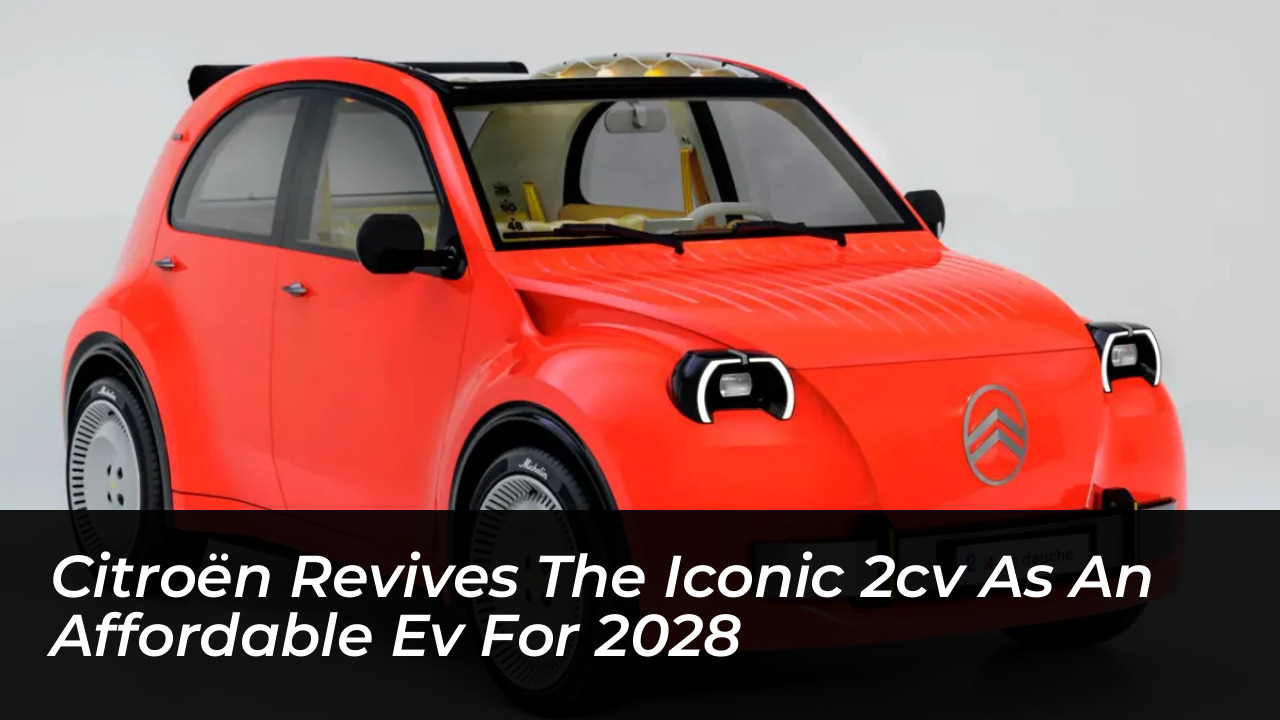

Thirty-eight years after production officially ended, French automaker Citroën is bringing back one of the most recognizable and beloved vehicles in automotive history. The iconic 2CV is officially returning as a 100% electric city car, with a production version slated to hit the market in 2028. Citroën revealed the bold project, backed by Stellantis, aiming for a target starting price of approximately €15,000 (roughly £12,750), positioning the model among the least expensive electric vehicles in Europe.
The modern reincarnation made its preview waves following initial announcements and concept teasers tied to the Paris Motor Show. While competitors like Renault have leaned heavily into deep retro design with the R5 and R4, Citroën’s approach focuses on the original philosophy of the 1948 classic: maximizing utility, stripping away non-essentials, and delivering lightweight, accessible mobility for everyone.
Engineering Simplicity and Staying True to the Roots
The original Citroën 2CV-affectionately nicknamed the “Tin Snail” or “Deudeuche”-was engineered with a famously unique mandate: carry four people and a 50 kg sack of potatoes across a plowed field at 60 km/h without breaking a single egg on the seat. Over a 42-year run, more than 5 million units were produced, turning a budget-friendly post-war utility vehicle into an enduring symbol of French popular ingenuity.
The upcoming electric successor pays homage to that exact ethos rather than creating a mere pastiche. Measuring approximately 3.76 meters long, the modern concept is actually shorter than the original 1948 model, which stretches around 3.8 meters. By keeping the footprint small and targeting a vehicle weight of roughly 1,000 kilograms (2,200 pounds), Citroën reduces the need for an oversized battery pack, directly driving down manufacturing costs and retail pricing.
Technical Expectations and Platform Strategy
While final specifications such as exact battery capacity and driving range remain unconfirmed by corporate leadership, industry reports indicate the car will utilize a dedicated, cost-efficient EV architecture. Expected technical highlights include:
- Affordable Battery Tech: Integration of Lithium Iron Phosphate (LFP) cells optimized for thermal stability, longevity, and low production costs.
- Targeted Range: Anticipated real-world urban range tailored for daily commutes and city driving, mirroring practical everyday usability.
- European Production: Planned assembly at the Italian plant in Pomigliano d’Arco, aligning with European Union regulatory frameworks for affordable small electric vehicles.
- Repairability Focus: Simplified flat body panels and replaceable components designed to minimize long-term maintenance and accident repair expenses.
Reviving the People’s Car for the Electric Era
The timing of Citroën’s announcement is no coincidence. As rising vehicle costs and expensive battery technologies push many new EVs beyond the financial reach of average buyers, automakers are searching for ways to democratize electric mobility. Current low-cost entries like the Dacia Spring and Leapmotor T03 have proven there is robust market demand for ultra-affordable battery-powered transport.
By undercutting competitors and aiming for a sub-€15,000 price point before national subsidies, Citroën hopes to outpace rivals and offer a practical counterweight to Chinese manufacturing dominance in Europe. The project addresses modern urban mobility needs much better than vintage models ever could, combining nostalgic charm with zero-tailpipe emissions and modern safety standards.
What Lies Ahead Before 2028
Although the initial concept has captured public imagination with clever Easter eggs-such as egg-friendly door pockets, Bakelite-inspired interior accents, and a removable “Radioën” portable speaker-the production reality will unfold gradually between now and its 2028 launch window. Buyers and automotive enthusiasts will be watching closely as Citroën transitions its bold concept into a tangible showroom reality.
If Citroën successfully delivers on its promise of an ultra-affordable, lightweight, and characterful European electric car, the revived 2CV could fundamentally reshape the entry-level EV segment and prove that modern electric motoring does not have to come with an exorbitant price tag.
Frequently Asked Questions About the Citroën Electric 2CV
Is the new Citroën 2CV fully electric?
Yes. Citroën has confirmed that the reborn 2CV will feature a 100% electric powertrain, with no internal combustion engine variants planned.
When will the electric 2CV be released?
Production is scheduled to begin in 2028 at Stellantis’s manufacturing plant in Pomigliano d’Arco, Italy, following concept previews shown at the Paris Motor Show.
How much will the electric 2CV cost?
Citroën is targeting a starting price of approximately €15,000 (roughly £12,750), which would make it one of the most affordable new electric cars available in Europe.
Will the new 2CV look exactly like the original 1948 model?
While the new model incorporates classic design cues-such as a rounded silhouette, prominent fenders, and retro door handles-Citroën is emphasizing the philosophy and simplicity of the original rather than doing a direct retro copy-paste.
Where will the electric 2CV be built?
Production will take place within the European Union at an Italian facility, helping the vehicle meet regional regulatory standards and qualify for various local EV purchase incentives.