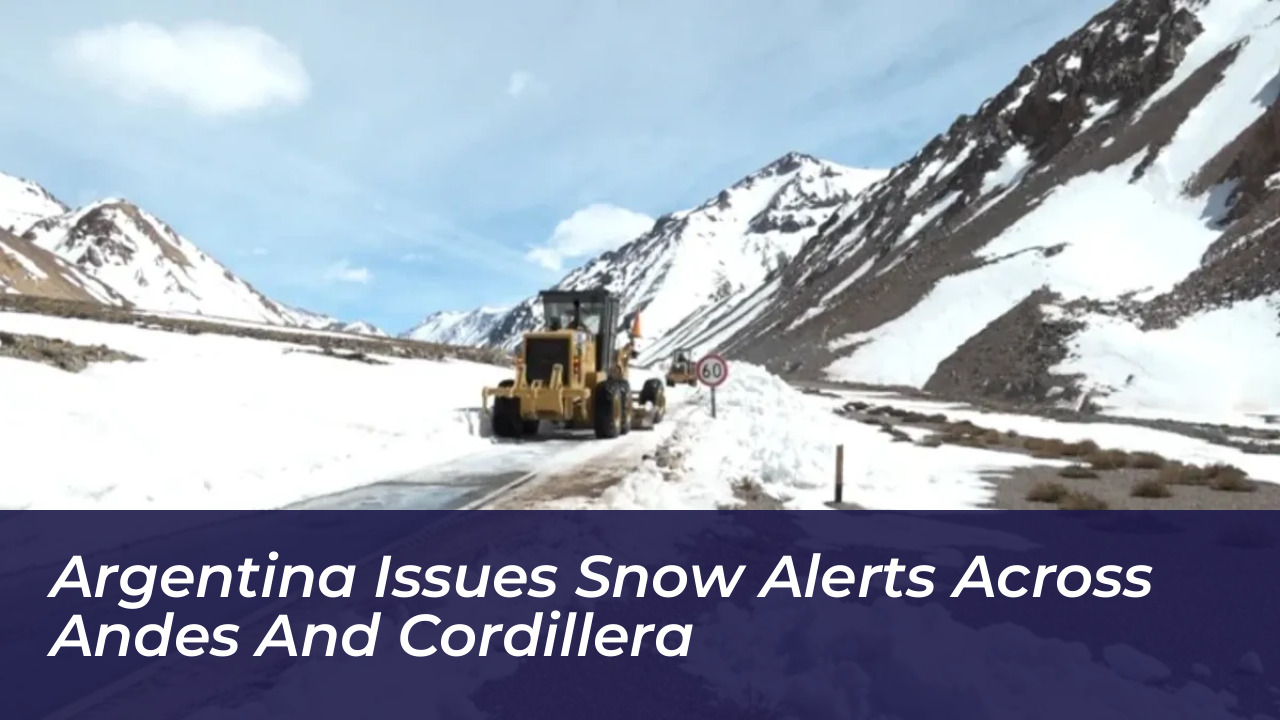

On October 11, 2026, Argentina’s National Meteorological Service issued official weather alerts for parts of the Andes mountain regions, warning residents and travelers of incoming snowfall risks across San Juan, La Rioja, and Catamarca. The weather system brought heavy snow expectations to high-altitude zones, creating potential hazards for mountain transit.
Details of the Argentine Cordillera Snowfall Warnings
Mountainous areas in the targeted provinces faced significant snowfall risks. Forecasts predicted accumulations ranging between 15 and 30 centimeters. In certain isolated high-elevation locations within the Andean range, local snow totals were projected to exceed 30 centimeters.
Lower elevation areas adjacent to the mountain ranges experienced different weather patterns. Incoming precipitation manifested primarily as rain or a mixed transition of rain and snow. This stark contrast in elevation-based weather highlighted the diverse meteorological conditions present across western Argentina during the event.
Regional Temperature Variations Across Argentina
Alongside the mountain snow alerts, official forecasts noted sharply contrasting temperatures extending from the northern regions of the country down toward Patagonia. While high-altitude cordillera zones faced freezing temperatures and heavy winter-like precipitation, other parts of the nation experienced distinct seasonal shifts.
- San Juan: Mountainous sectors placed under direct snow risk advisories.
- La Rioja: High-altitude passes warned of accumulations up to 30 centimeters.
- Catamarca: Andean zones impacted by dropping temperatures and variable snowfall intensity.
Impact on Travel and Safety Measures
The National Meteorological Service emphasized that the weather warnings particularly affected mountainous zones where visibility and road conditions could deteriorate rapidly. Authorities advised drivers and local commuters to exercise caution, monitor updated regional forecasts, and avoid non-essential travel through high mountain passes until conditions stabilized.
Meteorological officials continue to monitor the progression of the cold front across the Argentine Cordillera, providing real-time updates to ensure public safety in vulnerable high-altitude sectors.