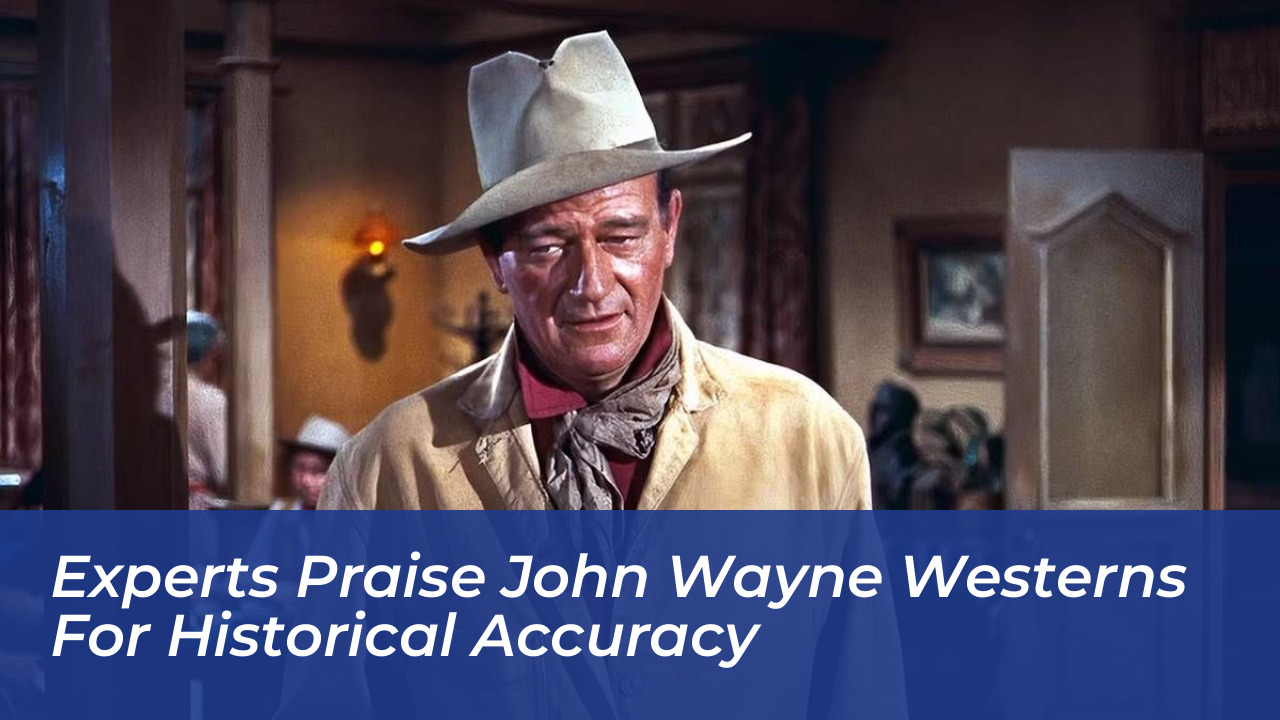

For decades, the Western genre was defined by the sweeping star power of Golden Age of Hollywood icon John Wayne. While many of his 140-plus feature films favored a romanticized view of the American Frontier over gritty realism, film experts and historians have increasingly highlighted several key movies for their striking historical accuracy. From authentic depictions of post-Civil War economics to lesser-known aspects of 19th-century cattle drives, Wayne’s filmography contains hidden gems that double as informative windows into the past.
Among these, late-career classics and early masterworks have drawn praise from academic and cultural institutions. By looking closely at historical records, research documents, and expert analyses, film scholars continue to uncover how closely Hollywood managed to mirror the genuine realities of the American West.
‘The Cowboys’ (1972) and Underage Trail Crews
Widely regarded by Old West historians as one of the most historically accurate films of John Wayne’s career, 1972’s The Cowboys breaks away from standard genre tropes. Directed by Mark Rydell, the film features Wayne as Wil Andersen, an aging rancher who must figure out how to drive a 1,500-head cattle herd 400 miles from Montana to South Dakota after his regular farmhands desert him to join a gold rush.
Rather than relying on seasoned gunslingers, Andersen recruits a group of schoolboys to complete the arduous journey. While this setup sounds like a dramatic narrative device, historical sources cited by MovieWeb and endorsed by esteemed Old West historian Michael Grauer indicate that teenage workers were frequently part of 1800s trail crews. Archives from the Sid Richardson Museum and the National Park Service confirm that many trail crews consisted of teenagers who managed massive herds, making Wayne’s late-career film surprisingly faithful to the socioeconomic realities of the late 19th-century cowboy experience.
‘The Big Trail’ (1930) and Frontier Realism
Long before he became a defining icon of the genre, a young John Wayne landed his first leading role in 1930’s The Big Trail. Playing a trapper and scout guiding a caravan of pioneer settlers along the grueling 2,000-mile Oregon Trail, Wayne helped anchor a production rooted in extreme physical authenticity.
Rather than cutting corners on studio soundstages, director Raoul Walsh moved his massive cast and crew across raw, unchanged frontier landscapes spanning seven states. The Library of Congress has frequently commended Walsh’s dedication to historical realism. The physical exhaustion, weather conditions, and logistical challenges captured on film reflect the actual hardships faced by pioneers journeying west during the mid-19th century.
‘Fort Apache’ (1948) and Nineteenth-Century Military Tactics
Collaborating with legendary director John Ford, Wayne starred in 1948’s Fort Apache, a tense drama exploring the Reconstruction Period and the complex dynamics of the American frontier. The narrative pits a glory-seeking commander against a junior officer played by Wayne who objects to the inhumane treatment of Native Americans.
Beyond its psychological depth, the film earned high marks from academic researchers for its tactical realism. In a research document from East Tennessee State University, scholar Kenneth Estes Hall praised the movie’s battle dynamics. Hall noted that Fort Apache successfully avoided the lazy Hollywood cliché of Native American warriors charging head-first into fortified walls, instead depicting authentic tactical engagements that reflected historical skirmishes of the era.
‘The Alamo’ (1960) and Architectural Precision
John Wayne’s passion project, 1960’s The Alamo, represented a massive financial and creative gamble for the star, who personally directed and financed a large portion of the epic. Wayne famously spent over $1.5 million to construct a permanent historical set known as “Alamo Village” in Brackettville, Texas, to ensure visual authenticity.
That monumental risk paid off historically. Writing for PBS, history professor Stephen L. Hardin noted that The Alamo correctly captured the actual siege tactics, architectural layouts, and military equipment utilized during the historic 1836 conflict. By prioritizing structural and tactical accuracy, Wayne delivered one of cinema’s most thorough visual recreations of the Texas Revolution.
‘The Horse Soldiers’ (1959) and Civil War Strategy
Set against the backdrop of the American Civil War, 1959’s The Horse Soldiers pairs John Wayne with director John Ford for a gritty military adventure based on real-world historical campaigns. Wayne plays a former railroad engineer tasked with leading a dangerous cavalry raid deep into Confederate territory to destroy a crucial railhead and supply depot.
Research conducted by The Cleveland Civil War Roundtable highlighted that the film accurately reflects the strategic importance of Grierson’s Raid. The movie details why the historical Colonel Benjamin Grierson was chosen to strike Newton Station to disrupt Confederate supply lines, as well as how the raid successfully diverted enemy attention while Union forces advanced unopposed toward Vicksburg.
‘Red River’ (1948) and Post-Civil War Economic Hardships
Directed by Howard Hawks, 1948’s Red River features lead performances from John Wayne and Montgomery Clift. As a fictionalized account of an early cattle drive along the Chisholm Trail from Texas to Kansas, the film explores the immense pressures of rebuilding a livelihood in the wake of national conflict.
Studies from institutions including The University of Nebraska and The Evergreen State College have analyzed how accurately the film portrays the economic realities of post-Civil War Texas. During this era, many ranchers possessed massive herds of cattle but suffered from a severe lack of local capital, forcing them to embark on perilous long-distance drives to reach viable markets. The movie meticulously details the legal, political, and financial hurdles that defined early cattle commerce.
The Complex Legacy of ‘The Searchers’ (1956)
While films like The Cowboys and The Alamo won praise for direct structural and tactical accuracy, other Wayne classics explored historical tensions through psychological realism. In The Searchers (1956), also directed by John Ford, Wayne portrays Ethan Edwards, a bitter Civil War veteran hunting down the Comanche faction that abducted his niece.
While historians like Michael Grauer have critiqued specific cinematic exaggerations, scholars widely celebrate the film for capturing the brutal cultural clashes, deep-seated hatreds, and complex frontier demographics of 19th-century Texas. By stepping into the boots of a deeply flawed anti-hero, Wayne helped dismantle the simplistic “good versus evil” formulas of early Hollywood, paving the way for a more honest appraisal of the American West’s turbulent past.