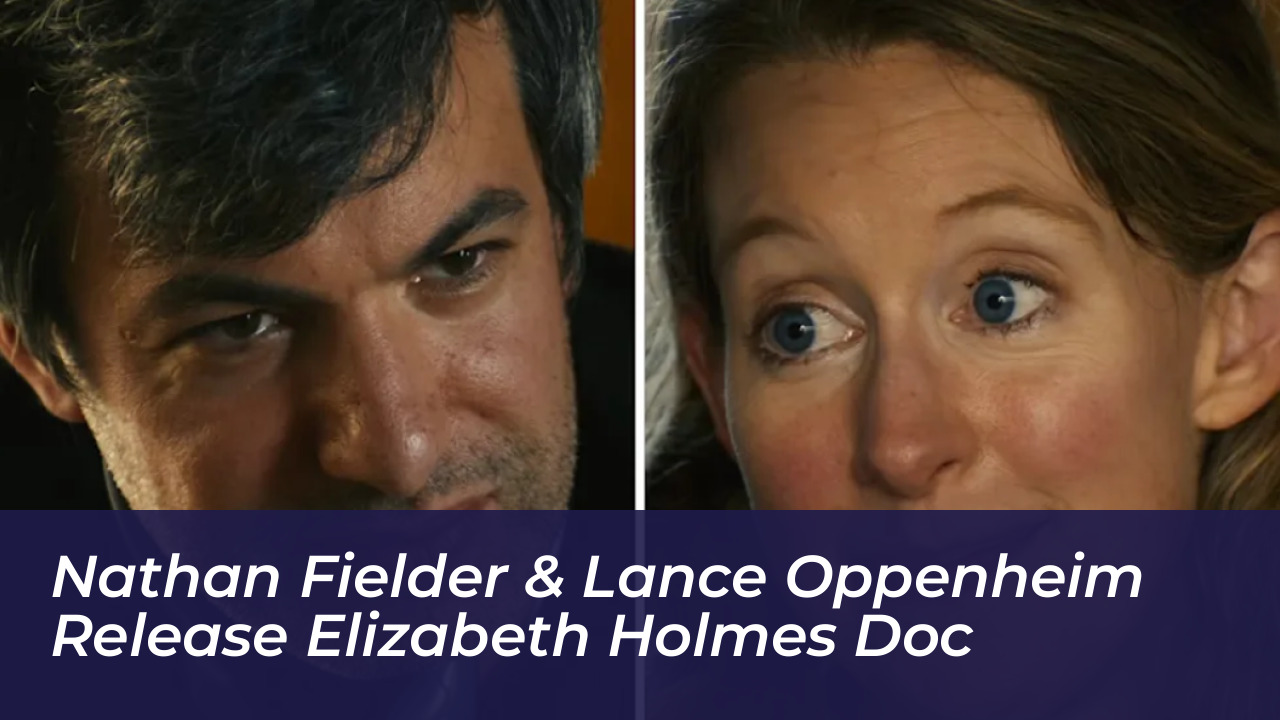

Filmmakers Nathan Fielder and Lance Oppenheim have stunned the entertainment industry by releasing You Can See Everything, a feature-length documentary chronicling the final weeks of former Theranos founder Elizabeth Holmes before she reported to federal prison. Developed in absolute secrecy over nearly four years, the project made its unexpected premiere at the Telluride Film Festival. It left audiences and critics grappling with its intimate and deeply unsettling exploration of narrative control and corporate fraud.
The project began 34 days before Holmes was scheduled to begin serving an 11-year sentence for fraud related to her blood-testing startup, Theranos. Holmes and her partner, Billy Evans, invited Fielder, Oppenheim, and a remarkably small production crew into their San Diego home. What initially started as an observational documentary transformed into a sprawling, three-year investigative odyssey that tracked Holmes through rejected appeals, ongoing legal maneuvers, and her steadfast assertions of innocence.
Inside the Secret Four-Year Production
According to interviews given by the co-directors during subsequent screenings at the New York Film Festival, the production relied on unorthodox methods to capture authentic moments without altering the household dynamic. Operating with just seven total crew members-with only four allowed inside the home at any given time-cinematographer David Bolen utilized long-zoom lenses and fixed wide-angle cameras to monitor rooms continuously.
Fielder, widely known for his unique comedic and social experiment formats in Nathan for You and The Rehearsal, initially intended to stay entirely behind the camera. However, as Holmes and Evans repeatedly engaged him in conversation off-camera, the directors shifted their approach. They captured Fielder’s real-time reactions and positioned him as an on-screen investigator attempting to parse truth from performance.
“I was like, ‘I’m definitely not going to be in this when we started,’” Fielder recalled during a post-screening discussion. “Every time we would miss a moment or try to change a lens, that would be when they would also be engaging Nathan off-camera. So eventually… we decided essentially to completely change the way both of us work.”
A Radical Approach and Critical Response
Clocking in at approximately 174 minutes, You Can See Everything adopts a 4:3 aspect ratio reminiscent of retro reality television, keeping the focus tightly centered on the facial expressions and interactions of its subjects. Critics at Telluride and subsequent screenings praised the film for its formal radicalism and the intense ethical quandaries it provokes. Rather than feeding into public fatigue surrounding the Theranos scandal, the documentary forces viewers to confront the uncomfortable reality of a disgraced executive attempting to engineer a public redemption arc.
Throughout the film, Fielder and Oppenheim document Holmes and Evans discussing plans to pursue a new health technology venture, even while prison looms. The project also investigates Evans’s heavy involvement in managing Holmes’s public image and social media footprint. According to the filmmakers, neither Holmes nor Evans viewed the completed documentary prior to its festival rollout. Communication between the subjects and the crew broke down toward the end of the production process as Evans sought greater control over the narrative.
Release Plans and Unresolved Questions
Distributed by A24, You Can See Everything is scheduled to arrive in theaters on October 16. This follows its heavily guarded rollout where theatergoers had their smartphones locked in secure pouches and titles withheld until the lights dropped.
With Holmes currently incarcerated and her clemency petition pending before the U.S. Office of the Pardon Attorney, the documentary acts as the most visible platform yet for her ongoing legal and public relations strategy. Yet, the film deliberately leaves its central question unanswered: whether Holmes is a master manipulator executing a carefully scripted performance, or someone genuinely convinced of her own narrative.
“I really am struggling to this day to understand exactly what I experienced,” Fielder admitted to audiences. “Truly, to this day, I don’t quite know what I went through.”