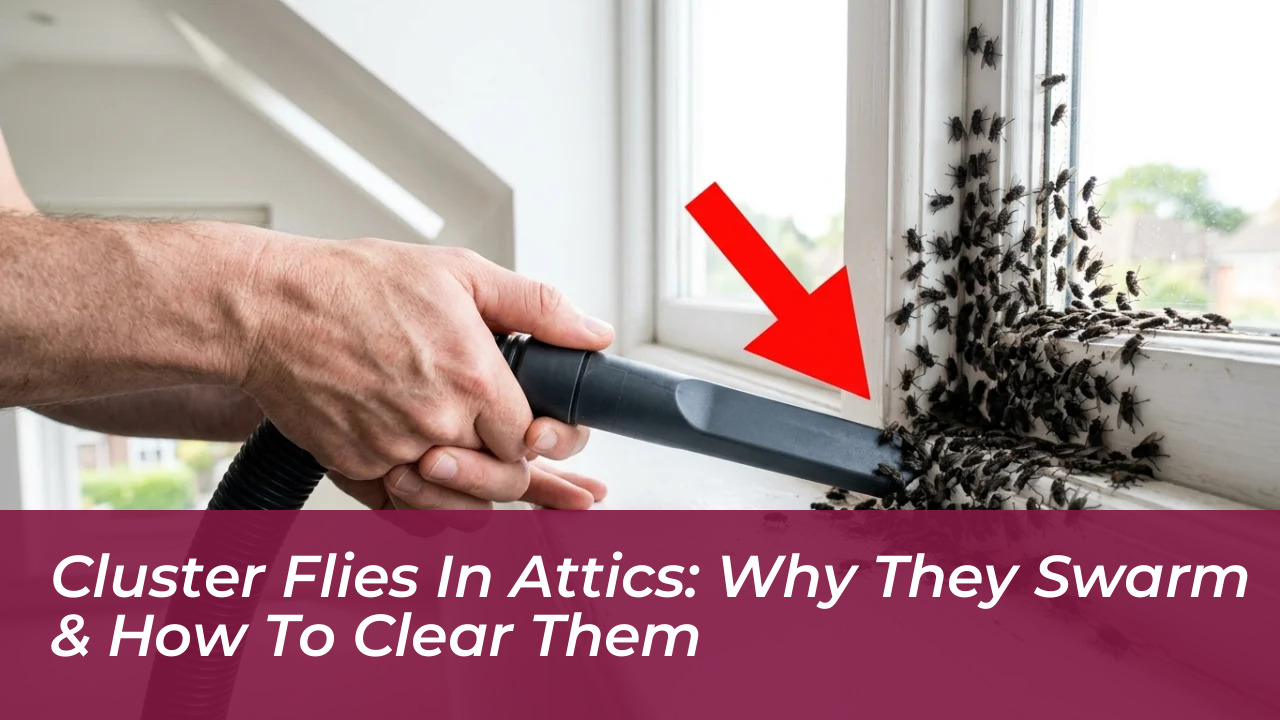

As outdoor temperatures drop during autumn, homeowners across the country often face an unexpected seasonal nuisance: cluster flies invading upper levels of the house. Unlike common houseflies that breed in garbage and contaminate food, these dark grey, golden-haired insects seek out dark, enclosed warmth purely for shelter. They gather by the hundreds or thousands inside attics, upper crawlspaces, and roof voids to hibernate through the cold months.
Understanding their unique biology and overwintering behavior makes managing these unexpected indoor swarms much simpler and far less stressful. Here is a detailed look at why cluster flies target homes, how to identify them, and the most effective strategies to clear and prevent them.
Spotting the Signs: How to Identify Cluster Flies
Distinguishing cluster flies (Pollenia rudis) from standard household pests requires a closer look at their physical appearance and movement. Adult specimens typically measure approximately 8 mm in length. They feature a dark grey body covered with distinctive golden-yellow hairs across the thorax, accompanied by noticeable dark stripes or lines positioned directly behind the head.
When autumn temperatures drop, their metabolism slows down drastically. Instead of darting rapidly through kitchens like common filth flies, cluster flies congregate in large, sluggish pockets around upper windows, skylights, and roof insulation. When disturbed, they move clumsily and slowly, often emitting a faint, sweetish odor reminiscent of buckwheat honey.
“A mass of cluster flies is a nuisance in the house, especially in large numbers, and as they may also return to the same location year after year, they can become a recurring issue,” explained Natalie Bungay, head of membership and technical at the British Pest Control Association (BPCA).
The Earthworm Connection and Indoor Risks
The outdoor biology of cluster flies explains why their indoor habits differ so dramatically from other pests. Female adults deposit their eggs directly onto outdoor soil surfaces rather than on organic kitchen waste, garbage bins, or pantry goods. Once hatched, the subterranean larvae burrow deep into the ground, acting as parasites that feed exclusively on earthworms.
Because their entire reproductive cycle takes place outdoors, cluster flies do not spread food-borne pathogens, transmit diseases, or pose direct health and contamination risks inside living areas. They do not chew wood, damage insulation, or chew through electrical wiring. Their impact is purely psychological and aesthetic: a large, buzzing seasonal nuisance that occasionally wanders down into living spaces on warm winter afternoons.
Myth vs. Fact: Food Contamination
A widespread assumption among property owners is that an attic fly swarm indicates spoiled food, hidden rot, or poor household sanitation. The biological reality is entirely different. These insects are completely indifferent to food prep surfaces, trash cans, or open pantries. Their sole objective inside a building is finding dry shelter for autumn hibernation and a safe pathway back outside when spring arrives.
Cluster Fly Specification Overview
- Adult Body Length: Approximately 8 mm
- Physical Markings: Dark grey body with yellow thoracic hairs and stripes behind the head
- Primary Indoor Activity: Overwintering and hibernation in attics and wall voids
- Diet / Larval Host: Soil-dwelling earthworms
- Indoor Health Risk: Nuisance pest; non-contaminating to human food and living spaces
Eradication and Control Strategies
Handling a seasonal swarm depends heavily on the volume of insects inhabiting your structure. While minor gatherings require only basic tools, extensive structural roosts frequently demand specialized pest management methods.
1. Vacuum Extraction
For minor gatherings around windows, attics, and upper eaves, capture them directly using a vacuum cleaner fitted with a disposable collection bag. Work on warm winter days when the flies are most active and sluggishly crawling toward light sources. Seal the collection bag tightly before disposal.
2. Targeted Aerosols and Light-Trap Methods
Domestic aerosol fly sprays offer rapid knockdown for localized interior rooms where stragglers emerge during warm spells. Alternatively, the light-trap method-darkening the home while leaving one window open with an external light source-safely guides active flies outside without chemicals or mess.
3. Professional Fogging and Insecticide Treatments
Massive colonies nesting deep within attic insulation often necessitate specialized insecticidal treatments administered by qualified professionals. Certified technicians use products containing residual active ingredients like deltamethrin or bifenthrin to safely control heavy roosts without posing chemical exposure risks in your primary living spaces.
Exclusion: The Only Permanent Solution
Killing existing cluster flies without sealing entry points guarantees the problem will return the following autumn. Cluster flies release chemical aggregation signals-pheromones-that prompt surviving populations to return to the exact same structure year after year. Permanent control relies entirely on physical exclusion.
- Inspect and screen attic vents: Cover soffit and eave vents with fine-mesh hardware cloth (minimum 16-mesh) to block entry points.
- Seal gaps around fascia boards: Use paintable latex caulk to close gaps where exterior trim has warped or pulled away from the structure.
- Weatherstrip attic hatches: Ensure attic access doors seal tightly to prevent flies from migrating down into living quarters.
- Check utility penetrations: Seal gaps where electrical conduits, plumbing pipes, or cable lines enter through exterior walls.
Checking your attic spaces and upper window frames as outside temperatures drop helps catch overwintering swarms early. Regular physical exclusion, sealing attic gaps, and rapid cleanup keep seasonal invaders out of your roof for good.