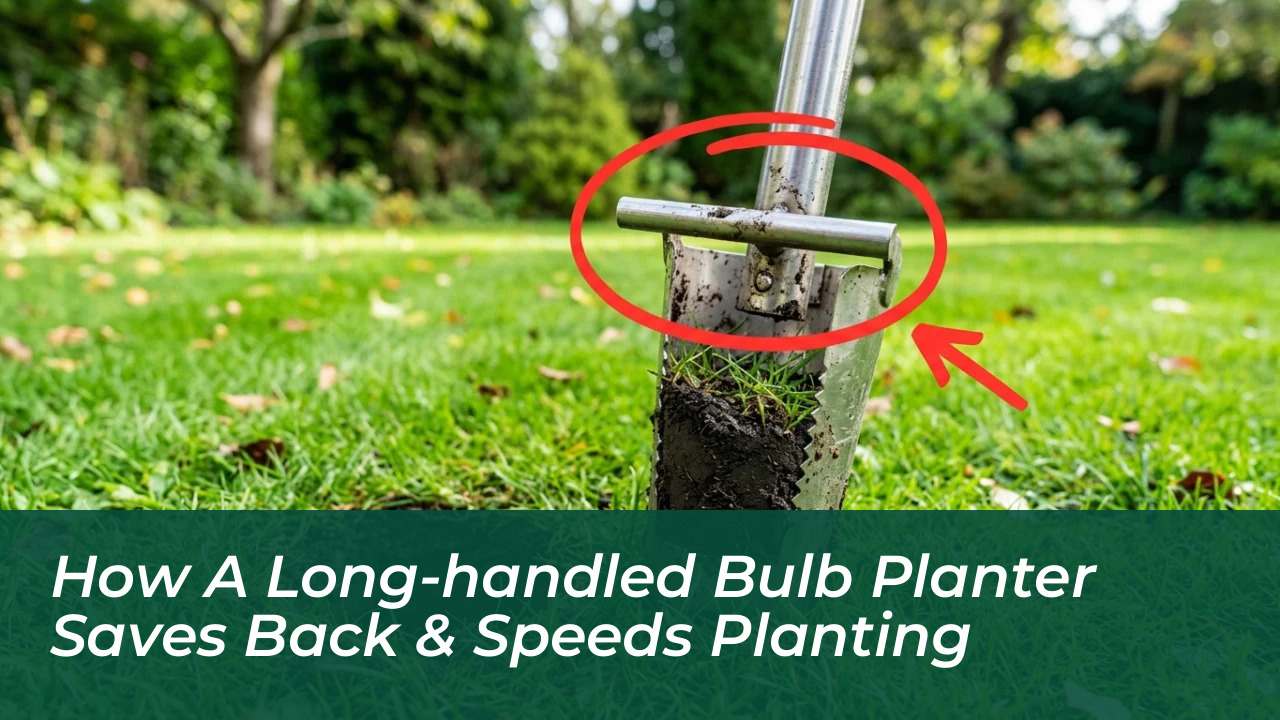

Autumn bulb planting delivers vibrant early-season color, but burying hundreds of individual bulbs across garden borders and turf often leads to intense lower back fatigue. Gardening experts highlight an ergonomic solution that bypasses repetitive kneeling and trowel digging entirely: using a dedicated long-handled bulb planter. By extracting a uniform core of soil while standing upright, the tool guarantees that every bulb reaches its optimal depth without disturbing neighboring root systems. This mechanical advantage speeds up seasonal preparations significantly, transforming a tedious chore into an effortless routine before winter freezes the ground.
“Want to plant bulbs without breaking your back? A brilliantly simple bit of kit for planting bulbs makes one of autumn’s biggest gardening jobs feel far less laborious.”
Strategic Layouts: Naturalized Drift vs. Formal Border Design
Before punching the first core into your soil, the layout determines the entire aesthetic of your spring garden. A bulb planter offers the highest utility when planting across lawns, natural meadow areas, or large landscape drifts where manual hand-trowel work creates excessive turf tearing.
For an authentic woodland or natural meadow display, toss handfuls of bulbs gently across the lawn and bore into the sod wherever they drop. In structured garden borders, weave them closely between established herbaceous perennials and ornamental grasses to generate continuous waves of foliage as early spring blooms fade.
Step-by-Step Execution with a Long-Handled Tool
Mastering the tool requires minimal technique and provides clean, instant planting holes. Operating the tool properly preserves lawn turf and reduces physical strain to zero:
- Position and Drive: Place the hollow cutting cylinder vertically over your designated spot, step onto the foot bar, and push firmly into the earth.
- Twist and Lift: Rotate the handle slightly to sever roots or dense dirt, then pull directly upwards to extract an intact soil core.
- Drop the Bulb: Seat the bulb firmly at the base of the cavity, keeping the pointed end pointing toward the sky and the flat root plate downward.
- Replace the Plug: Position the extracted soil plug directly over the opening and press down lightly with your boot to level the ground.
Overcoming Common Planting Mistakes
A widespread misconception is that shallow placement encourages quicker flowering. In reality, shallow bulbs remain exceptionally vulnerable to hard winter frosts, rodent theft, and severe dehydration during unseasonably dry cold snaps. Most spring-flowering bulbs must sit at a depth equal to two to three times their individual height. A standard cylindrical planter automatically guides the gardener toward this safety threshold, ensuring subterranean insulation during deep winter dormancy.
Spring Variety Specifications
Different flower species require distinct depths and soil tolerances to establish robust root networks before winter.
| Bulb Variety | Recommended Planting Depth |
|---|---|
| Tulips | Two to three times bulb height |
| Daffodils (Narcissi) | Two to three times bulb height |
| Alliums | Two to three times bulb height |
| Crocuses | Two to three times bulb height |
| Hyacinths | Two to three times bulb height |
Once all plugs are firmed back into turf or garden beds, water the designated area thoroughly if autumn soil remains dry. This initial soak eliminates air pockets surrounding the base and activates vegetative root development long before freezing temperatures arrive.
Upgrading your equipment transforms demanding yard tasks into efficient seasonal milestones. Selecting the right species and planting depth guarantees years of perennial spring returns. Share your experiences with us and let us know your favorite spring bulb combinations in the comments below.
Frequently Asked Questions
What is the main advantage of a long-handled bulb planter?
The primary benefit is ergonomic. It allows you to dig planting holes from an upright standing position, completely eliminating repetitive bending, kneeling, and lower back strain.
How deep should I plant spring-flowering bulbs?
As a general rule, spring bulbs like tulips, daffodils, and crocuses should be planted at a depth equal to two to three times the individual height of the bulb.
Can I use a long-handled bulb planter in hard clay soil?
Yes, but you may need to apply steady body weight via the foot bar and twist the handle to shear through dense clay. Watering the soil a day before planting can also make the process significantly easier.
Will a bulb planter work in lawn turf?
Absolutely. In fact, long-handled step-on planters are ideal for naturalizing bulbs in lawns because they extract a clean core of turf with minimal tearing or lawn damage.
What size bulb planter should I buy for standard garden bulbs?
A standard 3-inch diameter tube works exceptionally well for most common home garden bulbs, including standard tulips, daffodils, hyacinths, and garlic cloves.