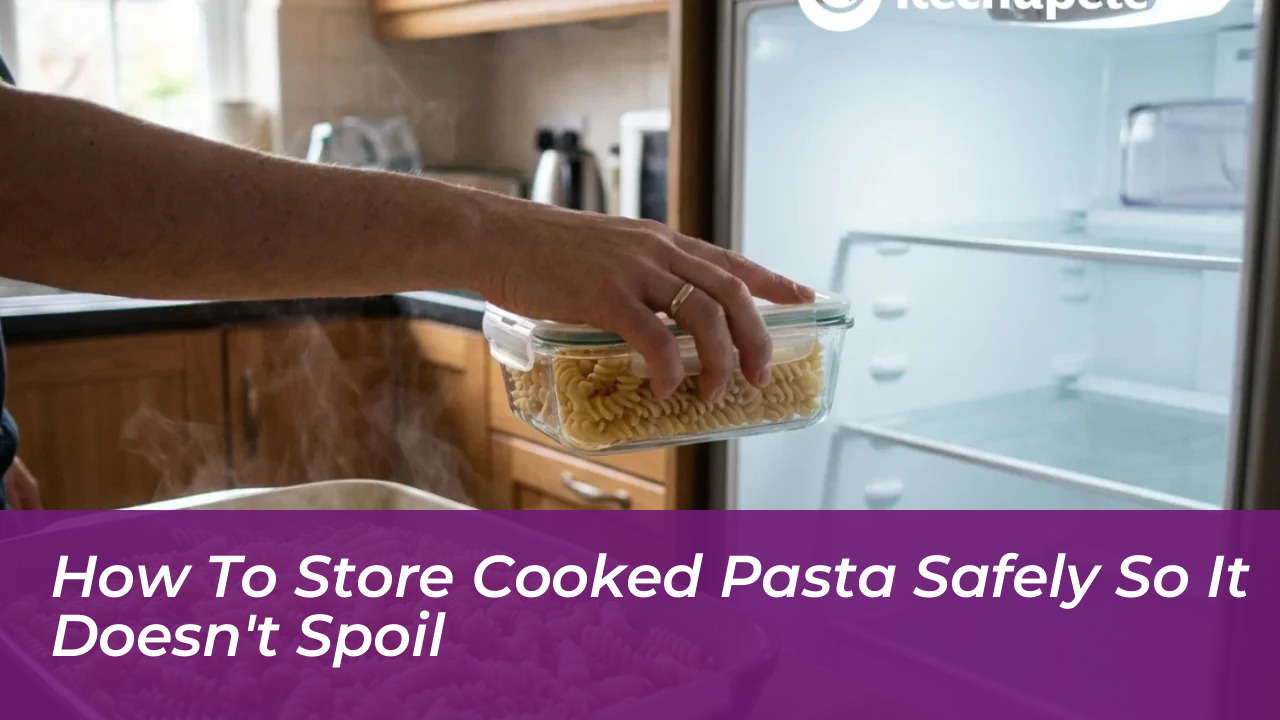

A package of dry pasta can sit safely in the pantry for months. However, the rules change the moment those noodles hit boiling water. Once cooked, pasta absorbs water and becomes a perishable leftover. It requires prompt refrigeration if it is not eaten immediately. Treating leftover pasta casually leads to poor texture, such as a clumpy or mushy mess, and hidden food safety risks from starchy food-borne bacteria like Bacillus cereus. Proper storage relies on controlling four simple factors: time out of the fridge, cooling speed, storage temperature, and overall shelf life.
The Critical Two-Hour Rule for Food Safety
The most important step in storing cooked pasta happens immediately after it leaves the stove. Cooked starches left at room temperature sit squarely in the bacterial danger zone where microorganisms multiply rapidly. According to standard food safety guidelines, cooked foods must be refrigerated before two hours have passed. If the ambient room temperature exceeds 30 ºC (86 ℉), that safety window shrinks to just one hour.
Leaving a large pot of steaming pasta on the countertop to cool slowly is a common mistake. To drop the temperature quickly and safely, use these methods:
- Spread large batches of pasta across shallow trays or baking sheets to dissipate heat rapidly.
- Rinse plain pasta briefly under cool water if you need an immediate temperature drop.
- Transfer the pasta into shallow, airtight containers rather than keeping it packed tightly inside a deep pot.
How to Store Plain Cooked Pasta in the Refrigerator
Plain cooked pasta without any sauce is the easiest to preserve and maintains its quality the longest. Before sealing it away, toss the drained and cooled pasta with a very thin film of olive oil. The oil creates a protective barrier that stops individual strands from sticking together into a solid block as surface starches cool and set.
Store the oiled pasta in a clean, airtight container scaled to an appropriate size. An oversized, nearly empty container wastes space and dries out the food. Conversely, an overly compressed container damages texture. Maintain refrigerator temperatures below 5 ºC (40 ℉) at all times.
Storing Pasta Mixed with Sauce or Salad Ingredients
When pasta is already tossed with a sauce, storage times change. Keeping pasta and sauce separate yields the best long-term texture, but you do not need to deconstruct a finished dish. Macaroni with tomato sauce, a rich bolognese, or a creamy Alfredo can go straight into a sealed container after cooling.
However, sauced pasta has a shorter refrigerator window because the liquid continues to soften the noodles. Cold pasta salads containing perishable ingredients like fresh cheese, eggs, chicken, tuna, or mayonnaise require strict temperature control. The safety of these delicate ingredients dictates the shelf life of the entire dish.
Shelf Life: How Long Does Cooked Pasta Last?
For safe home consumption, refrigerated cooked pasta should be eaten within a maximum of 3 to 5 days. Food safety authorities, including AESAN, advise that refrigerated cooked foods should not linger beyond three days. The day you cook the pasta counts as day one. Reheating it mid-week does not reset the preservation clock.
Recommended Storage Timelines
- Plain cooked pasta (oiled): 3 to 5 days in the refrigerator.
- Pasta mixed with sauce: 2 to 3 days in the refrigerator.
- Cooked pasta stored in the freezer: Up to 2 months.
Can You Freeze Cooked Pasta?
Freezing is an excellent option for long-term storage if you follow proper protocols. Plain pasta tends to lose some firmness upon thawing, so cook the noodles slightly underdone (al dente) if you plan to freeze them.
Cool the pasta quickly, toss it with a small amount of oil, and divide it into single-serving freezer bags or airtight containers. Squeeze out excess air to prevent freezer burn. When you are ready to eat, drop frozen plain pasta directly into boiling water for one to two minutes to thaw and reheat simultaneously.
How to Reheat Leftover Pasta Without Making It Rubbery
Reheating methods vary depending on how the pasta was stored. Plain pasta benefits from a brief immersion in boiling water or a quick toss in a hot skillet with a splash of water or broth to restore moisture. Sauced pasta should be warmed gently in a pan over medium-low heat.
When using a microwave, cover the container, add a few drops of water if the noodles look dry, and stir halfway through the cycle to eliminate cold spots. Ensure the food reaches a steaming, uniform temperature throughout before serving.
When to Throw Cooked Pasta Away
Never rely solely on appearance or smell to judge whether old pasta is safe. While mold, a slimy surface, a sour odor, or discoloration are definitive signs of spoilage, dangerous bacterial toxins do not always alter the look or smell of food. Discard your cooked pasta immediately if:
- It has sat at room temperature for more than two hours.
- It has spent more than three to five days in the refrigerator.
- You cannot verify when it was cooked or how long it sat out.
- Your refrigerator failed to maintain a safe temperature below 5 ºC.
Practicing good habits-such as cooling food rapidly, portioning meals correctly, and labeling containers with preparation dates-ensures you can enjoy leftover pasta safely and reduce unnecessary food waste.
Frequently Asked Questions About Storing Cooked Pasta
Can I leave cooked pasta in the pot overnight on the stove?
No. Leaving cooked pasta at room temperature overnight places it squarely in the bacterial danger zone. It must be refrigerated within two hours of cooking to prevent dangerous microbial growth like Bacillus cereus.
Does rinsing hot pasta under cold water stop it from cooking?
Yes. Rinsing plain pasta under cold tap water rapidly halts the cooking process and quickly cools the noodles down, making it an effective step when preparing large batches for refrigeration.
Why does leftover pasta turn into a solid clump in the fridge?
As cooked pasta cools, surface starches firm up and act like glue, binding the strands together. Tossing the drained pasta with a small teaspoon of olive oil creates a barrier that prevents this sticking.
Can I safely reheat cooked pasta more than once?
While not strictly prohibited, reheating pasta multiple times degrades its texture and increases the total time spent in temperature danger zones. Always reheat only the specific portion you plan to eat.
Is it better to store pasta and sauce together or separately?
Storing them separately preserves the best pasta texture because noodles continue absorbing moisture from sauce over time. However, storing them together is entirely safe as long as the dish is cooled and refrigerated promptly.