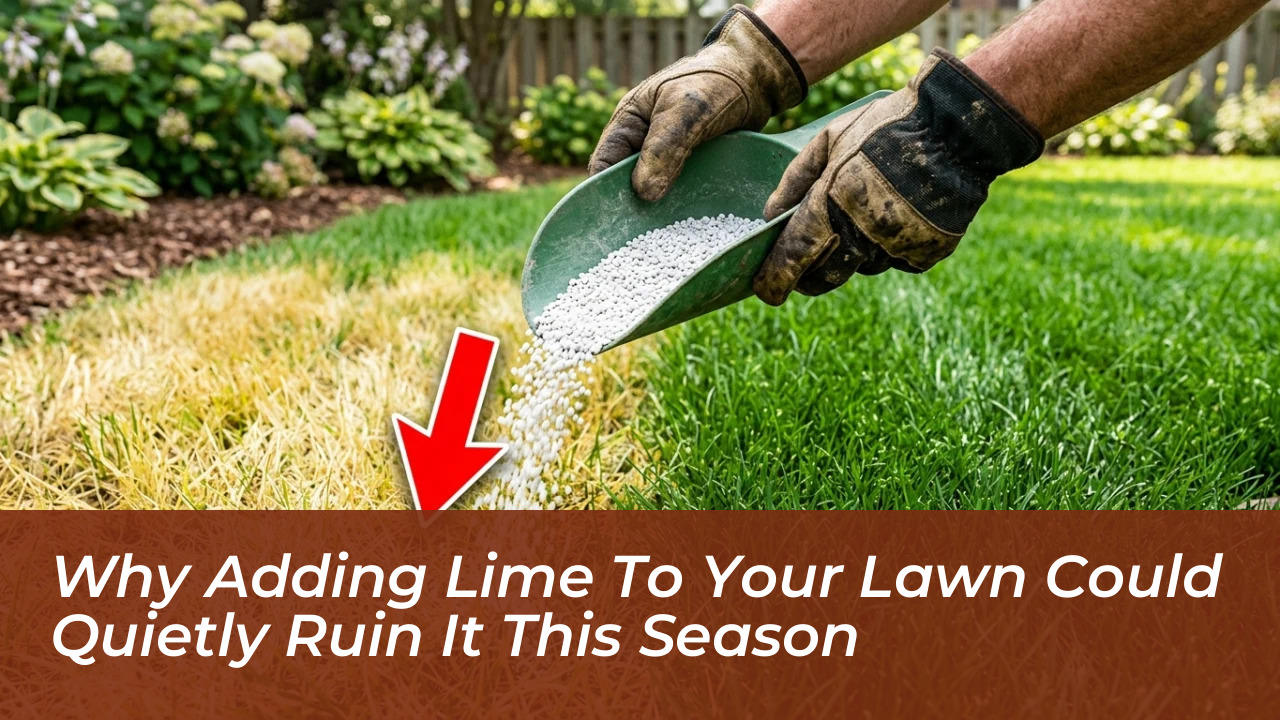

Applying garden lime to your turf can backfire severely if your soil pH already sits between 6.0 and 7.0. While highly acidic soil locks away essential plant nutrients, adding lime unnecessarily pushes ground chemistry into an alkaline state. This triggers iron deficiencies and long-term turf stress. Before spreading a single bag this autumn, verifying your ground’s baseline chemistry is the only way to avoid irreversible lawn damage.
Most turfgrass varieties thrive within a soil pH range of 6.0 to 7.0, where root systems efficiently absorb essential compounds like calcium, magnesium, and phosphorus. Kentucky bluegrass is particularly vulnerable to sour conditions and requires soil as close to a neutral 7.0 as possible. However, applying lime automatically as part of a routine autumn checklist is a widespread misconception that often does more harm than good. Applying lime to soil that already sits between pH 6.0 and 7.0 risks making the soil alkaline, which can induce iron deficiency and create persistent nutrient uptake problems for lawns.
The Soil Science: Calcitic vs. Dolomitic Adjustments
Strongly acidic soil creates an invisible barrier for turf development by binding critical macro-nutrients. When soil pH drops significantly below 6.0, grass plants cannot take up calcium, magnesium, and phosphorus in the quantities required for healthy cellular growth. One notable exception to this rule is centipede grass, which naturally prefers more acidic conditions.
Homeowners generally choose between two primary soil amendments: calcitic lime and dolomitic lime. Calcitic products supply calcium carbonate, whereas dolomitic formulas contain a significant amount of magnesium carbonate alongside calcium. Selecting dolomitic lime is the standard remedy when an analytical test proves the ground is deficient in magnesium as well as overly acidic.
Formulation also dictates how smoothly the application process runs. Pelletized lime products are widely preferred over raw powdered formulas because pellets flow uniformly through standard push spreaders without drifting into the air or creating hazardous dust clouds.
Timing Rules for Cool-Season and Warm-Season Lawns
The calendar timing of your amendment depends entirely on the specific grass species established in your yard. Cool-season turf-including fescue, perennial ryegrass, and Kentucky bluegrass-benefits most from an autumn treatment once the turf recovers from summer heat stress. Applying amendments in the fall gives the product all autumn and winter to break down under precipitation and migrate into the root zone before rapid spring growth resumes.
In contrast, warm-season yards should not receive lime in autumn. Homeowners managing warm-season grasses need to wait until spring to lime and rehabilitate their turf, especially since warm-season varieties tolerate acidic ground much better.
Grass and Soil Requirement Standard Recommendation
- Optimal Soil pH Range: 6.0 to 7.0 (Near 7.0 for Kentucky bluegrass)
- Tolerant Exception: Centipede grass thrives in acidic ground
- Cool-Season Timing: Apply in autumn after heat recovery
- Warm-Season Timing: Hold application until spring green-up
- Maximum Single-Season Rate: Cap at 50 lbs per 1,000 sq ft
- Retesting Schedule: Retest 6 months post-treatment; otherwise every 2 to 3 years
How to Test Soil Before Spreading
Because visual inspection cannot determine whether turf is suffering from nutrient lockout or a completely different pathology, testing is mandatory. You can submit composite soil samples collected from multiple spots across your yard to a local agricultural extension office for professional lab analysis. Extension services provide precise, customized application guidelines tailored directly to your soil texture and target pH.
For urgent timelines, commercial soil test kits provide rapid estimates of your current pH balance. If your test confirms optimal levels between 6.0 and 7.0, skip the application entirely and plan to retest in two to three years. If you do spread lime, always perform a follow-up test six months later to track how much the pH shifted.
Step-by-Step Execution: Proper Spreader Setup and Safety Caps
Even when a lawn desperately needs remediation, dumping heavy quantities at once can shock the root system. Adhering to strict application caps prevents acute chemical imbalance in the upper soil profile.
- Prepare the foundation: If installing new sod or seeding bare ground, till the lime directly into the top 4 to 6 inches of soil prior to planting. For existing turf, aerate the lawn first to create open channels that allow pellets to move beneath the surface.
- Calculate safe volume: Never apply more than 50 pounds of lime per 1,000 square feet in a single season, regardless of how acidic your soil test results appear.
- Calibrate the equipment: Check the product packaging for specific spreader settings, or default to a lower dial setting if uncertain.
- Execute a crisscross pattern: Apply half of the calculated volume in straight, even rows in one direction across the property. Walk perpendicular to your initial tracks to distribute the remaining half evenly.
- Irrigate thoroughly: Water the lawn immediately following distribution to rinse active dust and pellets off the grass blades and down into the soil.
Frequently Asked Questions
What happens if I put lime on a lawn with a normal pH?
If your soil pH is already between 6.0 and 7.0, adding lime forces the soil into an alkaline state. This can lock out vital micronutrients like iron, causing yellowing grass blades (iron chlorosis) and general turf stress.
When is the best time to apply lime to cool-season grasses?
Cool-season grasses such as Kentucky bluegrass, fescue, and perennial ryegrass benefit most from autumn applications. This allows winter moisture to break down the product before active spring growth begins.
Should I use calcitic or dolomitic lime?
Calcitic lime supplies calcium carbonate, whereas dolomitic lime supplies both calcium and magnesium. A soil test will tell you if your lawn specifically requires added magnesium.
Can I apply lime to warm-season turf in the autumn?
No. Warm-season grasses should not receive lime in autumn. Homeowners managing warm-season turf should wait until spring green-up to apply amendments.
How much lime is safe to apply in a single season?
Never apply more than 50 pounds of lime per 1,000 square feet in a single season, regardless of how low your initial soil pH test results read.
How often should I retest my soil after liming?
Perform a follow-up soil test six months after applying lime to monitor pH shifts, and test every two to three years under normal maintenance conditions.