
Interior designers have identified eight specific design mistakes that prematurely age a formal dining room, ranging from undersized area rugs to matching showroom suites and 1990s cherry wood veneers. While major relics like wall-to-wall shag carpet or orange-stained oak cabinetry immediately flag past eras, everyday decorating traps often age dining spaces in far sneakier ways. Refreshing an outdated layout does not require a full structural demolition. Subtle fixes, including balanced scale, modern lighting temperatures, and mixed-era furnishings, instantly restore architectural vitality to tired entertaining spaces.
1. The Proportional Pitfall: Poorly-Scaled Rugs
Scale issues ruin dining aesthetics faster than worn finishes. A frequent error in residential spaces is the “postage stamp” rug, which restricts movement and distorts spatial balance. Interior designer Ashley Gilbreath notes, “Something that can make a dining room feel dated are postage stamp rugs. You want the four legs of each chair to still be on the rug when they’re pushed out from the table.” Choosing an appropriately sized anchor protects spatial harmony and allows guests to move their seating without catching chair legs on bare flooring.
2. Stagnant Overhead Lighting and Dingy Hardware
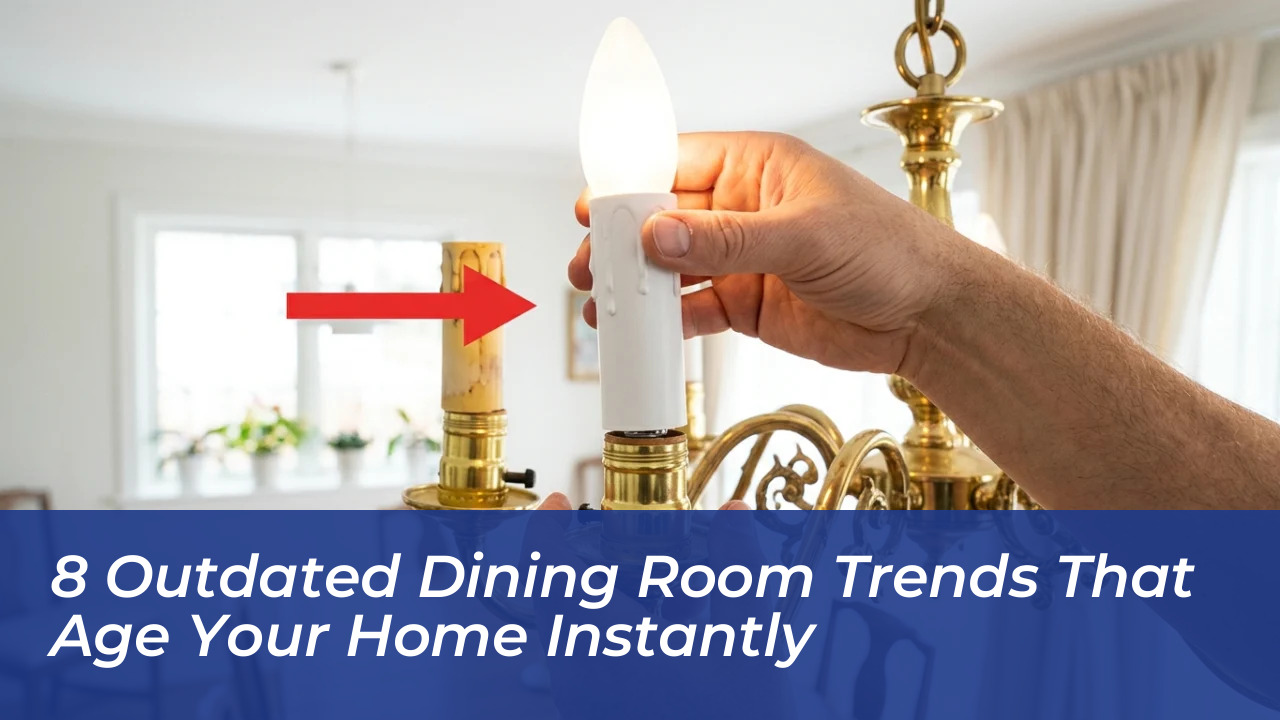
Beyond floor proportions, stagnant overhead illumination compounds room fatigue. Dingy chandelier hardware and flat lighting flatten textures across the entire space. Simple swaps, like replacing old, yellowing chandelier candle sleeves with fresh white covers from a local hardware store or online retailer, immediately brighten the setup without the expense of an entirely new fixture. Layering dimmable lighting creates contemporary depth suited for modern entertaining occasions.
3. High-Gloss Cherry Wood Veneers
While solid, authentic wood endures across centuries, certain synthetic finishes act as immediate time stamps. Designers note that high-gloss, veneered cherry wood furniture remains distinctly anchored to 1990s mass-market trends. As industry professionals frequently observe, wood furniture will never truly go out of style, but mass-produced veneered cherry wood furniture seems perpetually stuck in the previous decade.
4. Popcorn Textured Ceilings and Tattered Textiles
Popcorn textured ceilings present an equally stubborn obstacle, immediately dragging down vertical sightlines regardless of what furnishings sit below. Similarly, tattered and yellowed textiles undermine the room. While a true patina adds authentic character, dingy or visibly soiled dining chair upholstery signals neglect rather than deliberate vintage charm. Swapping or re-covering worn chair seats instantly lifts the visual weight of the room.
5. Monolithic Matching Furniture Suites
Monolithic furniture sets-where the sideboard, dining table, china cabinet, and all eight chairs share an identical factory finish-strip a home of its unique personality. Today’s design standards favor a curated, collected interior built carefully across styles and eras.
Breaking Up Matching Sets
- Mix seating profiles: Pair an antique wooden dining table with contrasting modern chairs, or alternate head-of-table armchairs with different side chairs.
- Vary wood tones and finishes: Place a painted or distinctively stained sideboard against a classic wooden table instead of buying identical catalog collections.
- Bridge eras: Combine traditional case goods with streamlined transitional lighting to establish balanced visual tension.
6. Harsh Primary Color Schemes
Color choices heavily define a room’s era. High-saturation primary reds paired with Chippendale silhouettes and crystal fixtures read strictly as 1980s motifs. Swapping harsh primaries for earthy terracotta or deep plum tones modernizes the envelope while retaining dramatic depth.
7. Oversized Hutches and Restrictive Storage
Large pieces of furniture, like massive dining room hutches and oversized tables, limit the available space in the room and restrict the arrangement of other design elements. Large pieces can also overwhelm a space, making it appear visually awkward and unbalanced, particularly in modern homes with smaller footprints. Modern homeowners are increasingly seeking storage furniture that is more discreet, flexible, and less invasive.
8. High-Maintenance Carpet and Heavy Formal Drapes
As comfortable as carpet can be, it has limited utility in a dining room where food debris and liquid spills cause lasting damage. Hard surface flooring materials like hardwoods, tile, natural stone, and luxury vinyl plank offer longevity and easier maintenance. Additionally, heavy, formal drapes contribute to a dated look. Design preferences today are shifting toward lighter window treatments like sheer linen or cotton panels that provide privacy while letting in natural light.
Summary of Outdated Trends and Designer Solutions
- Undersized area rug: Upgrade to a rug large enough to keep all chair legs grounded when pulled out.
- Dingy chandelier candle covers: Replace with fresh white candle covers and layer dimmable lighting sources.
- Cherry wood veneer suites: Transition to mixed wood finishes and mismatched antique accent pieces.
- Primary red paint schemes: Shift to layered palettes using terracotta, plum, and varied textures.
- Matching showroom furniture sets: Create curated combinations blending historic eras and varied seating profiles.
- Popcorn ceilings: Invest in smooth ceiling finishes to open up vertical visual height.
Overcoming a dated look requires balancing deep colors with varying textures and deliberate highlights. Evaluating your current furniture scale and swapping out small details like lighting components can instantly refresh your space. Taking time to mix furniture styles across eras ensures your dining area evolves gracefully without falling captive to fleeting catalog trends.