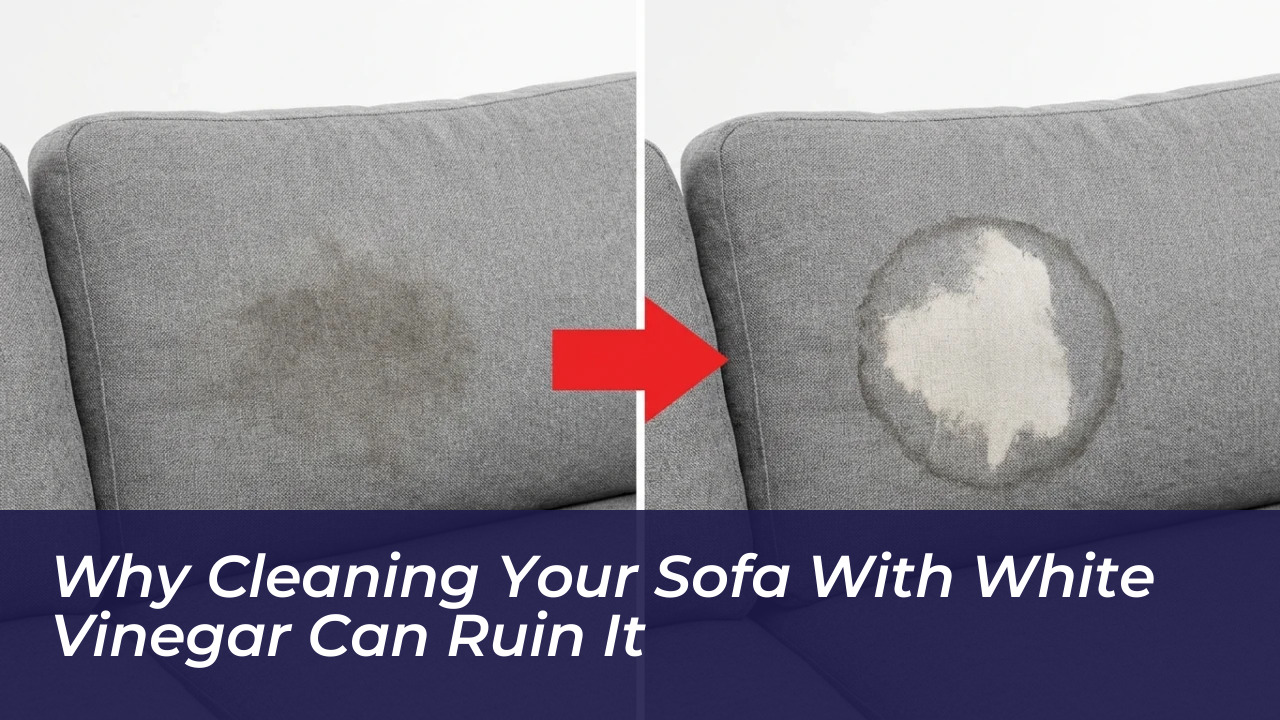

White vinegar has earned a reputation across social media as a miracle household cleaner, praised for its low cost and natural acidity. However, splashing a DIY water-and-vinegar solution onto living room furniture can backfire. While it helps lift light surface smudges on specific materials, applying white vinegar to the wrong sofa fabric risks permanent discoloration, structural fiber breakdown, and stubborn water rings. Before bringing any acidic mixture near your couch, understanding the chemistry of your upholstery and knowing when to back away from viral cleaning hacks is essential.
The Hidden Risks: Acidity, Fabric Codes, and Fiber Reactions
Household white vinegar typically carries a higher acetic concentration than everyday culinary vinegar. Applying this untested, acidic liquid directly to delicate upholstery fibers-such as wool, silk, or fine velvet-can break down delicate textile structures, strip surface finishes, and cause immediate dye bleeding. Natural, protein-based fibers are especially sensitive, reacting poorly to low pH solutions.
Before applying any liquid cleaner, always examine your manufacturer’s care tag, usually hidden beneath the cushions or along the bottom frame. Key upholstery cleaning codes dictate safe practices:
- W: Indicates that water-based cleaning agents and solutions are safe to use.
- S: Requires solvent-based cleaners only; water will ruin the fabric.
- WS or SW: Indicates a blend where either water-based or solvent-based cleaners can be used with caution.
- X: Prohibits all liquid cleaning; vacuuming or professional dry cleaning only.
If instructions forbid water-based treatments, applying diluted vinegar causes water rings, shrinkage, and deep-seated dampness. The American Cleaning Institute emphasizes strictly following these manufacturer guidelines, noting that vinegar is never a universal solution for all home surfaces.
When cleaning furniture, safety boundaries must never be crossed. Combining white vinegar with bleach, ammonia, or commercial cleaning chemicals creates hazardous, toxic gases. Keeping solutions limited to clean water and properly diluted vinegar in a well-ventilated space safeguards both indoor air quality and textile integrity.
Myth vs. Reality: What Vinegar Cannot Sanitize
A widespread misconception claims household white vinegar acts as a hospital-grade disinfectant capable of eliminating deep pathogens, heavy mold, and stubborn organic stains. The Environmental Protection Agency (EPA) notes that it does not verify domestic kitchen staples against specific harmful microorganisms.
For deep-set grease, ink, heavy bio-contaminants, or widespread mold inside dense cushion padding, acidic water mixtures fail entirely. Addressing sanitation issues requires certified antimicrobial products applied strictly according to label directions.
| Cleaning Factor | White Vinegar Solution Capability |
|---|---|
| Surface Odors | Helps reduce mild, everyday household smells on compatible fabrics. |
| Disinfection | Not verified by the EPA against specific pathogenic microorganisms. |
| Fresh Smudges | Aids in lifting light, non-greasy surface marks without added perfumes. |
| Grease and Ink | Ineffective; typically requires commercial solvent or targeted cleaners. |
| Fabric Safety | High risk for water-sensitive fibers, wool, silk, and delicate velvet. |
Step-by-Step: The Only Safe Way to Clean Water-Tolerant Upholstery
If your couch care tag explicitly permits water-based care (Code W), follow a controlled, non-saturating method to minimize moisture penetration while treating surface spots:
- Vacuum thoroughly: Remove cushions and use an upholstery attachment across all main surfaces, crevices, and seams to capture dry dust, crumbs, and pet hair.
- Mix a dilute solution: Combine one part white vinegar with at least three parts water in a clean container. Never mix with bleach or secondary cleaners.
- Conduct a hidden spot test: Lightly dampen a clean white cloth with the mixture and press it onto an incons**cuous area, such as a back corner. Allow it to air-dry completely to verify no dye transfer or rings occur.
- Dab without oversaturating: If the test succeeds, gently blot the target area in small sections using a lightly moistened cloth. Never spray liquid directly onto the sofa, as it can soak into interior foam.
- Rinse and dry: Dab the area with a second cloth dampened only with plain water to lift residual acidity. Press a clean, dry towel firmly against the spot to absorb excess liquid, and ventilate the room until fully dry.
Preventative Maintenance and Alternative Care
Routine care prevents dirt from binding permanently to woven fibers, reducing the need for harsh solutions. Vacuuming interior seams weekly and gently blotting liquid spills immediately with a dry cloth keeps upholstery fresh. Always inspect manufacturer labels before introducing any moisture, and when in doubt, rely on specialized commercial cleaners or professional extraction services to protect your investment.
Frequently Asked Questions
Can I use undiluted white vinegar on my sofa?
No. Undiluted white vinegar carries high acidity that can instantly strip dyes, weaken natural fibers, and leave permanent water rings or chemical damage on your upholstery.
How do I know if my couch is safe for water-based cleaners?
Check the manufacturer’s tag typically located under the cushions or along the bottom frame. Look for a “W” or “WS/SW” code, which indicates water-based solutions are acceptable.
Does vinegar kill germs and bacteria on upholstery?
While vinegar offers mild antibacterial properties against certain everyday household germs, the EPA does not verify it as an effective disinfectant against specific harmful pathogens.
What should I do if vinegar leaves a water ring on my couch?
Lightly mist the entire panel or stained boundary with distilled water using a spray bottle, then immediately blot and feather the edges with a clean microfiber cloth while drying it quickly with a cool hairdryer or fan.
Are there better alternatives for cleaning a stained couch?
Yes. Mild dish soap mixed with warm water, specialized commercial upholstery cleaners formulated for your specific fabric code, or professional hot water extraction services provide safer and more reliable cleaning results.