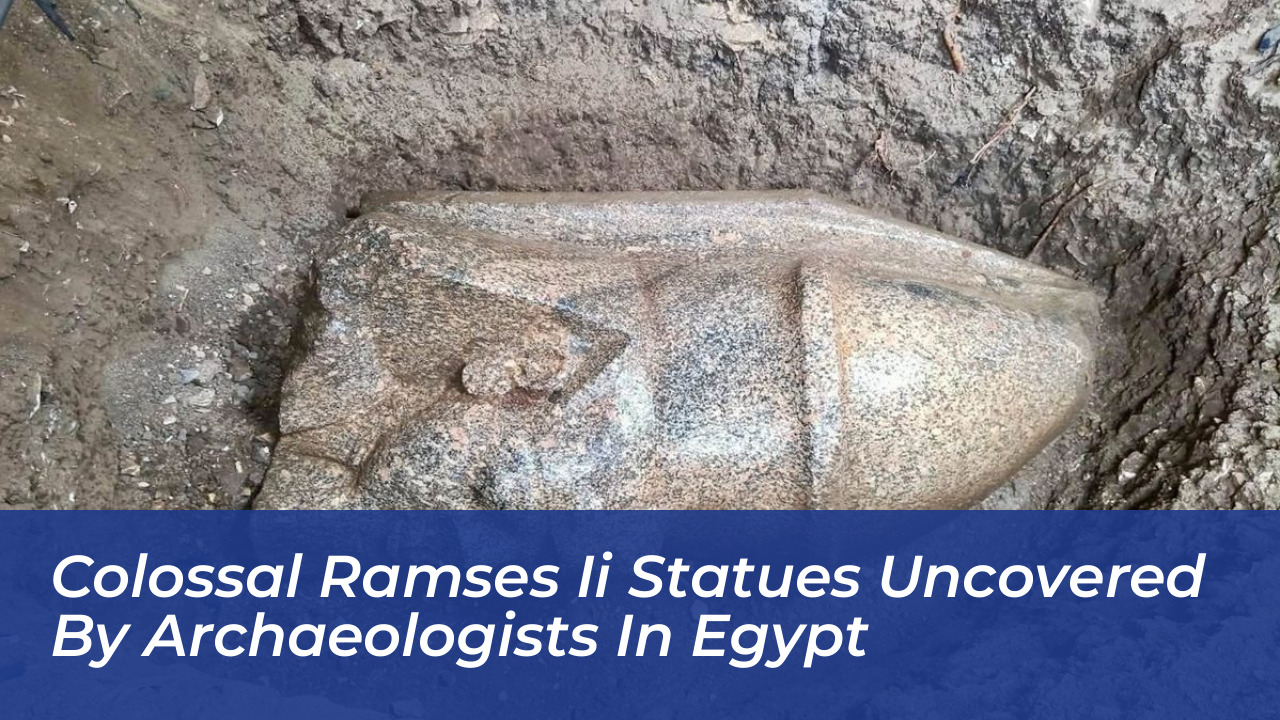

Two monumental royal statues and an inscribed pink granite block have been uncovered from an excavation in Behbeit el-Hagar, a village located in Egypt’s northern Gharbia Governorate. The significant historical find came to light after a local resident discovered an ancient carved stone while working on land outside his home.
The Egyptian archaeological mission is currently investigating the remains. These include a large statue positively identified as Pharaoh Ramses II and a second figure believed to depict the same legendary ruler. According to Egypt’s Ministry of Tourism and Antiquities, the observant resident immediately reported the unusual stone to local antiquities officials. This prompted an official site inspection that quickly confirmed its deep archaeological value.
Following the report, the Supreme Council of Antiquities organized a specialized team to conduct rapid rescue excavations at the site. Their efforts successfully brought the colossal statues and the mysterious inscribed granite block out of the earth for preservation and study.
Details of the Ramses II Discoveries
The first statue is highlighted by a massive head measuring approximately 1.60 meters, or 5 feet 3 inches, in height. Archaeological findings described by the excavation team confirm that the head depicts Ramses II wearing the distinct double crown. This ancient symbol represents his absolute authority over both Upper and Lower Egypt.
Key elements of the ongoing excavation include:
- Location: Behbeit el-Hagar, Gharbia Governorate, northern Egypt.
- Catalyst: A chance discovery by a local resident working on his land.
- Primary Artifacts: A 1.60-meter head of Ramses II, a second royal figure, and an inscribed pink granite block.
- Authority: Supervised and investigated by Egypt’s Supreme Council of Antiquities and Ministry of Tourism and Antiquities.
Historical Context of Ramses II
Pharaoh Ramses II, often referred to as Ramses the Great, ruled Egypt during the 19th Dynasty. He is widely considered one of the most powerful and celebrated pharaohs of the New Kingdom period. His reign lasted over 60 years in the 13th century BCE and left behind a legacy of immense architectural projects, military campaigns, and colossal statuary designed to project divine rule.
Discoveries in the Gharbia Governorate continue to shed light on the widespread presence of royal monuments throughout the Nile Delta. Experts from the Supreme Council of Antiquities will continue restoration and analysis work on the newly recovered artifacts to better understand their original temple context in Behbeit el-Hagar.