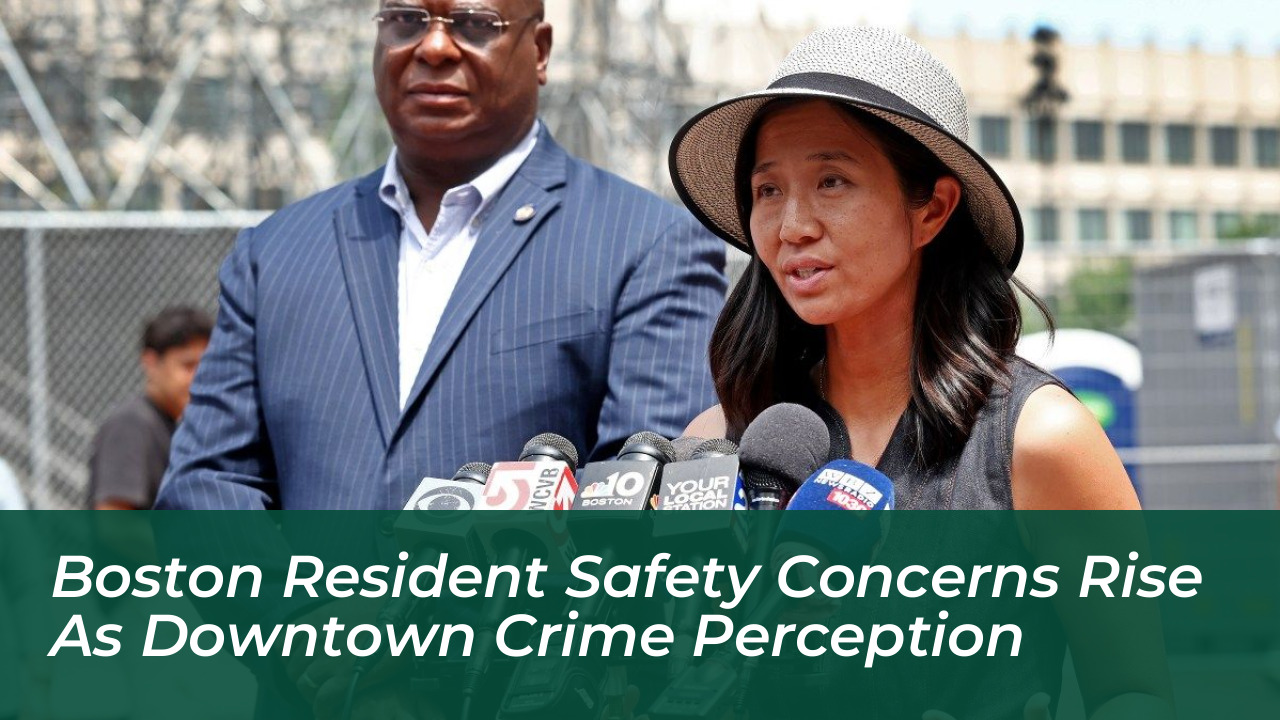
Public safety concerns have surged across the core of Massachusetts’ capital, according to new data released by community groups. Boston resident safety concerns have risen significantly as downtown crime perception worsens, leaving more than half of local residents feeling unsafe in their own neighborhoods.
The alarming shift in public sentiment was highlighted in a survey published Friday, Oct. 2, 2026, by the Downtown Boston Neighborhood Association (DBNA). The study reveals that 56% of respondents currently feel unsafe downtown and on Boston Common, representing a sharp 22-percent increase from the 34% recorded in 2025.
Alarming Numbers and Growing Urgency
The survey data underscores a widespread sense of unease among people who live, work, and commute through the city’s commercial and civic center. An overwhelming 90% of study participants categorized public safety as an urgent issue, with 53% rating their concern at the absolute maximum urgency level on a 10-point scale.
Residents pointed to several persistent issues affecting their daily routines:
- Drug activity and discarded needles: Cited by 45% of surveyed residents as the top safety hazard.
- Homelessness and loitering: Mentioned by 30% of participants.
- Violence: Cited by 20% of respondents, nearly tripling from just 7% in the 2025 survey.
- Traffic and e-bikes: Highlighted by 15% of individuals.
- Erratic behavior and mental illness: Noted by 13% of participants.
Geographically, the greatest concentrations of safety worries centered around the Boston Common and Park Street corridor at 46%, followed closely by Tremont Street (31%), Downtown Crossing (27%), Washington Street (22%), and Winter Street (21%).
The Clash Between Aggregate Statistics and Ground Realities
The spike in resident anxiety highlights a growing disconnect between citywide crime statistics and the subjective experiences of downtown pedestrians. While municipal leaders, including Mayor Michelle Wu, have maintained that Boston remains one of the safest major cities in the country by pointing to general year-over-year declines in several category indexes, community members argue that local incidents carry an outsized psychological toll.
The summer months saw several high-profile violent episodes in heavily trafficked zones. Notably, a concentrated string of violence in late June and early July left five people shot within a half-mile radius near the Tremont Street corridor and Boston Common. Subsequent stabbings near transit hubs like South Station and North Station further rattled commuters and residential stakeholders.
DBNA co-founder Rishi Shukla, writing in recent community commentaries, emphasized that aggregate numbers fail to capture the cumulative impact of visible disorder. “Residents do not experience a citywide annual average. They experience a particular block, subway entrance, park path, or walk after dark,” Shukla noted.
Calls for Action and Sustained Police Presence
In response to the deteriorating perception of safety, neighborhood coalitions, business groups, and local elected officials have pushed for coordinated interventions. When asked what single change they would make with a magic wand, 45% of survey respondents called for a more visible and sustained police presence rather than short-term enforcement surges.
City Councilor Ed Flynn, who represents downtown districts, has repeatedly voiced alarm over the strain placed on local law enforcement. Highlighting reports from the Boston Police Patrolmen’s Association regarding departmental shortages of roughly 600 officers, Flynn has called for comprehensive recruitment plans, emergency hearings, and expanded inter-agency support to alleviate forced overtime and prevent officer burnout.
Despite the challenges, community leaders remain optimistic that targeted collaboration can reverse the trend. Following emergency meetings hosted by the One Downtown Task Force, stakeholders have worked alongside the Boston Police Department to recalibrate patrols in designated hotspots, yielding localized improvements that business and residential leaders hope to maintain through the remainder of the year.
Frequently Asked Questions
What percentage of downtown Boston residents feel unsafe?
According to the October 2026 survey by the Downtown Boston Neighborhood Association, 56% of respondents reported feeling unsafe downtown and on Boston Common.
What are the primary safety concerns for downtown residents?
The top concerns include public drug activity and discarded needles (45%), homelessness and loitering (30%), violence (20%), traffic and e-bikes (15%), and erratic behavior (13%).
How have crime perceptions changed compared to previous years?
The percentage of residents feeling unsafe increased by 22 percentage points from 34% in 2025 back toward levels seen prior to coordinated municipal interventions.
What solutions are residents and neighborhood groups requesting?
Survey participants and community associations are primarily asking for a consistent, highly visible police presence, sustained foot patrols, and integrated behavioral health and addiction services.