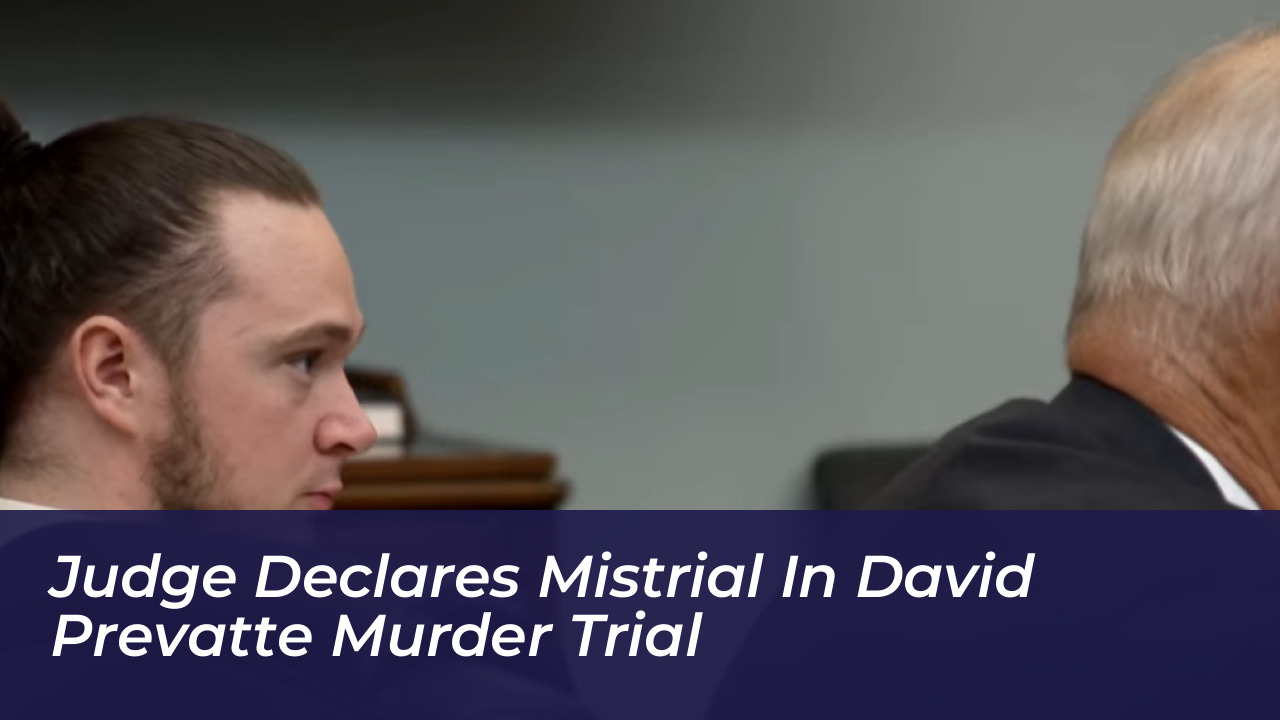

A North Carolina judge declared a mistrial on Thursday, October 15, in the high-profile murder trial of David Wesley Prevatte. Presiding over proceedings in Pender County, the court halted the trial on its tenth day following a cascade of juror misconduct allegations that severely compromised the fairness of deliberations.
The trial centered on the tragic 2017 death of 5-year-old Paitin Fields, Prevatte’s niece. Prosecutors maintained that Fields was strangled and s*xually assaulted inside a family home on November 13, 2017, before being rushed to the hospital where she died three days later. Prevatte, who was 19 at the time of the incident and 27 during the trial, faced charges including first-degree murder.
Juror Misconduct Investigations Derail Deliberations
The dissolution of the trial began when Juror No. 2 alerted the court to concerning remarks made by Juror No. 3. According to reports from local outlets WECT and WWAY, Juror No. 3 allegedly told fellow panelists, “I know more about this than I can say,” while characterizing the proceedings as the “biggest case to hit Pender.”
Additionally, Juror No. 3 was accused of making defensive statements regarding Prevatte’s background. These included claims that the local community had ostracized him, that he was blackballed by the town, and that he could not be racist because his girlfriend was Black. After questioning individual jurors, the judge dismissed Juror No. 3 for failing to disclose prior knowledge and being untruthful during questioning.
Although the defense and prosecution initially agreed to seat an alternate juror to allow the trial to proceed, subsequent inquiries unveiled deeper complications. Bailiffs and jurors surfaced additional claims involving other panel members discussing Prevatte’s criminal history, known as a “rap sheet,” and police familiarity with the defendant.
Confronted with widespread contamination of the jury pool, the judge ruled that a mistrial was necessary. While noting that a mistrial remains a drastic legal remedy, he concluded that multiple compounding misconduct claims made it impossible to guarantee an impartial verdict.
The Prosecution and Defense Arguments
Before the mistrial halted proceedings, the court heard extensive testimony regarding the events of November 2017. Prosecutors argued that Prevatte used a pair of red earbuds to strangle the child. Medical experts, including Dr. Brian McGrath, testified that Fields suffered severe non-accidental trauma and ligature strangulation that could not be explained by illness or infection.
Earlier in the trial, the judge dismissed a separate first-degree statutory offense charge against Prevatte due to a lack of supporting DNA evidence. This left the primary murder charge and other related evaluations for the jury’s consideration.
The defense aggressively contested the state’s timeline and forensic evidence, characterizing the investigation as a “witch hunt.” Defense attorneys pointed out that Prevatte was the person who found the victim unresponsive, administered CPR, and rushed her to the hospital alongside family members in an effort to save her life. They argued that any potential DNA transfer on clothing occurred naturally during emergency life-saving measures.
Following the declaration of the mistrial, an administrative session has been scheduled for November 13 to determine the next legal steps for the case. The closed session will pave the way for prosecutors to decide on retrying the defendant.