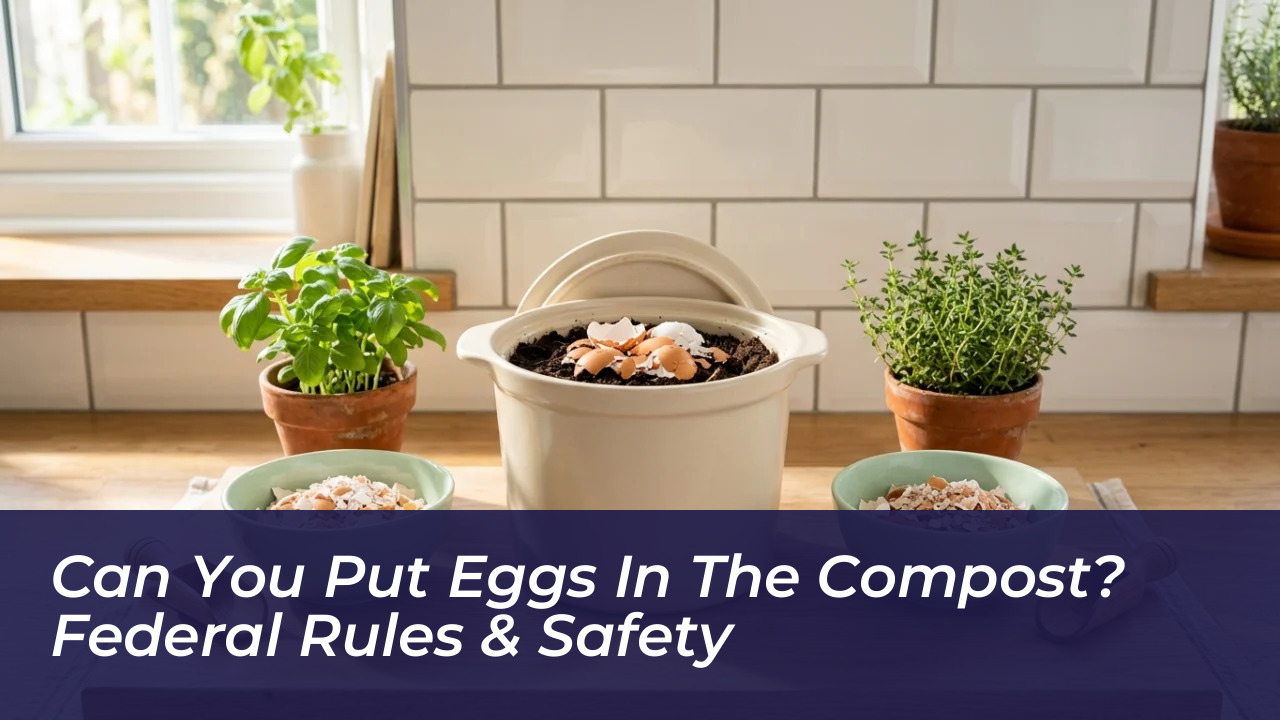

Adding raw or cooked whole eggs into a compost pile is officially advised against by the U.S. Environmental Protection Agency (EPA). Government guidance warns that animal-related kitchen waste routinely attracts rodents and flies while creating pungent odors. Yet, while standard cold composting setups cannot handle breakfast leftovers safely, specialized systems and hot composting methods can process them effectively when proper thermal conditions are met.
The distinction between managing whole eggs and repurposing discarded eggshells represents a critical balance in household waste management. Home gardeners look for ways to enrich their soil with valuable organic matter, but improper disposal can turn a garden bed into a pest nuisance. Understanding how temperature and biological breakdown interact is the difference between rich organic fertilizer and a magnet for pests.
The Science Behind Composting Eggs and EPA Warnings
The primary concern cited by the EPA involves the breakdown of animal-derived organic matter, which includes grease, dairy, meat, and whole eggs. When these nutrient-dense materials decompose in a conventional cold compost setup, they break down very slowly. This sluggish decomposition process emits foul sulfur compounds that mimic the scent of rotten eggs, acting as an open invitation for rats, mice, raccoons, and insect swarms.
Beyond pest pressure, disease control remains an essential consideration for backyard growers. Composting whole eggs requires elevated thermal management, because failing to reach pathogen-destroying temperatures risks spreading harmful bacteria directly into garden soil. Pathogen suppression hinges entirely on system heat:
- Hot Composting: Requires high-nitrogen organic matter capable of driving internal pile temperatures between 140 and 160 degrees Fahrenheit. Within this thermal range, dangerous pathogens naturally die off.
- Bokashi Fermentation: Provides an airtight, enclosed fermentation system that safely seals away odors and completely prevents pests from accessing decomposing food waste.
Egg Decomposition Methods Compared
Choosing the right approach depends on your system capabilities and tolerance for pest management. Different techniques yield varying safety and risk levels:
- Standard Cold Composting: Not recommended. It creates severe odors and attracts unwanted vermin.
- Hot Composting (140°F-160°F): Safe. Sustained high heat successfully eliminates harmful bacteria and breaks down whole pieces.
- Airtight Bokashi Bin: Safe. Fermentation traps potential odors and locks out scavengers.
- Prepared Eggshells Only: Highly recommended. Enriches the active pile with essential calcium without inviting pests.
Best Practices for Composting Eggs and Eggshells
If you choose to compost egg waste, execution requires strict adherence to physical containment and temperature management. Never introduce spoiled or rotten eggs into your pile, as these introduce unwanted bacterial strains alongside foul scents.
How to Safely Process Egg Scraps
- Rinse off cooking residues: Thoroughly wash cooked or fried egg pieces under clean water to remove cooking oils, butter, and dairy films that attract vermin.
- Bury deep within the core: Place the scraps deep into the center of the compost pile where microbial activity and heat are highest.
- Install a physical barrier: Cover the active pile with a metal sheet, durable board, or protective wire screen to block scavengers.
- Balance green and brown ratios: Mix nitrogen-heavy green items like food scraps with carbon-rich brown items like dried leaves and shredded cardboard, aiming for three to four parts brown material to one part green.
The Power of Eggshells in Garden Soil
Unlike whole eggs, cleaned eggshells present minimal nuisance risks while providing nutritional value to tired garden beds. Eggshells are loaded with calcium, magnesium, and potassium, serving as a natural soil conditioner for flowering and fruiting plants.
Preparation remains critical to avoid cross-contamination. Washing eggshells prior to disposal significantly reduces the risk of salmonella entering garden soil where edible vegetables grow. Once washed, allow the shells to dry completely for several days before grinding them into fine fragments. Crushing the shells increases surface area, speeding up decomposition and helping your soil absorb vital minerals rapidly. Managing kitchen waste requires balancing soil enrichment with effective pest prevention, making crushed eggshells and enclosed fermentation your safest bets.