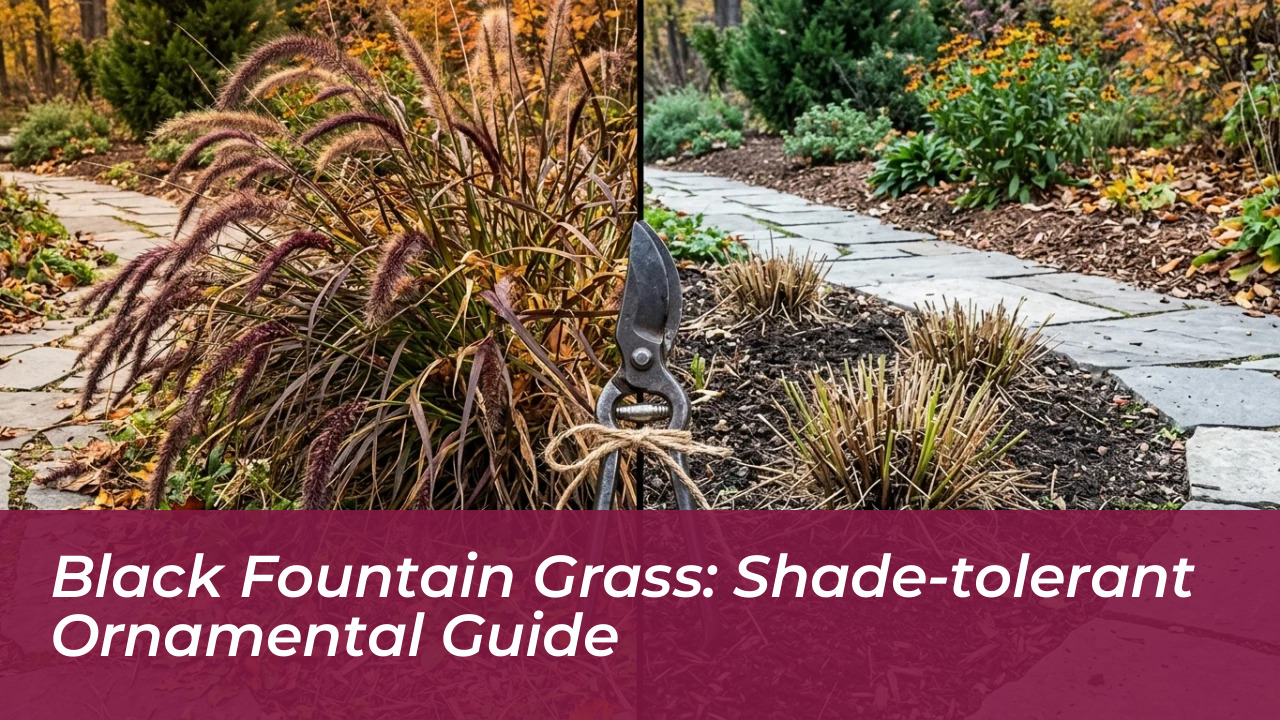

Black fountain grass, scientifically known as Cenchrus alopecuroides ‘Moudry’, has quickly become a favorite choice for horticulturists and home landscapers looking to add striking visual depth to their outdoor spaces. Offering lush upright greenery that reaches 2 to 3 feet in height alongside dramatic maroon plumes emerging from August through October, this fast-growing perennial brings reliable seasonal color to tricky landscape spots where other ornamental varieties often struggle.
Thriving across USDA hardiness zones 5 through 9, this versatile cultivar introduces rich texture and fluid architectural structure to garden borders, perimeters beneath high-canopy trees, and mixed containers alike. As autumn arrives, its dense mounds-which spread 3 to 4 feet wide-transition gracefully from vibrant dark green leaves to bright golden hues before settling into a soft tan through the winter months.
Black Fountain Grass: Appearance and Hardiness
Despite its moody trade name, black fountain grass does not actually feature dark foliage. Gardeners frequently confuse it with black mondo grass, a distinctive purple-black ground cover that exhibits a much slower growth rate. In practice, the ‘Moudry’ cultivar forms substantial architectural mounds of deep green blades, earning its title strictly from the dark, smoky maroon color of its bottlebrush flowers.
This vigorous grower establishes best in well-draining soil and can comfortably handle moist landscape pockets, including rain gardens and pond perimeters. It adapts seamlessly between full sun exposure and partial shade, making it an invaluable tool for perimeter areas that receive limited direct sunlight. While hotter summer climates cause the plant to grow even more vigorously, gardeners should note that deeper shade levels may slightly reduce the density of its signature plumes.
Growth Characteristics and Specifications
- Mature Height & Spread: 2-3 feet tall; 3-4 feet wide clumps
- USDA Hardiness Zones: 5 through 9
- Foliage Color Shift: Deep green to autumn gold, fading to tan in winter
- Bloom Season & Color: Maroon plumes appearing August to October
- Sunlight Needs: Full sun to partial shade (more flowers in direct sun)
- Soil Preference: Well-draining soil; tolerates moist areas
Essential Maintenance, Pruning, and Clump Division
Maintaining vigorous growth requires a straightforward seasonal pruning routine. Cut the clumps back down to 3 to 6 inches above soil level in late autumn or early winter. Securing a tight line of string around the upright stems prior to cutting ensures a clean, swift shear, keeps cleanup hassle-free, and prevents the plant from unwanted self-seeding.
To retain vitality and prevent hollow centers over time, gardeners should schedule root division roughly every three years after pruning, or tackle the task in early spring just before initial seasonal shoots emerge:
- Excavate the root system carefully with a garden spade, lifting the entire mature clump from the bed.
- Separate the root mass into distinct sections, ensuring every newly divided section contains a robust, healthy cluster of intact roots.
- Replant immediately into prepared, well-draining garden soil or containers.
Best Companion Plants for Vibrant Autumn Displays
Layering companion species around the base of black fountain grass creates contrasting depth in partially shaded landscape beds. Spreading ground covers like dwarf plumbago (Ceratostigma plumbaginoides) provide vivid blue flowers that contrast sharply against the ornamental grass as its blades turn golden yellow.
Similarly, red creeping thyme (Thymus praecox ‘Coccineus’) matches identical cultural conditions while creating a colorful, low-growing carpet. For added vertical variation and foliage interest, integrate coral bells (Heuchera) nearby. Their diverse array of leaf textures, rich hues, and patterns balances the fine texture of the fountain grass plumes, completing a low-maintenance, multi-tiered display that remains attractive deep into the season.
Frequently Asked Questions
Does black fountain grass actually have black leaves?
No, the name is a misnomer. The foliage is deep, glossy green. The plant is named “black” due to the dark, smoky maroon-to-black color of its bottlebrush flower plumes that emerge in late summer.
Is black fountain grass shade-tolerant?
Yes, it adapts very well to partial shade, making it a great option for spots beneath trees or areas that miss out on all-day direct sunlight, though it may produce slightly fewer blooms in deeper shade.
How do I stop black fountain grass from spreading too much?
In warmer climates, ‘Moudry’ can be a prolific self-seeder. To prevent unwanted spreading, shear the plant back to 3 to 6 inches in late autumn or early winter before the seed heads fully mature and drop.
How often should I divide black fountain grass?
To maintain plant health and prevent the center of the clump from dying out or becoming hollow, divide the root system every three years in early spring or late fall.
What are the best companion plants for black fountain grass?
Dwarf plumbago, red creeping thyme, and coral bells (Heuchera) make fantastic companions because they thrive in similar soil and moisture conditions while offering stunning color and texture contrasts.