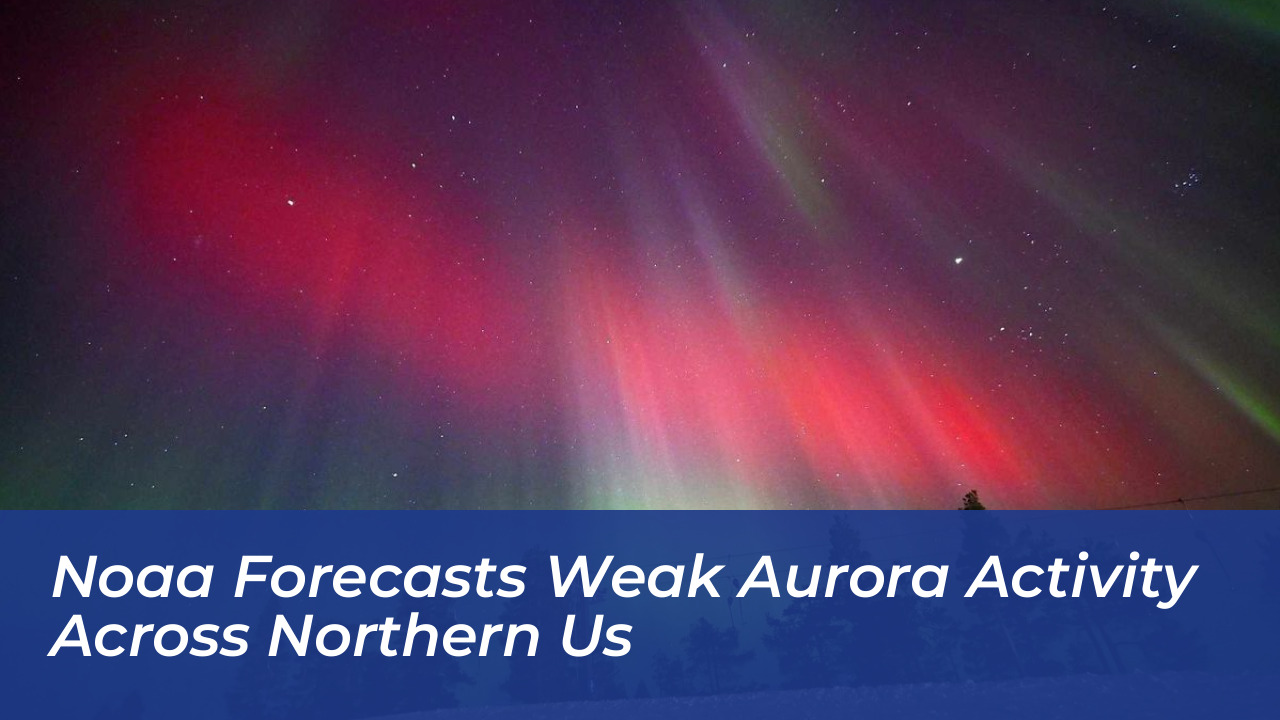

Recent coronal mass ejections (CMEs) that traveled toward Earth between October 11 and October 13 could spark brief auroral displays across parts of the northern United States. However, the National Oceanic and Atmospheric Administration (NOAA) reports that overall geomagnetic conditions are forecast to remain below storm levels.
According to NOAA’s latest space weather forecasts, the activity is expected to arrive late Thursday, October 16. Despite multiple solar eruptions heading in Earth’s direction, the anticipated planetary response remains subdued.
What to Expect from the Upcoming Aurora Forecast
Skywatchers hoping for intense, sweeping displays stretching deep into the United States may need to temper their expectations. NOAA models indicate that the strongest predicted three-hour Kp index value will reach just 2.67.
A Kp value of 2.67 is classified as quiet to unsettled. This reading falls well below the thresholds of G1 (minor) or G2 (moderate) geomagnetic storms, which are typically required to push visible aurora displays farther south into lower latitudes.

Viewing Opportunities at High Latitudes
Even though the broader geomagnetic forecast remains weak, minor and brief auroral activity cannot be entirely ruled out. NOAA notes that short-lived displays remain possible, particularly for observers located at high northern latitudes.
Successful viewing will heavily depend on local environmental conditions. Stargazers under clear and dark skies far away from city light pollution will have the best, albeit limited, chance of catching faint glows on the horizon.
Changing Space Weather Conditions
Space weather remains a dynamic and rapidly evolving field. NOAA space weather forecasters emphasize that evening viewing conditions can shift as incoming solar-wind measurements continue to arrive at monitoring satellites stationed between the sun and Earth.
Observers in northern border states are advised to monitor real-time NOAA Space Weather Prediction Center updates throughout the evening of Thursday, October 16, for any sudden fluctuations in solar-wind speed or interplanetary magnetic field orientation.