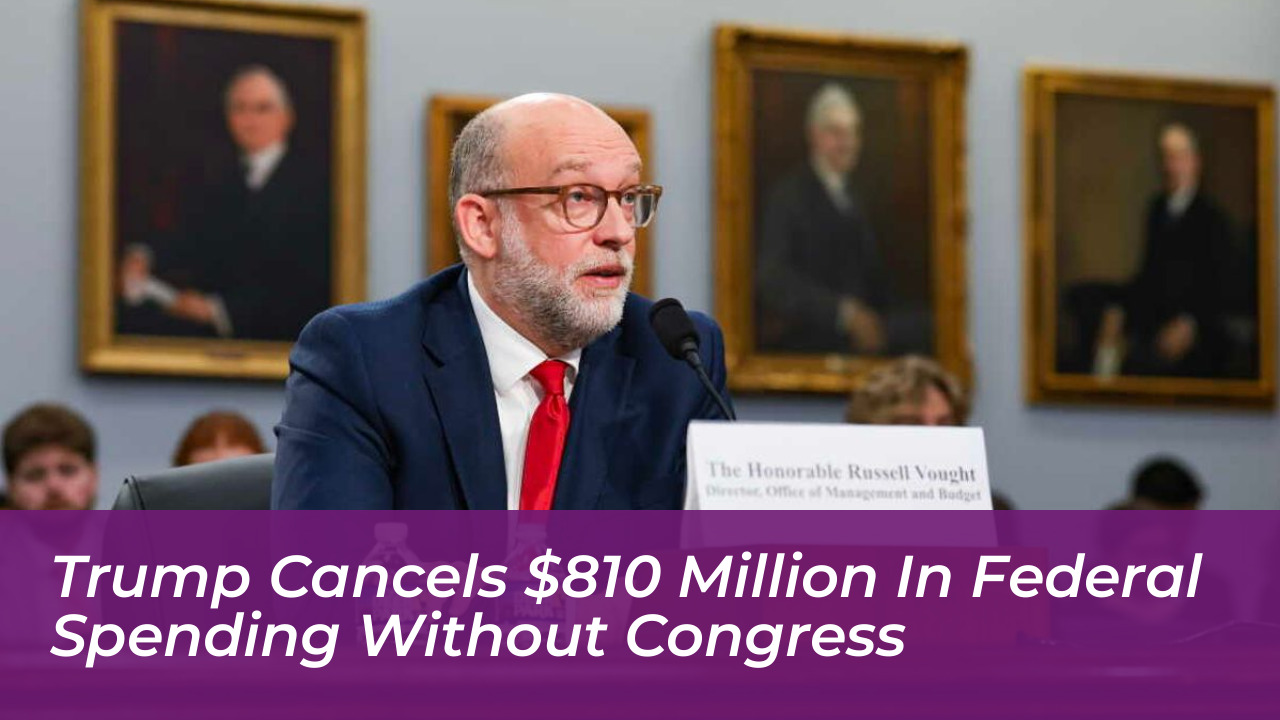
President Donald Trump announced the cancellation of approximately $810 million in federal spending previously approved by Congress. This decision intensifies a constitutional battle over the control of federal funds. The administration used a controversial budgetary maneuver known as a pocket rescission, notifying congressional leaders just days before the federal fiscal year ended.
The withheld funds impact a wide range of domestic and international initiatives. The single largest cut targets $567 million allocated through the Department of Health and Human Services (HHS) for refugee, asylee, and non-citizen social services. Additional funding reductions affect climate change research, Housing and Urban Development programs, Department of Justice community relations services, and international education grants.
The White House Office of Management and Budget (OMB) defended the action, calling the targeted allocations wasteful or unnecessary. Administration officials argued that programs assisting refugees and asylees are overfunded due to successful border policies. OMB Director Russell Vought and the administration maintained that the executive branch is exercising legitimate authority under the Impoundment Control Act of 1974.
Bipartisan Backlash and Constitutional Concerns
The unilateral cancellation drew immediate condemnation from lawmakers in both parties. They argued that bypassing Congress violates the separation of powers outlined in Article I of the U.S. Constitution.
- Senator Susan Collins (R-ME): The Senate Appropriations Committee chair called the move unlawful and an attempt by the OMB to undermine Congress’s constitutional power of the purse.
- Senator Patty Murray (D-WA): The Senate Appropriations Committee vice chair labeled the cuts a theft from the American people and criticized the administration for rendering congressional votes optional.
- Senate Minority Leader Chuck Schumer (D-N.Y.): Condemned the maneuver as an illegal stripping of funds supporting education, health, and clean air research.
The Mechanics of a Pocket Rescission
Under the Impoundment Control Act, a president can formally request that Congress rescind previously approved funding. This gives lawmakers a 45-day review window to accept, reject, or ignore the proposal. A pocket rescission happens when the executive branch submits these requests so late in the fiscal year that the funds expire before Congress can legally respond.
The Government Accountability Office (GAO), the nonpartisan federal watchdog agency, has repeatedly stated that pocket rescissions are illegal. The GAO argues that running out the 45-day clock allows the executive branch to rewrite federal law without legislative consent.
Last year, the Trump administration used a pocket rescission to block $4.9 billion in foreign aid. That move survived legal challenges up to the U.S. Supreme Court. Unlike the previous action, however, the latest $810 million package targets domestic programs. This sets the stage for new courtroom battles and intense legislative clashes when Congress reconvenes.