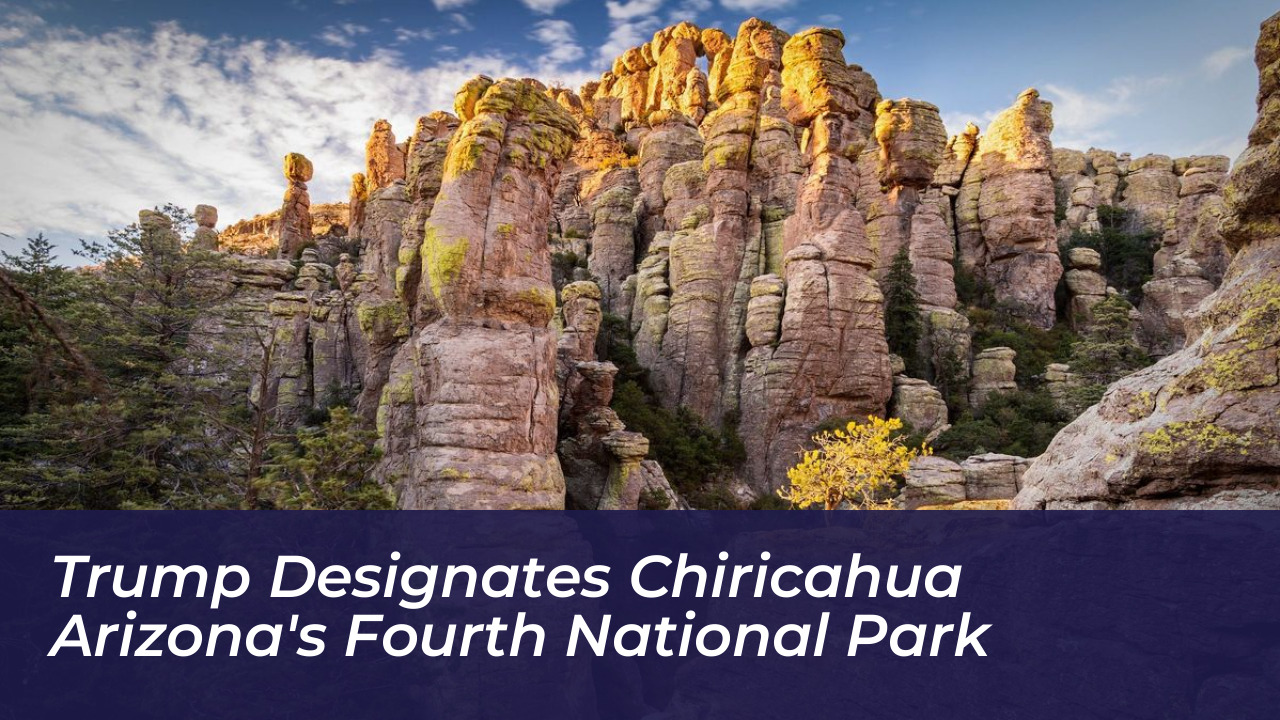

Arizona officially gained its fourth national park on October 20, 2026. President Donald Trump signed the Chiricahua National Park Act into law on this date. The legislation redesignates the historic Chiricahua National Monument in southeastern Arizona as the nation’s 64th national park. This marks the first new addition to the United States national park system in six years.
The protected area spans approximately 19 square miles, or roughly 12,000 acres. It sits in Cochise County, about 120 miles southeast of Tucson near Willcox. The new law maintains the park’s existing boundaries, current land uses, and established protections for tribal access. These measures ensure that traditional cultural and religious uses remain intact.
A Bipartisan Effort Decades in the Making
The transition from national monument to national park followed years of advocacy by Arizona’s congressional delegation. Previous bills had stalled repeatedly since 2016. To secure final passage, U.S. Senators Mark Kelly and Ruben Gallego championed companion legislation in the Senate. In the House, U.S. Representatives Juan Ciscomani, a Republican, and Greg Stanton, a Democrat, guided the measure forward. The Senate approved the Chiricahua National Park Act on September 30, 2026, clearing the final legislative hurdle before reaching the White House.
“Today is a historic day for Arizona. Making Chiricahua a national park has been a priority of mine since I first came to the Senate, so I’m thrilled this day has finally arrived,” said Senator Mark Kelly in a public statement following the signing.
With this designation, Chiricahua joins Arizona’s three existing national parks: Grand Canyon National Park, Petrified Forest National Park, and Saguaro National Park.
Geological Wonders and Sky-Island Biodiversity
Native Americans historically referred to Chiricahua as the “Land of Standing-Up Rocks.” The area is famous for its dramatic hoodoos, balancing boulders, and towering rhyolite pinnacles. These geological formations formed nearly 27 million years ago when a massive volcanic eruption covered the region in thick ash. Over millennia, wind and water eroded the hardened material into its current spires.
The landscape also functions as an isolated sky island, which is a mountainous ecosystem rising above surrounding deserts and grasslands. It features roughly 17 miles of hiking trails and an eight-mile scenic drive to Massai Point. Additionally, the International Dark Sky Association recognizes the location as a Dark Sky Place due to its exceptional stargazing conditions.
Economic Opportunities and Local Tourism Growth
President Calvin Coolidge originally established Chiricahua as a national monument under the Antiquities Act in 1924. Last year, the site recorded just over 70,000 visitors, ranking it 254th out of nearly 400 National Park Service sites nationwide.
Local leaders in nearby Willcox expect the national park upgrade to raise the region’s profile. They estimate it could boost tourist foot traffic by roughly 20 percent. Municipal officials hope the influx will support local small businesses, hotels, and restaurants. They also anticipate additional resources will help fund trail upkeep and park staffing to manage future crowds.